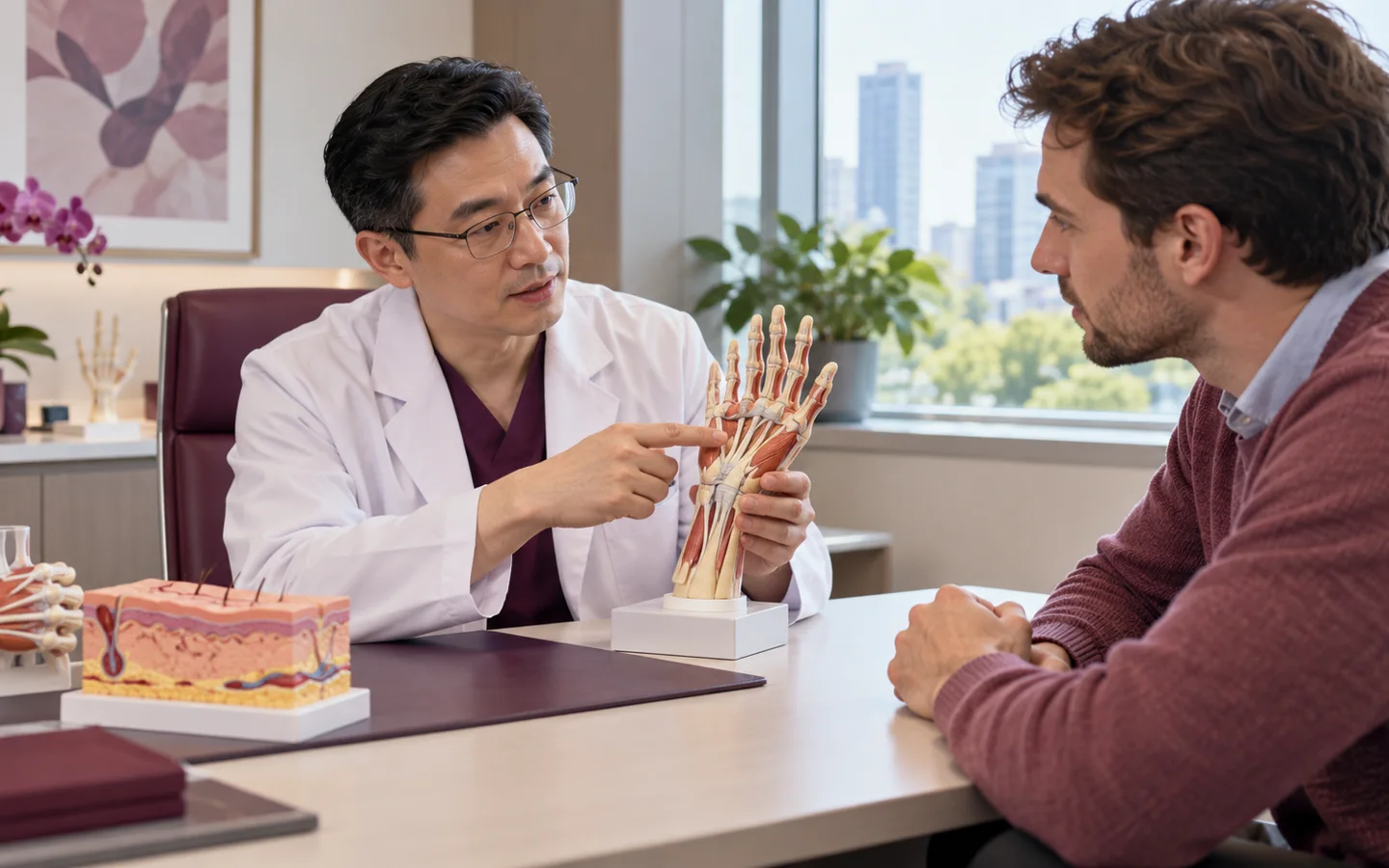
Burn Reconstruction: diagnosis, function and long-term planning
Burn Reconstruction is considered when mature or problematic burn scar restricts movement, distorts a feature, repeatedly breaks down or causes disabling symptoms.
Reconstruction should identify whether the main limitation is skin shortage, deep scar, tendon or joint stiffness, nerve injury or active hypertrophic scarring because each requires a different combination of release and rehabilitation.
Who may be considered?
Specialist review may help when burn scars impair movement, eye or mouth closure, growth, hygiene or durable skin coverage.
- Joint contractures limiting daily function.
- Eyelid, mouth, neck or hand distortion affecting essential tasks.
- Unstable scars with recurrent wounds.
- Selected hypertrophic scars after appropriate conservative care.
What the specialist team must confirm
Review original burn depth and operations, standardized photographs, scar maturity, joint range, strength, sensation, growth in children, pressure and silicone treatment, therapy response, donor sites and psychosocial impact.
Key points for this treatment
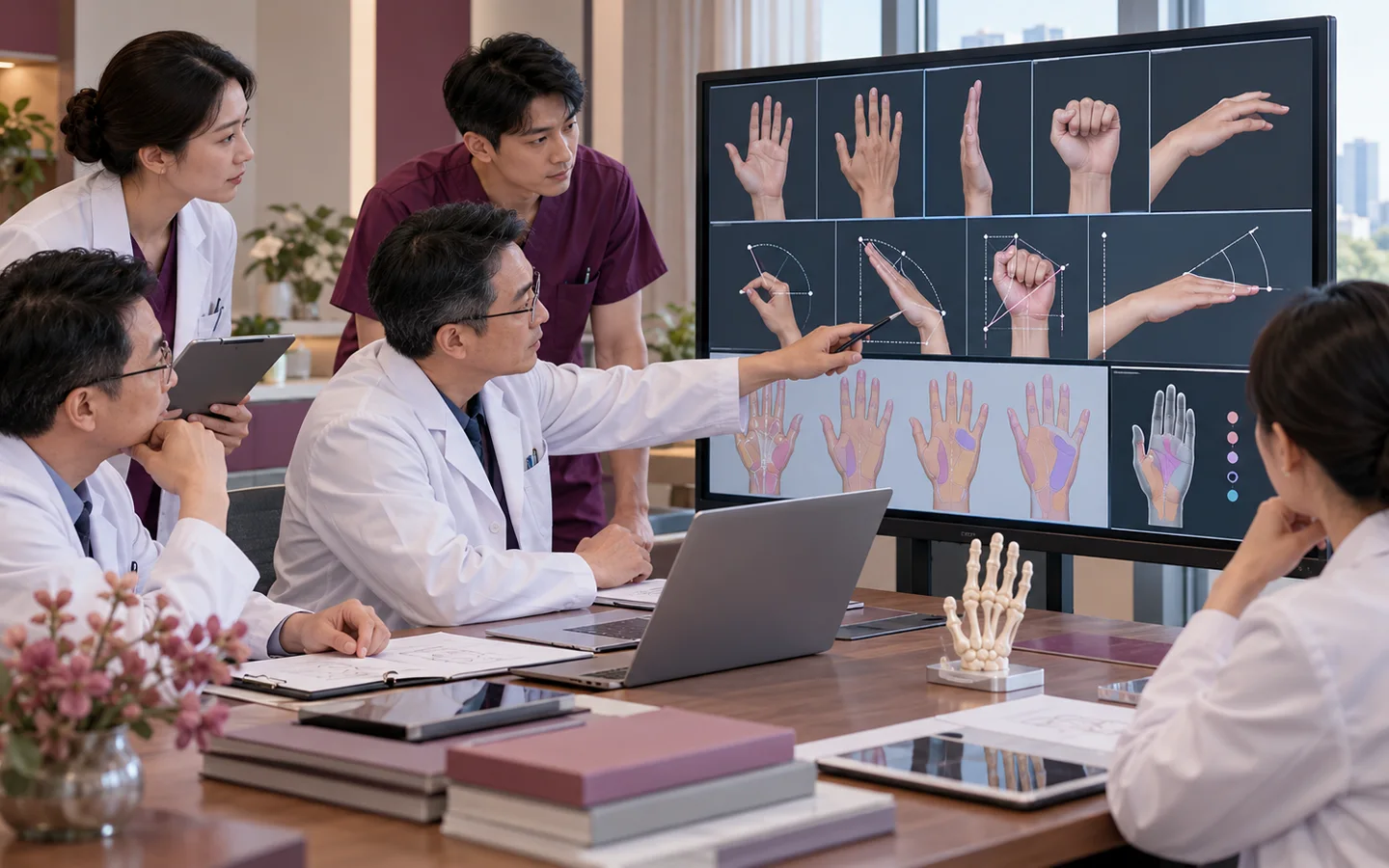
From mature scar assessment to durable movement and coverage
Function usually takes priority over cosmetic refinement, with later stages considered after motion and scar behavior stabilize.
Scar control and movement protect the reconstruction
Wound or graft care, splinting, pressure, pain control and guided movement are balanced according to the released area.
Range, recurrent tightening, scar thickness, color, itch, skin breakdown and growth are reviewed, with laser or further release used selectively.

Risks, limits and realistic expectations
Risks include graft loss, flap problems, infection, recurrent contracture, color or texture mismatch, donor-site scar, stiffness, nerve symptoms and multiple operations.
Increasing wound pain, fever, spreading redness, graft or flap color change, sudden loss of movement or breathing difficulty requires urgent care.