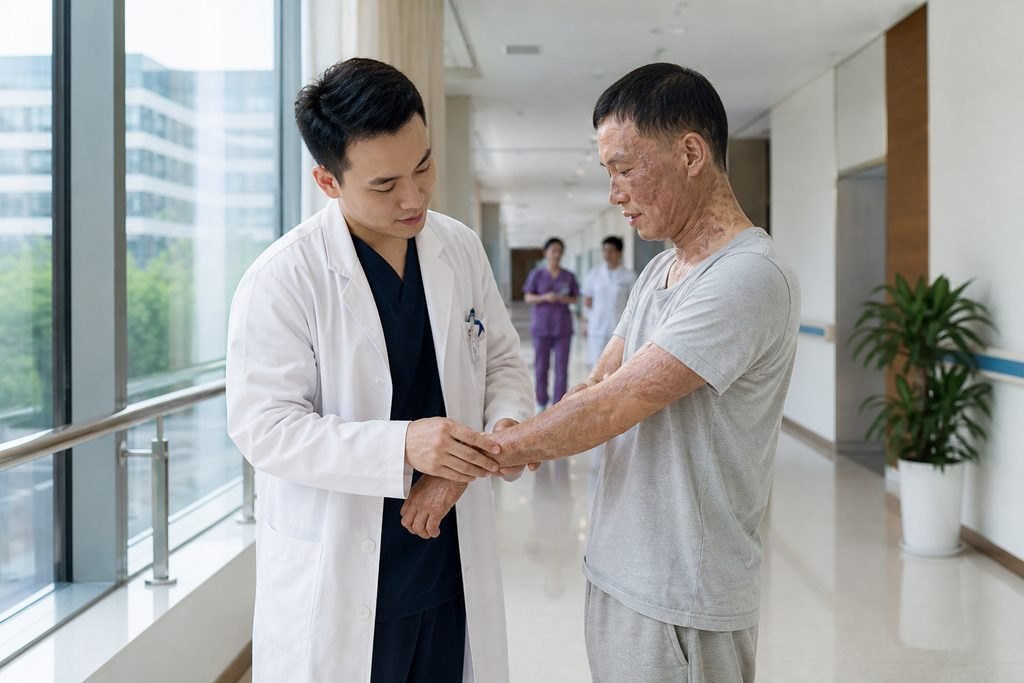
Why a Focused Question List Matters More Than a Complete File
When you travel to a first in-person consultation for burn reconstruction, the clinician needs to understand two things quickly: what your scarring looks like now and what you cannot do because of it. A thick folder of every record since the original injury can obscure those two points. A short, structured summary that you can hand over at the start of the appointment helps the team focus on the decision you are actually there to make.
The purpose of this consultation is not to review your entire medical history. It is to determine whether reconstructive surgery could improve function or appearance, what that surgery might involve, and whether the timing is right for you. Your job is to make those questions clear. The clinician's job is to assess the scar, discuss options and explain what the hospital can offer.
Bring a one-page summary in English or Chinese that states: the date and cause of the burn, which areas are affected, what treatments you have already had, and the three daily activities that are most affected. This is not a substitute for the hospital's own assessment, but it gives the conversation a starting point.
Describing Function Goals in Concrete Terms
Burn reconstruction is not only about appearance. The functional limits caused by scarring often drive the decision to operate. Before the appointment, write down specific activities that are difficult or impossible. Examples might include raising an arm above shoulder height, turning the head fully, closing a hand into a fist, or wearing a shoe without pain. These concrete descriptions give the clinician a clear picture of what reconstruction might aim to improve.
Avoid vague statements such as 'my arm feels tight.' Instead, say 'I cannot lift my arm high enough to reach a shelf above my head' or 'I cannot fully straighten my elbow.' The treating team can then examine the relevant joint or skin area and explain whether surgery could address that specific limitation.
Ask directly: 'Which of these functional goals is realistic to address with reconstruction, and which may need a different approach?' The answer will depend on the scar's location, maturity, blood supply and your overall health. No surgeon can guarantee a specific range of motion, but they can explain the intended aim of surgery and the factors that affect the outcome.
Understanding How Staged Reconstruction Would Be Planned
Burn reconstruction is often described in stages. This does not mean every patient needs multiple operations, but it does mean the treating team may plan more than one procedure over time. The staging depends on which areas are prioritised, how the skin responds to the first surgery, and whether rehabilitation between stages is needed.
At the first consultation, ask how the team typically sequences reconstruction for someone with your pattern of scarring. For example: 'If we start with the neck contracture, when would the hand be considered?' or 'Would you plan both areas in one admission or separate admissions?' The answers help you understand the practical commitment involved.
You should also ask what rehabilitation would look like between stages. Would you need physiotherapy or occupational therapy? Would splints or compression garments be part of the plan? How would follow-up be arranged if you return home between stages? These are questions about the treatment pathway, not requests for a guarantee. The treating team can explain its general approach, but the final plan depends on your response to surgery.
What Records and Images to Bring to the First Meeting
The hospital will want to see evidence of your current condition, not just the original injury. Bring recent photographs of the affected areas from multiple angles, taken in good light. These help the clinician understand the scar's extent and how it changes with movement. If you have had previous reconstructive surgery, bring the operative notes and any follow-up summaries.
If you have had recent imaging, such as ultrasound or MRI, bring the reports and the images if available. Not every burn reconstruction consultation requires new imaging, but the treating team may want to review what already exists. Ask in advance whether the hospital needs the images on disc or whether digital files are acceptable.
Do not assume that a complete archive is required before the appointment. A focused set of recent photographs, a list of previous operations and a clear description of current function is enough to start the discussion. The clinician can request additional records after examining you.
One record question is worth settling before you travel: which specific documents does this hospital require for a burn reconstruction assessment? Ask the named provider directly, because requirements differ between hospitals and departments. If you have a written estimate or treatment plan from a previous provider, bring it and ask what the current hospital's own quote would include. Do not assume that a previous estimate transfers to a new hospital or that the same scope applies.
If you are missing an operative note or a discharge summary, say so at the start rather than presenting an incomplete file as complete. The treating team can then tell you whether the missing document changes the assessment or whether the consultation can proceed without it. This is more useful than delaying the appointment while you search for a record that may not affect the decision.
Keep the file organised so you can find a specific document when asked. A simple folder with labelled sections, or a digital folder with clear file names, saves time during a short consultation. If you use an interpreter, make sure they can access the same documents so nothing is lost in translation.
Questions to Ask About Suitability and Alternatives
The first in-person discussion is your opportunity to understand whether reconstruction is suitable for you and what alternatives exist. Ask directly: 'Based on what you see today, am I a candidate for reconstructive surgery?' and 'What would happen if I decided not to proceed?' The clinician should explain the reasons behind their assessment, including any factors that make surgery more complex.
You should also ask about the alternatives to surgery. These might include non-surgical scar management, such as pressure therapy, silicone products, or laser treatment. The treating team can explain which options are relevant to your situation and whether they would be used alone or alongside surgery.
Ask about the risks and the expected recovery in general terms. For example: 'What are the main risks of this operation for someone with my scar pattern?' and 'What does the recovery period typically involve?' The answers will be specific to your case. No outcome is guaranteed, and the hospital's assessment is the basis for any treatment decision.
Practical Preparation and the Next Step
Before you travel, confirm the appointment details with the hospital or your coordination contact. Ask what time to arrive, what to bring, and whether an interpreter will be available. If you need language support, arrange it in advance. The consultation itself may take time, so plan for a flexible schedule on that day.
Write your three main questions on a card and keep it with you. It is easy to forget details in a clinical setting. If you are unsure about anything the clinician says, ask them to repeat or clarify it. You can also ask for a written summary of the plan or the next steps.
After the consultation, you should have a clearer idea of whether reconstruction is recommended, what it would involve, and what the next step is. If surgery is proposed, ask what preparation is needed and how the hospital will communicate with you. If you need time to decide, say so. The decision is yours, and the hospital will explain the process for scheduling if you choose to proceed.
For general information about burn reconstruction services, you can review the procedure reference page. If you are considering an initial enquiry, you can share a brief summary of your situation without sending a complete medical archive. The team can then explain what information the hospital would need for a formal assessment. An initial enquiry is free and does not require purchasing a proxy consultation.
Sources & scope of this guide
References and official service information relevant to this guide.
This is general planning information and has not been individually reviewed by a doctor. Medical decisions and personal treatment advice come from your treating clinicians.