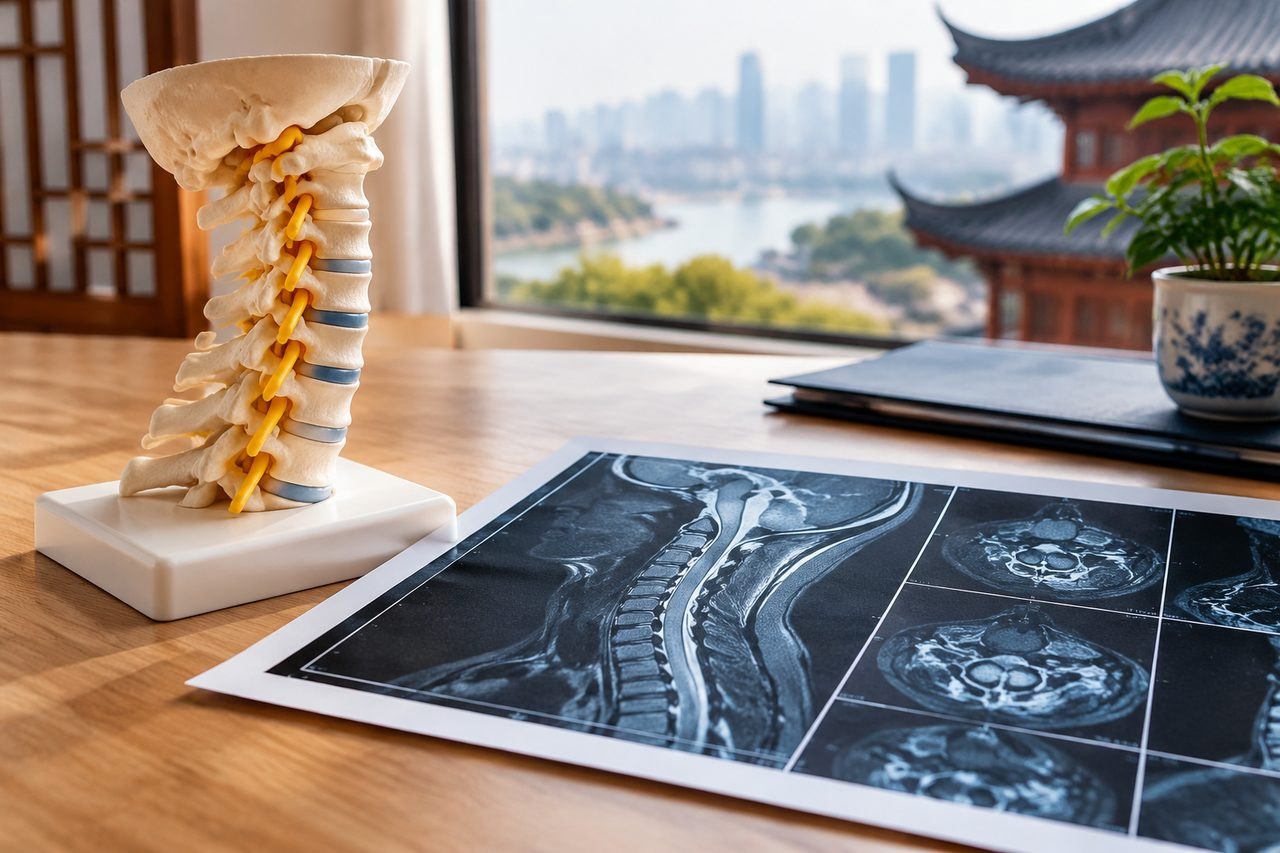
What old imaging can and cannot answer
A previous MRI, CT or X-ray can be genuinely useful. It may show the shape of the cervical spine, the position of discs and vertebrae, and whether an earlier report described narrowing or contact with a nerve root. It gives the receiving clinician a starting point and can prevent some repeat scanning if the images are complete and readable.
What old imaging cannot do is confirm that those findings still explain today's symptoms. Neck pain, arm pain, numbness or weakness can change over time, and a scan is a snapshot rather than a live picture. A disc bulge on an old report may be stable, or the situation may have moved on. The images also may not include the views or sequences a surgeon needs for planning a specific level.
This is why the question is not simply whether the old scan is good enough. The better question is what decision each piece of information is meant to support. Old imaging supports background understanding. A current clinical assessment supports the decision about whether surgery is appropriate and, if so, at which levels.
Why the proposed spinal levels change everything
Cervical fusion joins vertebrae in the neck. The surgical levels and approach depend on the individual problem. That single sentence carries most of the practical weight for an overseas patient, because the number and position of levels affect almost every downstream question.
A one-level fusion and a multi-level fusion are not the same operation with a different label. They can differ in the approach, the amount of bone work, the implants required, the length of the hospital stay and the rehabilitation plan. They also differ in what the written estimate must cover. If you do not know which levels are proposed, you cannot meaningfully compare a quote, plan travel or understand what recovery might involve.
The levels should be stated in plain terms: for example, which vertebrae are involved and whether the plan is anterior, posterior or combined. Ask for this in writing. If the answer is still being decided, that is useful information too, because it means the assessment is not yet complete and a firm estimate may not be possible.
A related question is whether the proposed levels match the symptoms. A scan can show more than one abnormal level, and not every abnormal level causes the current problem. The treating clinician has to connect the imaging, the examination and the patient's history. That is a clinical judgement, not something an administrative coordinator can make.
What a new assessment is actually for
A new assessment is not a repeat for its own sake. It answers questions that old records may leave open: whether the current symptoms are consistent with the imaging, whether the neurological examination shows any change, and whether the proposed levels are still the right target.
It may also address safety and planning issues. The clinician may need to know about other medical conditions, medicines that affect bleeding or healing, previous neck surgery, allergies and general fitness for anaesthesia. These are not administrative details; they can change the recommended approach or the timing.
For an overseas patient, the assessment also has a practical function. It establishes whether the case is suitable for treatment in China at all, and whether the hospital can accept the patient. An initial enquiry or records review does not establish that. Suitability and acceptance belong to the treating hospital and its clinicians.
It helps to separate three different things that are often mixed together: a records-based opinion, a face-to-face specialist assessment, and a final surgical plan. A records-based opinion can clarify options and missing information. It cannot replace an in-person examination where that is needed, and it does not guarantee that surgery will proceed.
Records that help the assessment answer its questions
The most useful file is not the largest one. It is the one that lets a clinician understand the problem and the proposed solution. For a neck problem, that generally means the imaging itself where available, the written reports, a clear history of symptoms and treatments tried, and any examination findings or nerve studies.
It also helps to include a short summary in your own words: when the symptoms started, what makes them better or worse, what has been tried, and what you most want to know. This does not replace medical records, but it directs attention to the right questions.
Ask the receiving team what format they can read and whether they need the original images rather than only the report. Do not send passport numbers, card details or a complete medical archive at the first contact. A brief summary is enough to begin.
- Current imaging reports and, where possible, the images themselves
- A short timeline of symptoms and treatments already tried
- Relevant examination findings, nerve studies or specialist letters
- A list of medicines and other medical conditions
- Your main question and what you hope to decide
What the written estimate should make clear
Cost questions are difficult to answer well without knowing the proposed levels and the implant plan. Rather than asking for a single number, ask the named provider how its written estimate is built and what it covers. The scope of the quote matters more than the headline figure.
Specifically, ask which spinal levels are included, what implants are planned, whether ward type affects the estimate, and what would change the figure. Ask what is included, what is excluded and what remains undecided. If the levels are not yet fixed, say so, because a quote based on an assumed level may not reflect the final plan.
Keep hospital charges, coordination fees and travel costs separate in your own planning. Hospital consultations, tests, treatment, medicines and rooms are paid to the hospital or the relevant provider. Coordination fees are separate. Do not assume that any particular item is bundled or billed separately; ask the provider to state it in writing.
A records-based estimate is not a final bill. It is a planning tool that should be revisited once the assessment confirms the levels and approach.
Review after discharge and the next practical step
Discharge is not the end of the clinical relationship, but the arrangements vary. Before travelling, ask how review after discharge will work: who will see the patient, how often, whether remote review is possible, and what would prompt an earlier return. Ask what written instructions and imaging will be provided at discharge, and whether these will be in a language your local clinician can read.
This matters because follow-up after cervical fusion may involve wound checks, imaging and assessment of healing or neurological symptoms. The treating team should explain its own plan and any restrictions. A local clinician can also be involved, and their independent judgement should be respected. It is not the case that only the original surgical team can assess the patient.
If symptoms are worsening, especially with new weakness, difficulty walking or problems with bladder or bowel control, seek local urgent care rather than delaying for an overseas enquiry. An overseas plan should not take priority over necessary local assessment.
The practical next step is to gather a brief summary, the relevant imaging reports and your main question, then ask for an initial review. An initial enquiry is free and does not require buying a proxy consultation. The hospital decides suitability, and no outcome is guaranteed.
Sources & scope of this guide
References and official service information relevant to this guide.
This is general planning information and has not been individually reviewed by a doctor. Medical decisions and personal treatment advice come from your treating clinicians.