What cervical fusion addresses
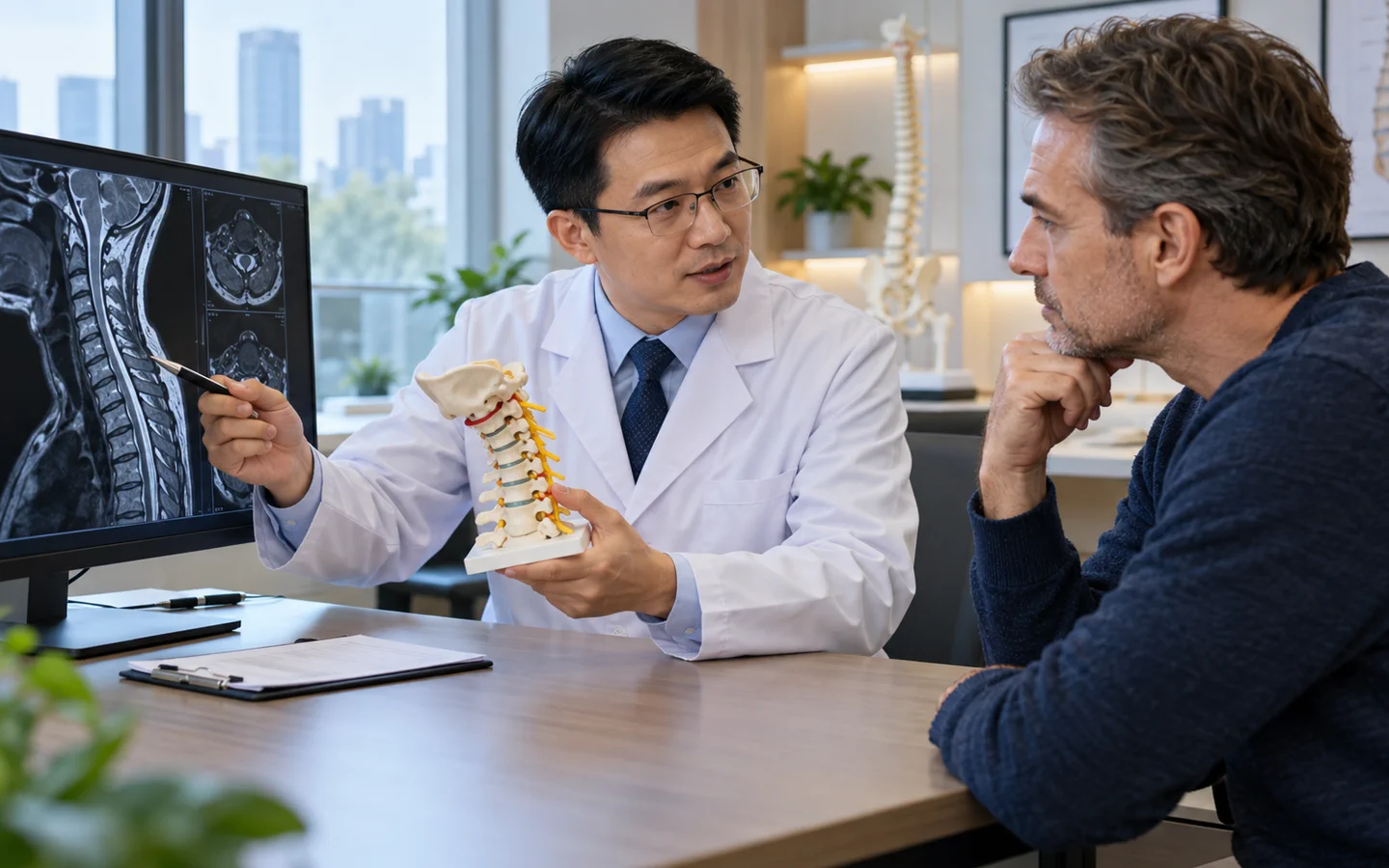
Cervical fusion joins selected vertebrae in the neck. It is often combined with removal of a damaged disc, bone spur or other tissue compressing a nerve root or the spinal cord. Anterior cervical discectomy and fusion—ACDF—reaches the spine from the front; posterior decompression and fusion is performed from the back.
The expected benefit depends on the target problem. Arm pain from nerve-root compression may respond differently from long-standing spinal-cord damage, balance difficulty or isolated neck pain. Fusion stabilises levels but does not reverse every neurological change.
Hand clumsiness, worsening balance, leg stiffness or new weakness can indicate cervical myelopathy. Sudden severe neurological change is an emergency.
Who may be considered?
Surgery may be discussed after clinical and imaging findings match, particularly for:.
- Progressive spinal-cord compression or cervical myelopathy.
- Persistent arm pain, weakness or numbness from a compressed nerve root.
- Instability, deformity, fracture, tumour or infection requiring reconstruction.
- Symptoms that remain disabling despite suitable non-surgical care when delay is safe.
- Selected failed prior surgery or non-union.
What the hospital needs to assess
MRI is central for discs, nerve roots and the spinal cord. X-rays show alignment and may include flexion-extension views; CT defines bone and previous fusion. The examination records strength, reflexes, hand function, gait and long-tract signs. Swallowing, voice, bone quality and previous neck surgery influence approach planning.
Key points for this treatment
Anterior and posterior fusion pathways
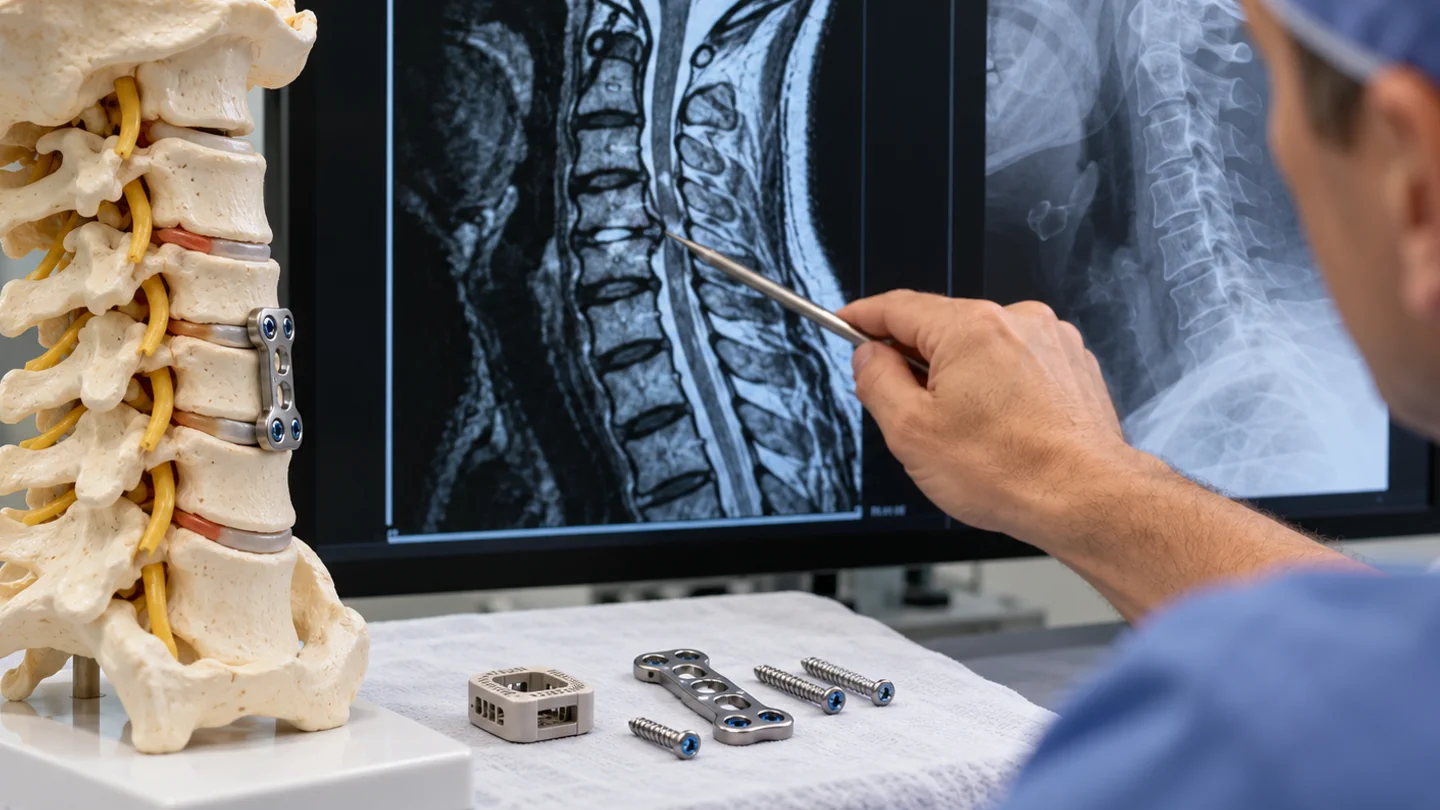
In ACDF, the surgeon approaches through the front of the neck, removes the disc and compressing bone, places a graft-filled spacer or cage and often adds a plate or integrated fixation. A corpectomy may remove more vertebral body when compression extends behind it.
From the back, laminectomy or other decompression can be combined with screws and rods when several levels, alignment or instability favour a posterior route. The best approach is based on where the compression lies and the shape of the neck—not the smallest visible scar.
Hospital stay and recovery
Early care includes neurological observation, walking, pain control and attention to swallowing and voice. Temporary throat discomfort is common after an anterior approach, but persistent or worsening difficulty needs review.
Return to driving, desk work, lifting and sport depends on neurological recovery, number of levels and surgeon restrictions. Follow-up X-rays assess alignment and implants while fusion develops.

Risks and realistic expectations
Risks include infection, bleeding, clot, spinal-fluid leak, nerve-root or spinal-cord injury, persistent symptoms, non-union, implant failure and adjacent-level disease. An anterior approach can injure swallowing or voice structures, oesophagus, trachea or major blood vessels; a posterior approach has its own muscle, wound and alignment considerations.
New arm or leg weakness, increasing balance loss, breathing or severe swallowing difficulty, loss of bladder or bowel control, fever or wound drainage requires urgent medical attention.