Three different replies that look similar
When you send neck imaging and a surgical question to a hospital in China, the first response often arrives quickly. It may be written by an international office, a coordinator or a triage clinician. The wording can be polite and encouraging without containing any clinical judgement. That is normal, and it is not a rejection.
A receipt reply means the file has been logged. Nothing has been assessed. A request for more records means someone looked at the file and found a gap, which is useful progress. A formal assessment reply means a specialist has begun to consider whether cervical fusion is appropriate for your problem, which levels might be involved and what else must be checked. These three stages carry very different weight, and confusing them can lead to booking travel before any clinician has formed a view.
The practical move is to reply with one short question: which stage is this, and what does the clinical team still need from me? Ask for that answer in writing so you can compare it with later messages.
Why the proposed spinal levels matter more than the reply's tone
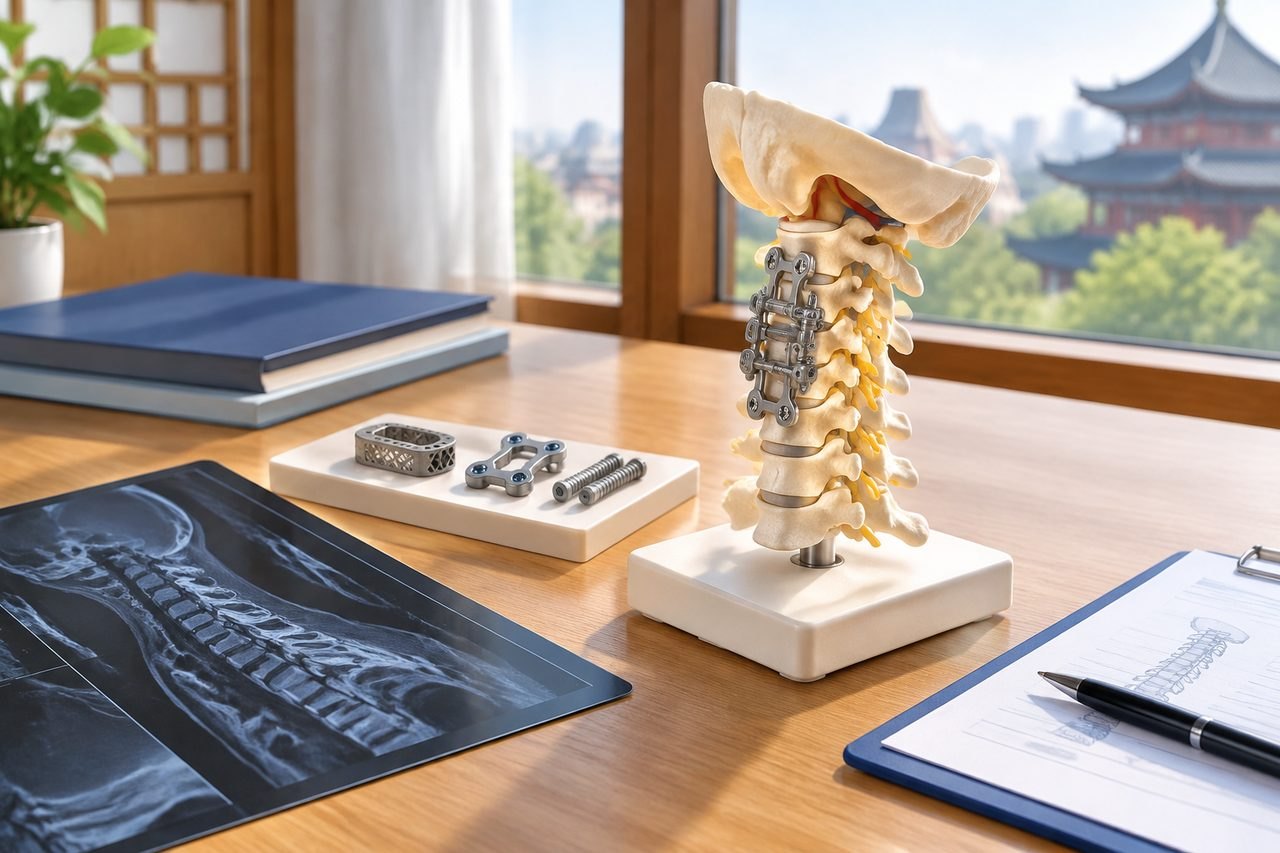
Cervical fusion joins vertebrae in the neck, and the surgical levels and approach depend on the individual problem. That single fact explains why a preliminary reply cannot tell you much. A fusion at one level and a fusion across several levels are different operations with different planning, different implant requirements and different questions about the approach.
If the reply does not name the levels, you do not yet know what is being discussed. Ask directly: which cervical levels are proposed, and is this a single-level or multi-level procedure? If the answer is vague, that is information too. It may mean the imaging has not been reviewed by a surgeon, or that the team wants additional studies first.
You should also ask whether the plan is fusion alone or fusion combined with decompression, and whether any alternative such as disc replacement is being considered. Do not assume you are a candidate for any particular option. Suitability belongs to the treating surgeon, who needs your imaging, your symptoms and your examination findings.
The records that usually decide whether a reply can progress
A preliminary reply often stalls because the file is incomplete. The hospital cannot move to a formal assessment without material it can actually read and interpret. Rather than sending everything you have, ask what is missing and send exactly that.
Imaging is the common gap. Reports alone may not be enough; the team may need the actual images or discs, or access to a cloud link. Ask whether they want MRI, CT or both, and in what format. If your images were done some time ago, ask whether the team considers them current enough for planning or whether repeat imaging would be required in China. Do not order new tests on your own initiative before the receiving clinician asks.
Clinical information matters as much as pictures. A short summary of your symptoms, how long they have been present, what treatments you have already tried and how your function has changed helps the surgeon understand the problem. If you have had previous neck surgery, say so clearly and send the earlier operative notes.
Ask one consolidated question: given my diagnosis and imaging, what specific documents would let your team complete a formal assessment? That turns a vague request into a defined list.
What to ask about the estimate and the implants
If the reply includes any cost information, treat it as a starting point for questions rather than a final figure. Ask the named hospital how its written estimate is structured, what it covers and what it excludes. Request the estimate in writing and ask which items are provisional.
Implants deserve their own question. Cervical fusion typically involves hardware, and the type, manufacturer and number of implants can affect both planning and cost. Ask how the estimate accounts for implants: are they quoted separately, included as a line item, or confirmed only after the surgeon selects a device? Ask whether the hospital's available implant options include the type your surgeon considers appropriate.
Also ask how the estimate handles the length of stay, intensive care if needed, imaging before and after surgery, and any revision or complication care. You are not trying to negotiate; you are trying to compare like with like. An estimate that omits implants is not comparable with one that includes them.
Keep the questions factual and specific. A hospital that answers them clearly is giving you useful planning information, not a guarantee of the final bill.
Confirming whether you have an appointment or only a review
A reply that says a specialist will look at your records is not the same as a confirmed appointment. Ask which it is. If a review is planned, ask who will conduct it, whether it is records-based only, and when you should expect a response. Avoid treating an encouraging message as a scheduled consultation.
The distinction matters because the two stages require different preparation from you. A records-based review can proceed while you are still at home, and it may end with a question rather than a plan. A confirmed appointment means a clinician has agreed to see you in person, which normally follows some form of review rather than replacing it. If you are unsure which stage you are in, ask the international office to state it plainly in writing.
If you are considering travelling, ask what would need to be confirmed before a visit makes sense: a specialist appointment, a decision about suitability, or a treatment date. Ask whether the hospital can confirm these in writing. Do not book travel on the basis of a preliminary reply alone.
It also helps to ask how the hospital handles language. Will interpretation be available during consultations, and who will explain the plan and consent discussions? These are practical questions that affect how much you understand before any decision.
One further point about timing. If your symptoms are worsening, or if you develop new weakness, numbness or problems with balance or walking, that is a reason to seek local medical assessment promptly rather than wait for an overseas reply. A preliminary message from a hospital abroad is not a substitute for urgent care where you are.
When you write back, keep the message short and specific. State which stage you believe you are in, list the records you have already sent, and ask the single question that matters most: what does the clinical team need next? That gives the hospital something concrete to answer and moves the file forward without pressure on either side.
Planning for review and follow-up after discharge
Cervical fusion is not finished when you leave the hospital. Ask the team how review arrangements work after discharge, including how often follow-up is expected, what imaging or assessment is needed, and how those appointments can be handled if you return home. Ask whether remote review is possible and what records you would need to send.
Ask who is responsible for your ongoing care once you leave China, and how information will be shared with your local clinician. A clear handover of operative notes, imaging and instructions reduces the chance of gaps. Request copies of your discharge summary and imaging before you travel home.
Finally, ask what warning signs should prompt urgent local assessment and who to contact in China if a question arises. This is a clinical question for the treating team, and their answer should be specific to your operation.
ChinaSpecialistCare can help with records organisation, interpretation and specialist appointment requests for cervical fusion enquiries. This is non-clinical coordination; the hospital and its surgeons decide suitability, the proposed levels and the treatment plan.
Sources & scope of this guide
References and official service information relevant to this guide.
This is general planning information and has not been individually reviewed by a doctor. Medical decisions and personal treatment advice come from your treating clinicians.