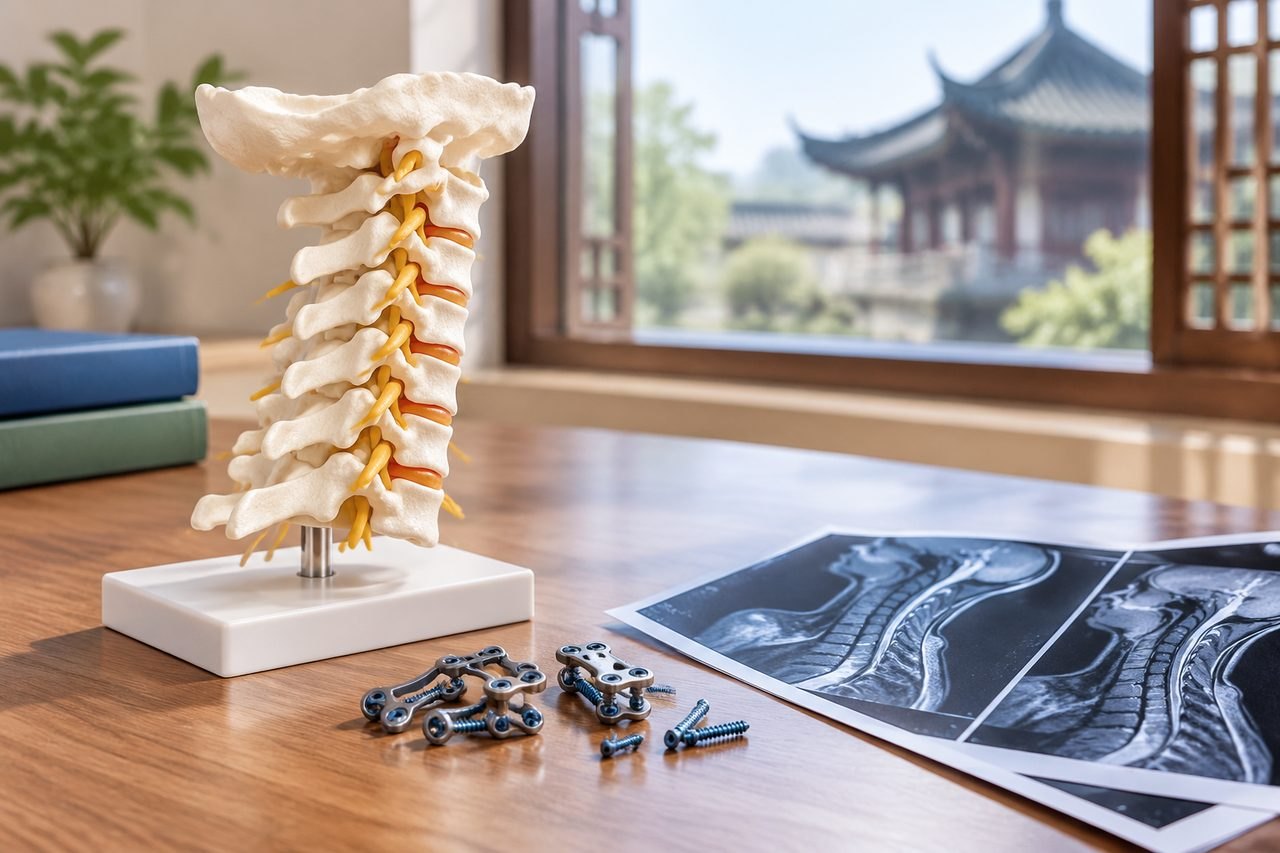
What 'Spinal Levels' Means in a Cervical Fusion Plan
A spinal level is a specific segment of the cervical spine, typically named by the vertebrae it sits between, such as C5–C6. When a surgeon proposes cervical fusion, the plan should identify which levels are involved and whether the fusion is single-level or multi-level. This matters because the number of levels affects the surgical approach, the amount of bone graft or implant material, the length of the operation and the recovery plan.
The AAOS notes that the surgical levels and approach depend on the individual problem. That means two patients with neck pain may receive very different plans. One may need a single-level fusion; another may need several levels addressed, or may be offered a different procedure entirely. You do not need to decide which is correct. You need the surgeon to state clearly what is proposed for you and why.
Ask for the level list in writing. A verbal 'we will fuse the bad disc' is not enough to compare opinions or prepare questions. Request the specific vertebrae, the side of approach if relevant, and whether any decompression is planned at the same levels.
Why the Number of Fused Levels Changes Your Questions
A single-level fusion and a multi-level fusion are not the same operation with a different number. More levels can mean a longer procedure, a larger incision or a different approach, and a different set of risks that the surgeon should discuss with you. The number of levels also affects how the hospital builds its estimate, because implants, operating time and ward stay are not identical for every plan.
If you are seeking a second opinion in China, give the reviewing surgeon the same imaging and the same level list that the first team used. Otherwise the two opinions may not be comparable. Ask each team to explain which levels it would fuse and which it would leave alone. A surgeon who recommends fewer levels is not automatically more conservative, and one who recommends more is not automatically more thorough. The reasoning matters more than the count.
You should also ask what happens if the planned levels change during surgery. Some surgeons adjust the plan based on what they find. Ask how that possibility is handled in the consent discussion and in the hospital's estimate.
Imaging and Records That Support a Level Decision
The level decision should be based on your clinical history and imaging, not on a single scan viewed in isolation. Bring your MRI report and images, any CT or X-ray studies, and a clear summary of your symptoms, including which arm or hand is affected and how long you have had symptoms. If you have had previous neck surgery, include those records as well.
The treating clinician decides which imaging is sufficient. Do not assume that a new scan is mandatory before an enquiry, and do not arrange tests on your own based on an article. If the hospital needs additional imaging, it should tell you what is missing and why.
When you send records to China, ask how the hospital prefers to receive imaging: discs, a secure upload link or physical films. Confirm whether the surgeon will review the images personally or rely on a radiology report. This is an administrative question, but it affects whether the level discussion is based on the actual study.
How a Written Estimate Should Account for Levels and Implants
Cervical fusion often involves implants such as plates, screws or cages, and the number of levels can affect how much implant material is used. A hospital estimate that lists only a single figure without explaining what it covers is difficult to compare with another hospital's estimate. Ask the named hospital to provide a written breakdown that states which items are included, which are excluded and which are still undecided.
Do not assume that every hospital in China structures its estimate the same way. Ask this provider how its written quote works, what the implant line includes, and whether the estimate changes if the number of fused levels changes. If the hospital cannot confirm a final figure before surgery, ask what range it can provide and what would cause the figure to move.
Keep coordination fees separate from hospital fees in your own planning. Hospital charges are paid to the hospital, and any coordination service is a separate arrangement. Ask each side what its own written scope covers rather than assuming one quote includes everything.
Questions to Ask the Surgeon Before You Commit
You are not expected to judge whether fusion is the right operation. Your role is to make sure you understand the proposal well enough to give informed consent. The questions below are practical, and you can put them in writing or ask them through an interpreter.
Start with the level list itself. Which exact cervical levels does the surgeon propose to fuse, and why those levels rather than the ones above or below them? Is the plan single-level or multi-level, and does the number of levels change the approach? If a level is being left alone, ask what the imaging shows there and why it is not included.
Then move to the operation. What approach is planned, and how does it relate to the levels involved? What are the main risks for my particular situation, and how would the team manage them? What alternatives exist for me, including non-surgical options or a different operation, and what would make you change your recommendation?
Finally, ask about the practical side. What does the hospital's written estimate include for the proposed levels, and what remains undecided until surgery? If the number of fused levels changes during the operation, how is that handled in the consent discussion and in the estimate? Who will explain the plan to me before I sign anything, and in what language?
If you are comparing a plan made in your home country with a plan made in China, ask both teams the same questions and compare the answers side by side. Write the answers down rather than relying on memory. A difference in the number of levels is a signal to ask more, not a reason to choose one plan automatically. The surgeon who explains the reasoning most clearly may not be the one who proposes the fewest or the most levels.
One more question is worth asking early: what would you need from me to be confident about this plan? The answer tells you whether the team has enough imaging and history to discuss levels properly, or whether something is still missing from the file.
Review Arrangements After Discharge and Your Next Step
After cervical fusion, follow-up is part of the treatment plan. Before you travel, ask how the hospital arranges review after discharge, who you should contact if you have a concern, and how imaging or clinical notes will be shared with your doctors at home. Do not assume that a fixed review schedule applies to every patient; ask what is planned for your case.
If you return home after surgery, ask the hospital what documentation it will provide and whether it can communicate with your local clinician. Your local team remains responsible for your ongoing care, and it should receive enough information to assess you independently. A receiving clinician does not need the original surgical team's permission to evaluate you.
For an initial enquiry, a brief summary of your diagnosis, symptoms and main question is enough. You do not need to send a complete medical archive or buy a proxy consultation to ask whether cervical fusion at specific levels is relevant to your situation. The hospital decides suitability after reviewing your records.
A useful next step is to write down the level list you have been given, the questions above, and the name of the hospital or surgeon you are asking. Then send that summary through the enquiry form. The team can help identify missing information and suggest the relevant next step, but the treating hospital and licensed clinicians make the clinical decisions.
Sources & scope of this guide
References and official service information relevant to this guide.
This is general planning information and has not been individually reviewed by a doctor. Medical decisions and personal treatment advice come from your treating clinicians.