Why a records review cannot replace the physical examination
Cervical myelopathy is a condition where the spinal cord in the neck is compressed or otherwise affected. The symptoms that matter most for decisions are often functional: how you walk, whether your hands can button a shirt or hold a cup, whether your balance has changed, and how quickly these abilities have changed over time. These are assessed by watching you walk, testing coordination, checking reflexes and sensation, and comparing both sides of the body. A written description or a video cannot fully substitute for that examination.
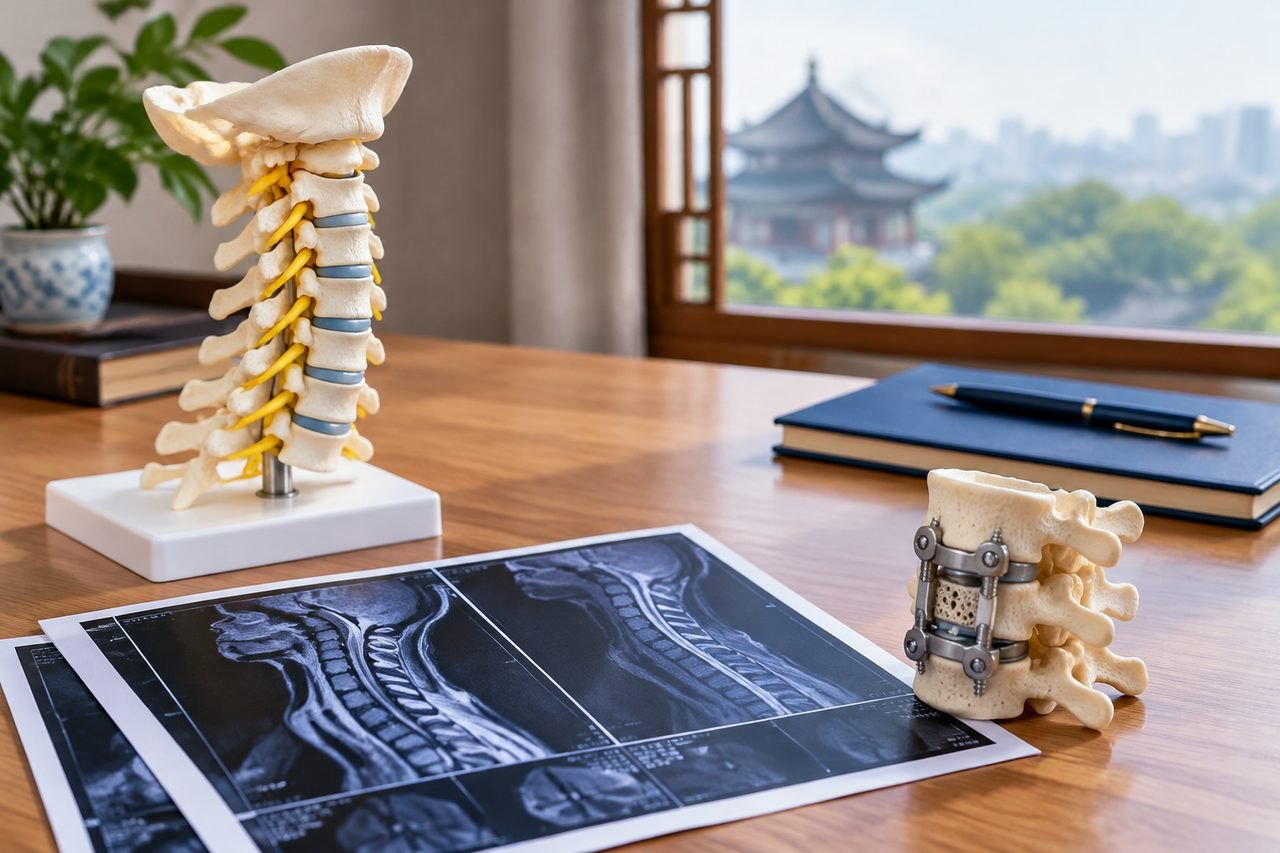
Imaging is essential, but it does not stand alone. An MRI or CT scan shows the anatomy of the spine and any compression, yet the same scan can look different in two people with very different symptoms. The treating clinician needs to match the imaging to your examination findings. That is why a records-based opinion can discuss the likely problem and the questions to ask, but it cannot confirm the exact surgical levels, the best approach, or whether surgery is appropriate for you.
If you are considering care in China, the first practical step is to understand which parts of your case can be reviewed remotely and which parts must wait for an in-person visit. This guide explains those boundaries and how to prepare.
What your walking and hand-function history should include
When you contact a hospital or a coordination service, a clear history helps the team understand urgency and plan the right appointment. Rather than a general statement like 'my neck hurts', describe changes in function. For walking: do you feel unsteady, do you need to hold a rail, has your stride become shorter, do you trip more than before? For hands: do you drop objects, struggle with small buttons, notice clumsiness when writing, or feel that your fingers are numb or stiff?
Timing matters. Note when these changes started and whether they are stable, slowly worsening, or worsening quickly. A rapid decline in walking or hand function is a reason to seek urgent local medical assessment rather than wait for an overseas appointment. If you have already been diagnosed with cervical myelopathy, say so and include the date and the name of the treating clinician. If the diagnosis is still being clarified, describe the symptoms and what tests have been done.
Also list any other conditions and all medicines you take, including blood thinners, because these affect how a clinician plans investigations and any treatment. Do not stop or change any medicine on your own; that decision belongs to your prescribing clinician.
Which imaging and records to bring to an in-person assessment
For a cervical spine assessment, the most useful records are usually the actual images, not only the written report. Bring the MRI and CT discs or a secure digital link, plus the radiology reports. If you have had serial imaging over months or years, include the earlier studies as well, because comparing them can show whether compression or cord signal changes have progressed. Plain X-rays may also be requested, depending on the clinical question.
Other helpful documents include clinic letters, operative notes from any previous neck surgery, and results of nerve conduction studies or electromyography if these were done. A simple list of your current medicines and allergies is also useful. If your records are in a language other than English or Chinese, ask whether a translation is needed; the hospital can confirm its own requirements.
Do not assume that one set of images answers every question. The treating clinician may decide that additional views or a new scan are needed to assess your case safely. That is a clinical decision, not a paperwork formality.
Questions that a records-based opinion can and cannot answer
A records-based opinion, sometimes arranged before travel, can be useful for several things. It can review whether your imaging and history are consistent with cervical myelopathy, identify missing information, and suggest which specialist or tests may be relevant. It can also help you understand the general treatment options that exist for your situation and prepare questions for an in-person visit. This kind of review is not a diagnosis and does not confirm that a hospital will accept you for treatment.
What it cannot do is confirm the exact surgical levels or approach. Cervical fusion joins vertebrae in the neck, and the surgical levels and approach depend on the individual problem. That principle applies to myelopathy as well: the decision depends on your examination, your imaging, your symptoms and your overall health. A remote reviewer cannot test your reflexes, watch you walk, or assess your balance.
Similarly, a records review cannot guarantee pain relief, recovery speed, or that a particular procedure is suitable for you. Those are questions for the treating clinician after an in-person assessment. You can and should ask your clinician about evidence-based risks, benefits and uncertainty, but no estimate can promise an individual result.
How to prepare for the specialist appointment in China
Once you have decided to seek an in-person assessment in China, preparation focuses on making the visit efficient. Confirm with the hospital or your coordination contact what records they want, in what format, and whether an interpreter will be needed. If you do not speak Chinese, ask whether English-speaking staff are available for the consultation and for any consent discussions. These arrangements vary by hospital and should be confirmed, not assumed.
Plan your questions in advance. Useful ones include: What is the likely cause of my symptoms? Which levels are affected? What are the treatment options, and what are the risks and benefits of each? What happens if I choose not to have surgery now? What should I expect during recovery, and what restrictions will I have? Write them down so you do not forget in the consultation.
If you are travelling with a companion, decide in advance who will take notes and who will help with practical arrangements. Keep your medicines in their original packaging and carry a copy of your prescription. For any question about bringing a specific medicine into China, check with the customs authority or the relevant embassy; a doctor or coordination service does not decide customs rules.
What ChinaSpecialistCare can help with, and the next step
ChinaSpecialistCare provides non-clinical coordination for international patients. For a cervical myelopathy enquiry, the team can help you organise your records, request a specialist appointment at a suitable hospital, and arrange interpretation or practical support during your visit. The team does not diagnose, prescribe, decide suitability or guarantee hospital acceptance. Those decisions belong to the treating hospital and licensed clinicians.
An initial enquiry is free and does not require buying a proxy consultation. You can start by sending a brief summary of your situation: your main symptoms, how long they have been present, what imaging and records you have, and your main question. The team will then explain what information is missing and suggest a relevant next step. If you already have a diagnosis and imaging, you can ask about a specialist appointment; if your case is complex, a multidisciplinary review may be discussed, but the scope and any fee are agreed first.
The practical next step is to gather your imaging discs, reports and a short symptom history, then contact ChinaSpecialistCare through the enquiry form, email or WhatsApp. Keep the initial message brief. Do not send passport numbers, card details or a complete medical archive at first contact. The team will tell you how to share records securely if a specialist appointment is arranged.
Sources & scope of this guide
References and official service information relevant to this guide.
This is general planning information and has not been individually reviewed by a doctor. Medical decisions and personal treatment advice come from your treating clinicians.