The question a specialist cannot answer from a partial file
Cervical radiculopathy means a nerve root in the neck is irritated or compressed, producing pain, numbness, tingling or weakness that follows a nerve pattern into the arm or hand. That description is a starting point, not a diagnosis. A specialist deciding how to help you needs to separate nerve-root symptoms from spinal cord compression, shoulder problems, peripheral nerve entrapment and other causes. Those distinctions change what is safe to recommend.
If your file contains only an MRI report and a brief note, the specialist can see that something was described on imaging but cannot tell how your symptoms behave, what examination found, or whether the imaging matches your current problem. A report that says 'disc protrusion' or 'foraminal narrowing' does not by itself confirm that this is the source of your arm pain. The treating clinician has to connect the image to your history and examination.
This is why a records-based opinion in China is best understood as a review of the evidence you provide. It can identify what is clear, what is contradictory and what is missing. It cannot replace an in-person assessment, and it does not establish eligibility for any particular procedure. The hospital and its clinicians decide suitability after they have enough information.
Records that decide whether the picture is complete
The most useful file for a cervical spine question is not the largest one. It is the one that lets a clinician reconstruct your symptoms over time and compare them with imaging. A short, well-organised set usually beats a scattered archive.
Start with your own symptom description: when the neck or arm symptoms began, which arm and which fingers are affected, what makes them better or worse, whether you have weakness, dropping objects, unsteady walking, or changes in bladder or bowel control. Those last symptoms matter because they can point to spinal cord involvement rather than a single nerve root, and they change the urgency of assessment.
Then include the clinical examination findings from your local doctor or physiotherapist: reflexes, muscle strength, sensation testing, and any provocation tests performed. These findings are often the part patients forget to request, yet they are central to interpreting the scan.
For imaging, the written report is useful, but the actual images are more useful. If you can obtain the MRI or CT on disc or through a secure link, send that rather than only the radiologist's summary. Include the date of each study, because an older scan may no longer reflect your current symptoms.
Also include any treatments already tried and their effect: medication, physiotherapy, injections, or previous surgery. A specialist reviewing your case needs to know what has already been attempted, not only what has been imaged.
- Symptom timeline with arm and hand distribution
- Examination findings: reflexes, strength, sensation
- Original imaging files plus written reports and dates
- Treatments tried and their results
- Any prior neck surgery or injection records
Why a missing examination note changes the treatment discussion
Cervical radiculopathy is often managed without surgery. Many people improve with time, activity adjustment, physiotherapy and medication. Surgery is considered in selected situations, such as progressive weakness, persistent disabling pain despite appropriate non-surgical care, or signs of spinal cord compression.
That range of options is exactly why the examination note matters. If your file shows a disc bulge but no record of weakness, reflex change or sensory loss, the specialist cannot tell whether your symptoms are mild and stable or whether there is a progressive deficit that needs urgent attention. The same scan can support very different decisions depending on the clinical picture.
If you are considering care in China, the practical consequence is that a specialist may reply with questions rather than a plan. That is not a refusal. It is a signal that the file does not yet support a responsible recommendation. You can respond by requesting the missing examination details from your local clinician and sending them.
Do not delay necessary local assessment while gathering records for an overseas enquiry. If your symptoms are worsening, or you develop weakness, unsteady walking or bladder or bowel changes, seek local medical care promptly.
Fusion, motion preservation and what the file must show
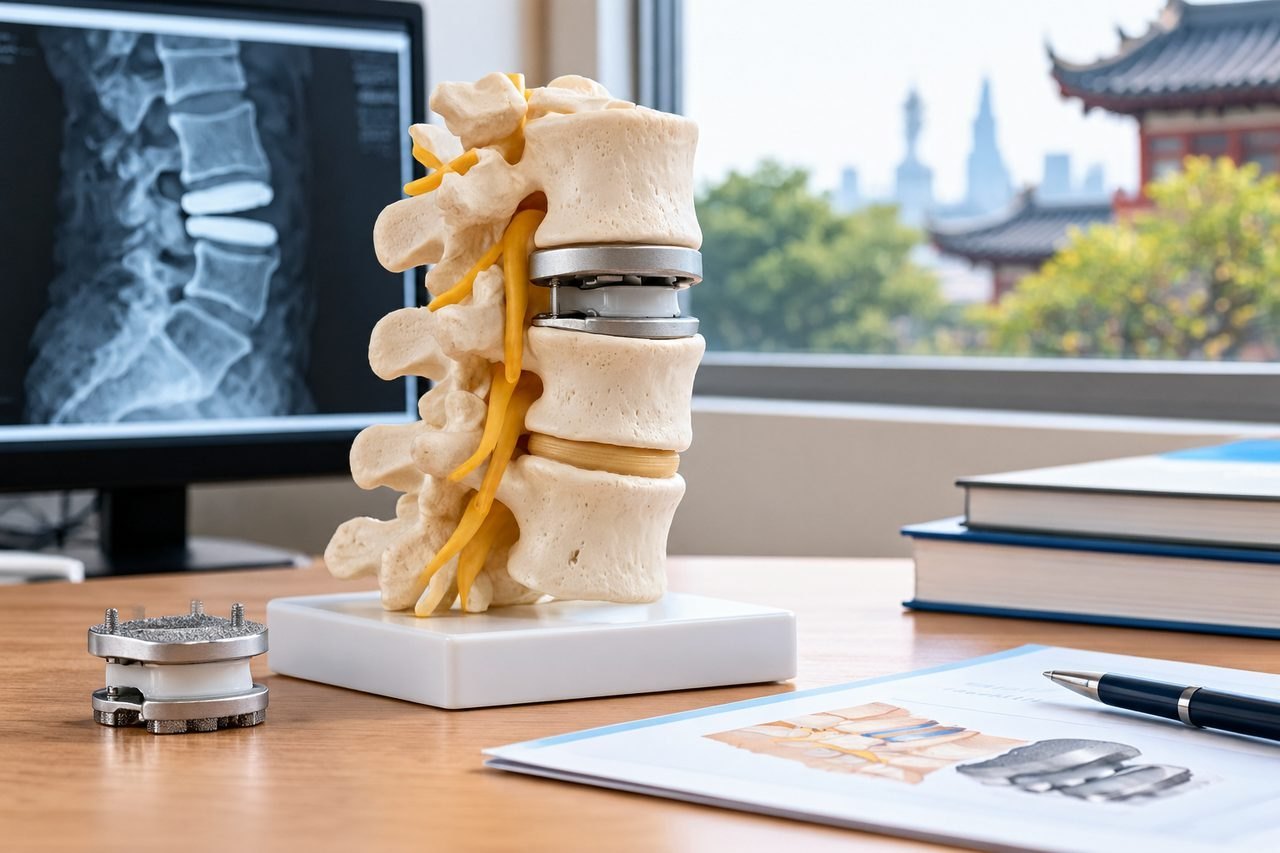
When surgery is discussed for cervical radiculopathy, two broad directions may be raised: fusion, which stabilises a segment, and motion-preserving options such as disc replacement, which aim to retain movement. These are different procedures with different selection criteria, and the choice depends on the level involved, the condition of the disc and joints, bone quality, prior surgery and the surgeon's assessment.
A file that lacks standing or dynamic X-rays, a clear MRI report and a documented neurological examination may leave the specialist unable to say whether a motion-preserving option is even relevant to your case. It may also leave unclear whether the problem is at one level or several.
This is a question to put to the treating team directly: based on my records, which procedures are you considering, and what additional information would change that view? Ask them to explain the reasoning in writing if you are comparing options across providers. A records-based opinion can clarify the discussion, but it does not confirm that any procedure is suitable for you.
If you want CSC to help organise a specialist appointment request or interpret records during a visit, that can be discussed as a coordination service. It does not replace the hospital's own assessment, and it does not decide suitability.
How to frame your enquiry so the gaps are visible
A useful first message to any China provider is short and specific. State your main question, summarise your symptoms and treatments, and list what records you have and what you are still trying to obtain. That lets the team tell you what is missing before you spend time and money on a fuller review.
Avoid sending a complete medical archive in the first contact. A brief summary is enough to start. After first contact, you can share records through the channel the team confirms. Do not send passport numbers, card details or sensitive identifiers in an initial enquiry.
When you write, ask concrete questions: Which records do you need to answer my question? Is a remote records review appropriate here, or do you need an in-person examination first? What would you need to see before discussing surgery? These questions surface the limits of a partial file instead of hiding them.
If a provider replies with a treatment recommendation before seeing your examination findings or imaging, treat that as a prompt to ask what the recommendation is based on. A responsible answer will name the evidence and the uncertainties.
What to confirm before you plan travel or payment
Before committing to travel, confirm in writing what has actually been arranged. An appointment request is not the same as a confirmed clinical plan. Ask whether the specialist has reviewed your records, what the appointment is expected to cover, and what additional tests or examinations may be needed in China before any treatment decision.
Ask about the scope of any written estimate: which professional fees, investigations, hospital charges and follow-up visits it covers, which items are excluded, and who is paid for each part. Coordination fees and hospital medical fees are separate. If a figure is not in the written quote, ask for it rather than assuming.
Ask what happens if the in-person assessment changes the picture. A scan reviewed remotely may look different when the clinician examines you. Confirm how a revised plan would be discussed and what that would mean for timing and cost.
Finally, keep your local care in place. A China enquiry is a planning step, not a reason to pause treatment or ignore worsening symptoms. The hospital decides suitability; no coordination service can promise acceptance, a particular surgeon or an outcome.
Sources & scope of this guide
References and official service information relevant to this guide.
This is general planning information and has not been individually reviewed by a doctor. Medical decisions and personal treatment advice come from your treating clinicians.