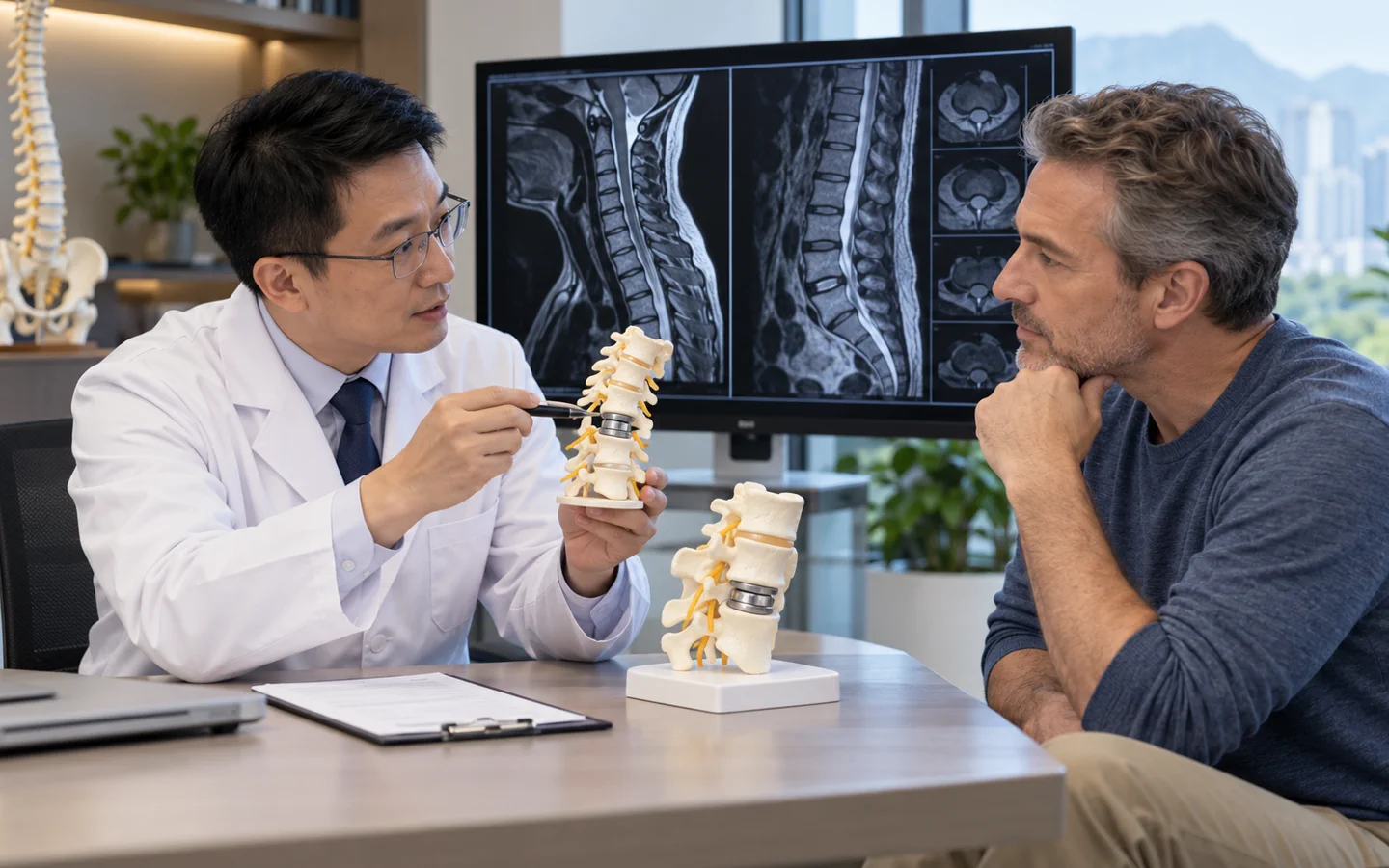
What artificial disc replacement means
Artificial disc replacement removes a damaged disc and inserts a mobile prosthesis between two vertebrae. Unlike fusion, it is intended to preserve movement at the treated level. Cervical disc replacement is used for selected neck conditions; lumbar disc replacement has narrower and more controversial indications.
Motion preservation is not automatically superior. A mobile implant needs healthy enough facet joints, stable alignment and suitable bone. The procedure treats a specific disc level; it does not prevent all future degeneration or guarantee unrestricted movement.
The anatomy, access risks, evidence and eligibility differ. A recommendation must name the level, diagnosis, implant type and realistic alternative.
Who may be considered?
A surgeon may consider disc replacement when symptoms and anatomy align, such as:.
- Cervical nerve-root or spinal-cord compression from one or selected adjacent disc levels.
- Persistent symptoms despite appropriate non-surgical care when delay is safe.
- Preserved facet-joint function and no major instability or deformity.
- Adequate bone quality and anatomy for the approved implant.
- For lumbar replacement, a highly selected disc problem after careful exclusion of other pain sources.
What the hospital needs to assess
MRI identifies disc and nerve pathology; standing and flexion-extension X-rays assess alignment and motion; CT may evaluate facets, bone and calcification. Bone density, previous surgery, implant allergy history and the number of diseased levels matter. For lumbar pain, the diagnostic uncertainty is especially important.
Key points for this treatment
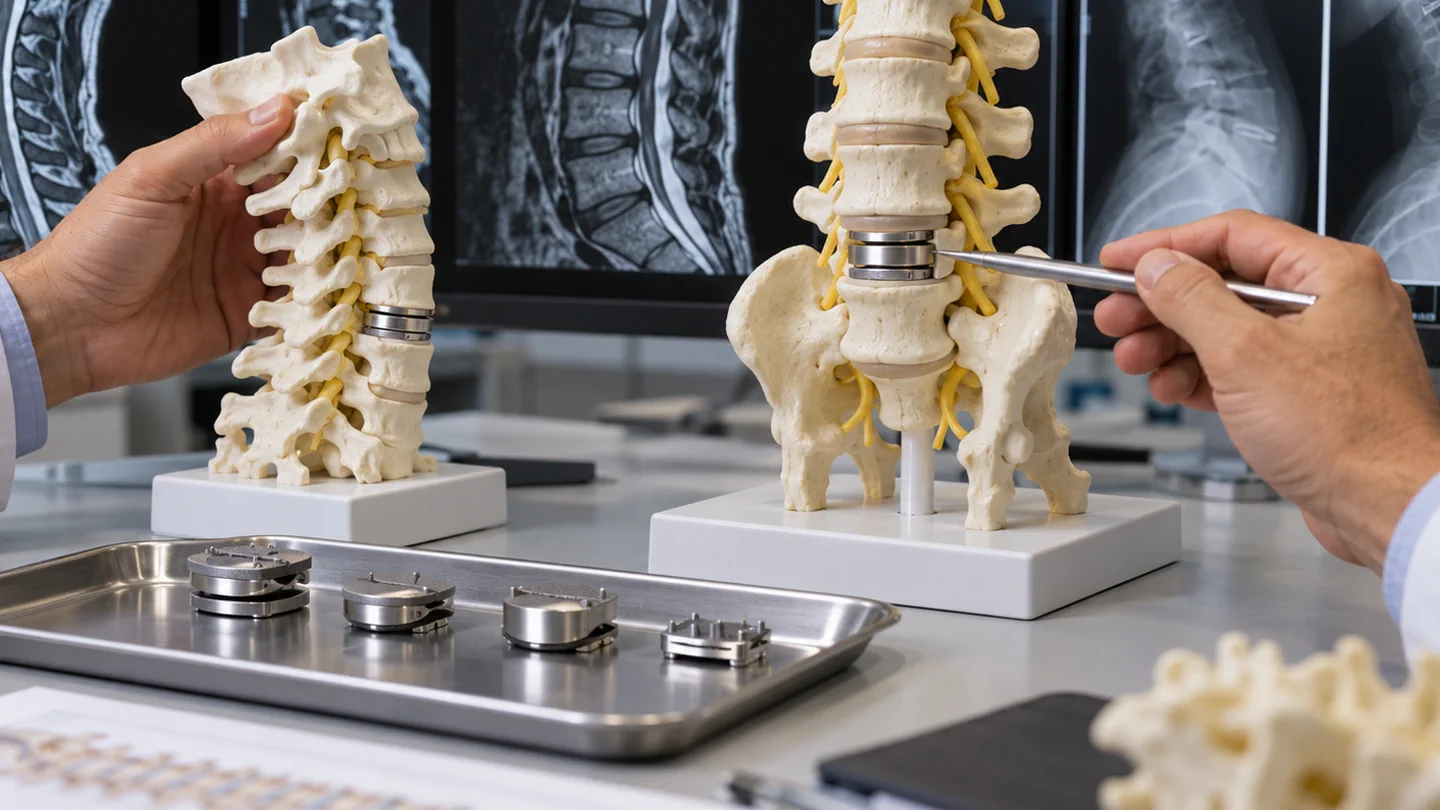
How the disc is replaced
The spine is usually approached from the front. The surgeon removes the damaged disc and compressing tissue, prepares the vertebral endplates and inserts the prosthesis at the planned depth and alignment. Correct sizing and position are important for motion and stability.
Cervical surgery passes near the swallowing and voice structures. Lumbar surgery requires access past abdominal organs and major blood vessels, often with an access surgeon. The prosthesis design and regulatory approval vary, so implant name, approved levels and surgeon experience should be confirmed.
Hospital stay and recovery
Walking starts early when medically appropriate. Restrictions depend on the level and approach. After cervical replacement, swallowing and voice are monitored; after lumbar replacement, abdominal and vascular recovery also matters.
Follow-up X-rays assess implant position and movement. Return to work and sport is staged; preserved motion is a design goal, not permission to skip tissue healing or neurological recovery.

Risks and realistic expectations
Risks include infection, bleeding, blood clots, nerve or spinal-cord injury, spinal-fluid leak, persistent symptoms, implant migration, wear, loosening, abnormal bone formation that reduces motion and later revision. Cervical access can affect swallowing or voice; lumbar access can injure abdominal structures, nerves or major vessels.
New weakness, loss of bladder or bowel control, breathing or severe swallowing difficulty, fever, wound drainage, chest pain or rapidly worsening pain requires urgent review.