
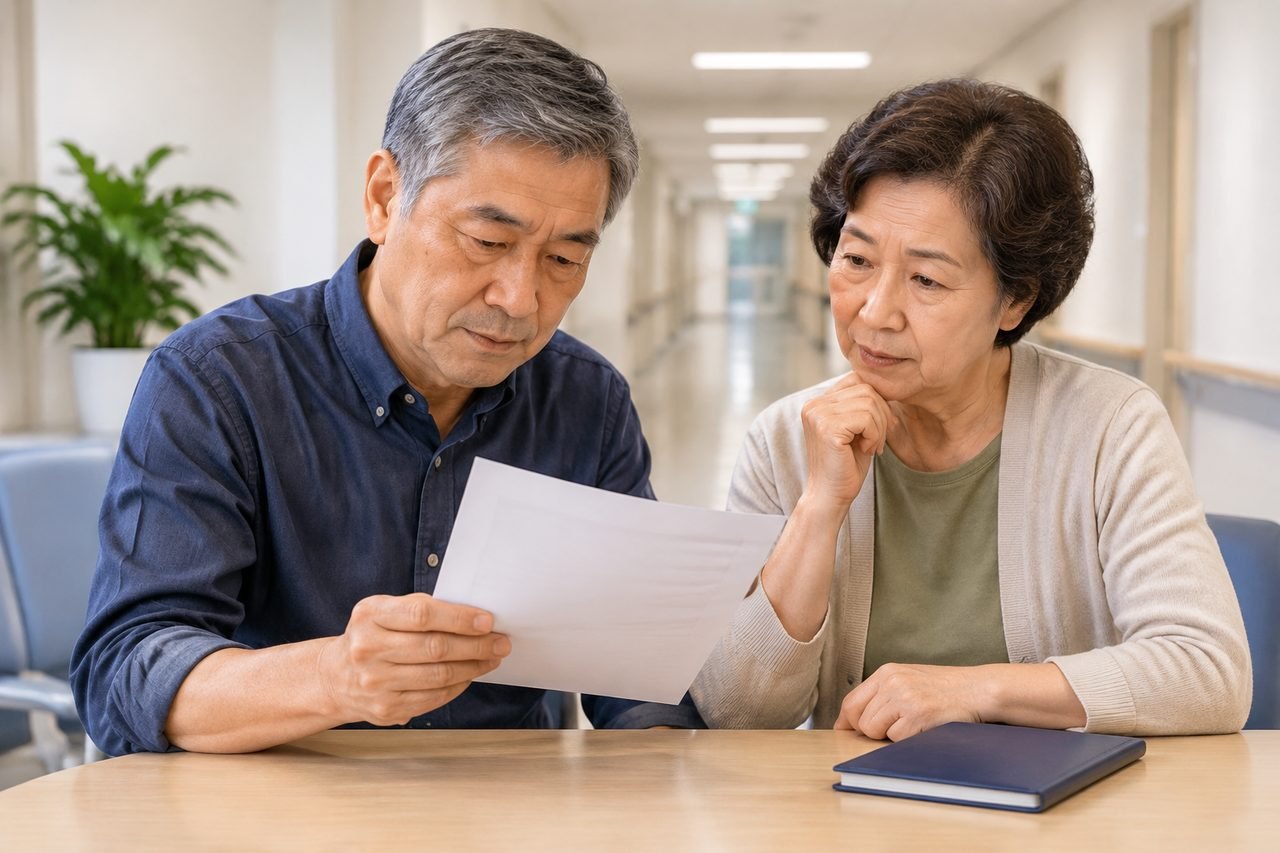
Why a Chinese prescription can be hard to read
Prescriptions written in a Chinese hospital are usually in Chinese, and the drug may appear under a brand name rather than the international generic name you know. Handwriting, abbreviations and local brand naming can all make the paper look unfamiliar even when the medicine itself is one you have taken before. That is why the first task is not to guess from the shape of the characters but to get an explicit, item-by-item explanation from someone qualified to give it.
There is a second layer of difficulty for an overseas patient: the prescription is written for a particular person, with a particular diagnosis, kidney and liver function, other medicines and allergies in mind. A drug name that looks familiar does not tell you whether this strength or this schedule is right for you. Treat the prescription as a clinical instruction that needs translation and confirmation, not as a shopping list you can match against your home supply.
Keep the original paper and any electronic record. If you later see another clinician, in China or at home, the original prescription is more useful than a photograph of a box, because it shows who prescribed what, when and in what amount.
The items to confirm before you accept the medicine
Ask the prescriber or a hospital pharmacist to walk through the prescription with you in English and confirm each of the following. If any item cannot be confirmed, do not start the medicine until it is.
Patient identity. Confirm that the name, date of birth or other identifier on the prescription matches you. Mix-ups are uncommon but the check costs nothing.
Exact drug name. Ask for both the name written on the paper and the international nonproprietary name, so you can compare it with your own records and with any medicine you already take at home.
Strength and form. Confirm the dose per tablet, capsule, vial or sachet, and whether it is a tablet, liquid, injection or topical product. A familiar name in an unfamiliar strength is a real source of error.
Directions. Confirm how many units, how many times a day, at what times, with or without food, and for how many days. Ask what to do if you miss a dose.
Duration and review. Ask how long you should take it, what to do with leftover medicine, and when the prescriber wants to see you again.
Ask for the explanation to be written down in English alongside the Chinese, or request a written summary you can keep. A verbal explanation is easy to lose once you leave the building.
Medicines you already take, allergies and pregnancy
The most important conversation is not about the new medicine alone. Bring a complete list of everything you take, including over-the-counter products, supplements, herbal preparations and anything you use occasionally. Give it to the prescriber before the prescription is finalised, and ask specifically whether the new medicine interacts with any of them.
Allergies matter in the same way. State any reaction you have had to a medicine, including rash, swelling, breathing difficulty or a less obvious reaction, and ask whether the prescribed drug belongs to a group you have reacted to before. If you have had a serious reaction, say so clearly rather than describing it as a mild allergy.
If you are pregnant, may be pregnant, or are breastfeeding, tell the prescriber before accepting the medicine. Suitability in pregnancy and breastfeeding is a clinical judgement that depends on the drug, the dose and your situation, and it should be made by the treating clinician, not inferred from a leaflet or a website.
Ask the prescriber what side effects you should watch for and which ones would mean stopping the medicine and seeking care. Write the answer down. If you develop a new symptom after starting, contact the prescriber or a local clinician rather than adjusting the dose yourself.
The pharmacy, the label and what you take home
In China, as elsewhere, the pharmacy dispenses what the prescriber ordered. Check that the box or bottle you receive matches the prescription: the drug name, the strength, the form and the quantity. If the packaging is in Chinese only, ask the pharmacist to mark the dose and timing on the box in a way you can read, or to provide a written English schedule.
Ask the pharmacist how the medicine should be stored, whether it needs refrigeration, and how long it remains usable after opening. These details are often on the packaging but not always in a language you read.
If you are given a substitute brand, ask whether it contains the same active ingredient at the same strength as the prescribed product. Substitution is a normal pharmacy practice in many countries, but you should know what you are taking and why it changed.
Keep the pharmacy receipt and the outer packaging until you have finished the course. If a problem arises, they identify the batch and the product. Do not remove medicines from their original packaging before you travel, because the label is part of the record.
Taking a Chinese prescription home across a border
Whether you may bring a medicine into another country depends on that country's rules, not on the Chinese prescription. Some medicines that are ordinary prescriptions in China are controlled or prohibited elsewhere, and some countries require a prescription, an import permit or a limited quantity. A Chinese prescription does not by itself authorise entry into another country.
Before you travel, check the destination country's customs or medicines regulator for the specific drug, and ask the prescriber for a letter describing the medicine, the dose and the reason it was prescribed. Keep the medicine in its original labelled packaging and carry the prescription and letter with you rather than in checked luggage.
If the medicine is unavailable or restricted at home, ask the prescriber in China and your own clinician at home how to manage the transition. Do not stop a prescribed medicine abruptly because of a travel or supply problem without clinical advice.
Customs and import decisions belong to the border authorities. A coordination service can help you prepare documents and ask the right questions, but it cannot decide whether a medicine may cross a border.
When to ask for help and what to send first
If you cannot get a clear English explanation of a prescription before you leave the hospital, ask to speak to a hospital pharmacist or to the prescriber again. If you have already left and are unsure what you are taking, do not guess from the packaging. Contact the prescribing hospital, or a local clinician who can review the paper with you.
For a planned visit to China, a brief summary of your diagnosis, current medicines, allergies and the main question is enough to start. Our team can help identify what needs clarifying and suggest the relevant next step, but the prescription itself, its suitability and any changes belong to the treating hospital and licensed clinicians. An initial enquiry is free and does not commit you to a proxy consultation.
If you have a serious reaction, worsening symptoms or difficulty breathing after taking a medicine, seek urgent local medical care rather than waiting for an email reply.
Sources & scope of this guide
References and official service information relevant to this guide.
This is general planning information and has not been individually reviewed by a doctor. Medical decisions and personal treatment advice come from your treating clinicians.