Why an initial estimate is a starting scope, not a final bill
When a hospital in China sends an initial written estimate for cochlear implantation, it is pricing a defined set of items based on the information available at that moment. That information may come from your referral letter, audiograms, imaging reports or a records-based review. If any of those documents are missing, incomplete or older than the clinical picture, the estimate is built on assumptions the hospital has not yet verified.
This matters because cochlear implantation is not a single transaction. It involves hearing evaluation, candidacy assessment, device selection, the surgical procedure itself, post-operative checks and a series of programming visits. Some of those steps happen before surgery, some during the admission and some over months afterwards. An estimate that covers the operation may not cover the full pathway.
The practical consequence is simple: an initial estimate tells you what the hospital has priced so far, not what the entire course of care will cost. Treat it as a scope document to be read carefully, not as a guaranteed ceiling. Ask the hospital to state explicitly which stages of the pathway are inside the quoted scope and which are outside it.
Items that commonly sit outside a first estimate
The following categories are worth checking line by line, because they are the ones most likely to appear later as separate charges or as items the hospital has not yet decided. This is not a claim about how any particular hospital in China bills; it is a list of questions to put to the provider whose estimate you are holding.
Pre-operative assessment. Hearing tests, speech perception testing, balance assessment, imaging such as CT or MRI, and any laboratory work may be listed separately or may not appear at all if the hospital is waiting for your records. Ask which assessments are included, which are still to be ordered, and whether the estimate assumes they will be done at the same hospital.
Device and implant selection. The internal implant and the external sound processor are chosen by the clinical team together with you. Different devices have different prices, and the estimate may name one option or leave the choice open. Ask whether the quoted figure is tied to a specific device, what happens if the team recommends a different one, and whether accessories, spare parts or a replacement processor are inside the scope.
Surgical and admission items. Beyond the surgeon's fee, an admission can involve anaesthesia, operating theatre time, intensive care or high-dependency observation, medications, dressings, and a hospital room at a particular ward level. Ask the hospital to confirm which of these are included and which are billed separately.
Programming and rehabilitation. After the implant is activated, the device needs programming sessions and the patient needs listening practice and rehabilitation. These visits may extend over many months. Ask how many programming sessions the estimate covers, whether rehabilitation is included, and what the charge is for sessions beyond the quoted number.
Follow-up and complications. Ask what the estimate assumes about routine follow-up, and how the hospital handles any additional care if a complication occurs. Do not assume that a complication is covered by the original figure; ask the hospital to explain its policy in writing.
How to read the written scope line by line
A useful estimate separates three things: what is included, what is excluded, and what is undecided. Many estimates blend these together, which makes it hard to know where you stand. When you receive the document, go through it and mark each line as one of those three categories. If a line is ambiguous, write down the specific question it raises.
Pay attention to wording such as 'estimated', 'subject to change', 'depending on clinical findings' or 'not included'. These phrases are not necessarily a problem, but they tell you where the hospital has not yet committed to a figure. Ask what clinical finding would change the number and by what mechanism you would be informed.
Check who the payee is for each item. Some charges are paid to the hospital, some to a device supplier and some to a separate service. Ask the hospital to confirm, for each major line, who issues the invoice and when payment is expected. This is an administrative question, not a clinical one, and the hospital's billing office should be able to answer it.
Finally, ask how the estimate will be updated. If the clinical plan changes after further assessment, will you receive a revised written estimate before the additional charge is incurred? Get the answer in writing, along with the name of the person or office that issues revisions.
Hearing assessment, surgery and programming across visits and countries
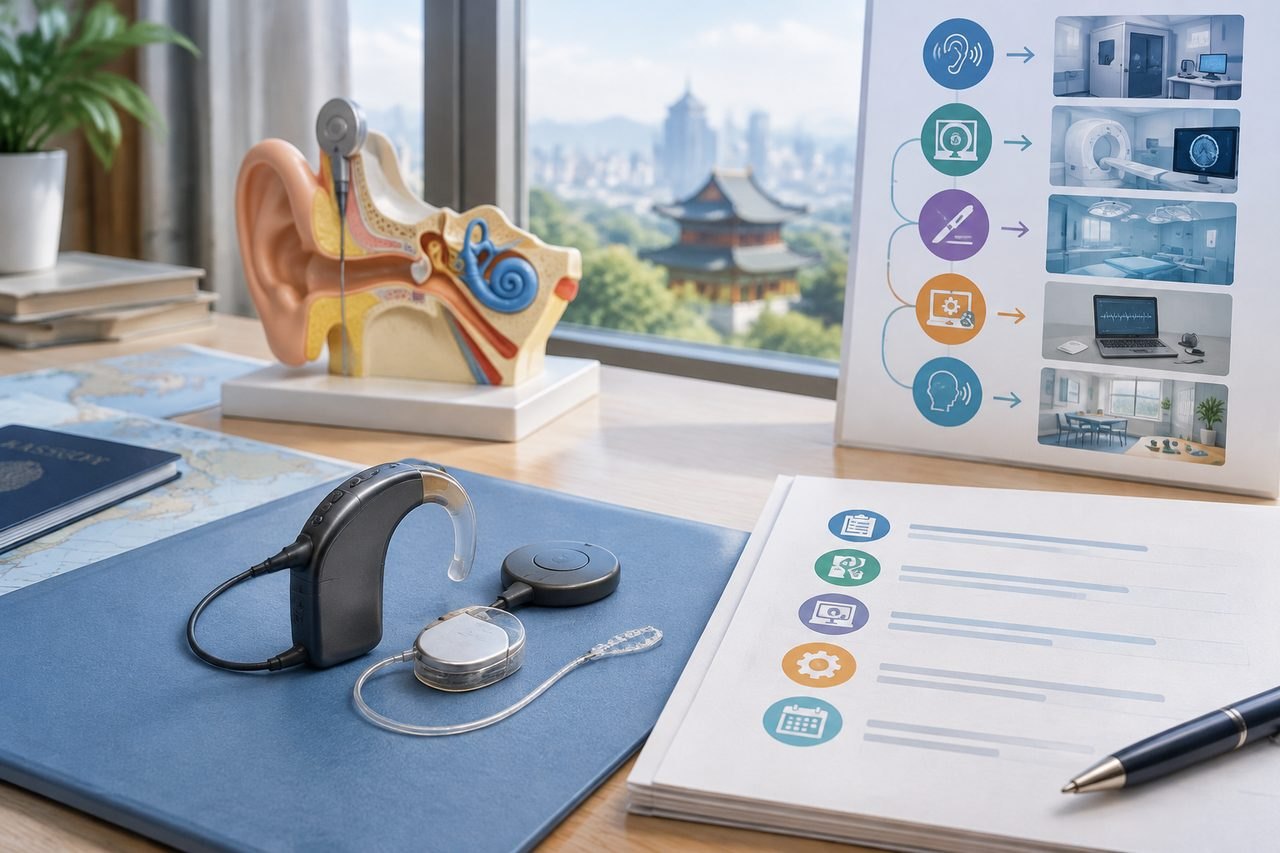
Cochlear implantation is considered for some severe permanent hearing loss when hearing aids do not help sufficiently. The system includes external and surgically implanted components. That description tells you the treatment involves both a procedure and ongoing device use, which is why the cost pathway is longer than a single operation.
If you are travelling to China from another country, the sequence of visits matters for your budget as well as your schedule. Assessment may happen on one trip, surgery on another, and activation and programming over subsequent visits. Ask the hospital how it would structure these stages for your case, and whether any stage can be combined with another. Do not assume that everything can be completed in one trip; ask the clinical team to explain what is realistic for your situation.
Ask where each stage would take place. If some programming or rehabilitation could be done in your home country, ask the hospital whether it supports that arrangement and how records would be shared. The receiving clinician abroad makes their own judgement about taking on follow-up; the Chinese hospital cannot decide that for them.
Finally, ask what happens if you cannot return for a scheduled programming visit. What alternatives does the hospital offer, and what would that change about the cost? These are questions to confirm with the provider, not assumptions to make in advance.
Sources & scope of this guide
References and official service information relevant to this guide.
This is general planning information and has not been individually reviewed by a doctor. Medical decisions and personal treatment advice come from your treating clinicians.