Home / ENT (Ear, Nose & Throat) / Cochlear Implantation
ENT patient guide · 人工耳蜗植入

Cochlear Implants in China

Considering cochlear implants in China? Start with hearing evaluation, implant selection and programming visits. This guide helps you identify the relevant records, questions for the receiving team and the scope of an individual estimate before a visit is agreed.

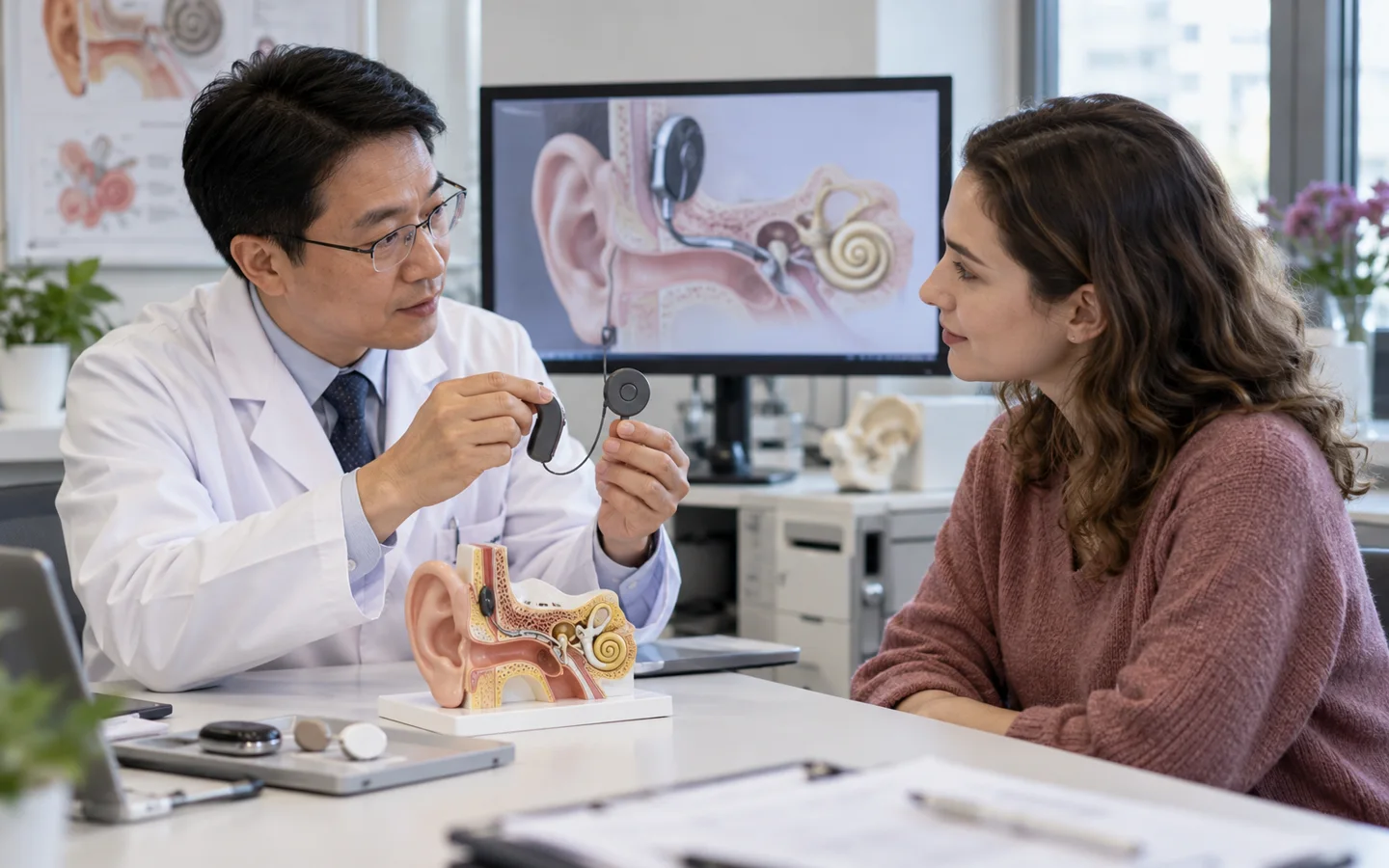
Chinese ENT specialist explaining cochlear implant components and the hearing rehabilitation pathway to a fully clothed international patient

Medical records & cost enquiry

Cochlear Implants: assessment and cost questions

For Cochlear Implantation, the budget depends on the proposed care and the hospital. A useful estimate needs to distinguish:

  • One side or both sides
  • Implant system and hearing assessment
  • Programming and hearing rehabilitation

Hospital medical fees, travel and our coordination services are separate. Any paid specialist review or coordination service is explained and agreed before you proceed.

Your next step

Start with your question

Tell us your diagnosis and what you need. Our free initial review checks the information and helps identify a suitable next step; it is not a specialist opinion or a hospital quotation.

Request a case-based estimate

Not ready to send records? Ask us first. Where hospital review is appropriate, we can help request an estimate. No travel commitment or mandatory proxy consultation.

Planning cochlear implants in ChinaHospital review · individual costs · visit and follow-up

Plan the visit around hearing evaluation, implant selection and programming visits. Agree the assessment route before travel.

Records for the cochlear implants review

Tell us what you already have: Diagnostic and aided audiograms; Speech perception test results; Hearing-aid fitting and use history. Start with a short summary; after first contact we explain which records the receiving team needs and how to share them.

Confirm the proposed scope and costs

Before asking for a personal estimate, clarify: One side or both sides; Implant system and hearing assessment; Programming and hearing rehabilitation. The receiving team confirms the proposed scope and hospital charges; coordination is agreed separately.

Visits and care after returning home

Ask how hearing assessments, surgery if appropriate, programming and rehabilitation would fit across visits and countries. Tell us if you need interpretation or English-language documents, and confirm the relevant arrangements with the receiving team.

Cochlear Implantation: diagnosis, function and long-term planning

Cochlear Implantation is considered when severe or profound sensorineural hearing loss provides limited useful speech understanding with well-fitted hearing aids.

Implant candidacy depends on aided speech testing, cochlear and nerve anatomy, communication goals, age at hearing loss, rehabilitation access and whether residual acoustic hearing should be preserved.

Who may be considered?

Specialist review may help when hearing loss remains disabling despite optimized hearing technology or the diagnosis raises questions about implantability.

  • Adults with severe hearing loss and poor aided speech understanding.
  • Children meeting age-specific auditory and developmental criteria.
  • Selected patients with single-sided deafness or asymmetric loss after specialist review.
  • Patients able to participate in programming and auditory rehabilitation.

What the specialist team must confirm

Review unaided and aided audiograms, speech perception in quiet and noise, hearing-aid verification, CT or MRI of the cochlea and auditory nerve, vaccination status, balance, communication method and educational or rehabilitation support.

Key points for this treatment

Purposeelectrical access to sound
Before surgeryaudiology and hearing-aid trial
After surgeryactivation and mapping
Successcommunication benefit varies
Chinese multidisciplinary ENT team reviewing audiograms speech testing temporal-bone imaging device selection and hearing-preservation goals
The operation is only one part of hearing restorationBenefit develops through activation, repeated mapping and structured listening practice after wound healing.

From aided testing to stable implant mapping

Device choice, surgical access, residual-hearing strategy and the first months of programming should be agreed before travel.

ConfirmVerify aided hearing limitations
MapReview cochlea and auditory nerve
ImplantPlace internal receiver and electrode
ActivateProgram and rehabilitate hearing

Activation begins a long rehabilitation process

The incision and ear are checked before the external processor is activated, commonly after initial healing.

Mapping sessions adjust stimulation as listening experience grows, while audiology measures speech understanding and device use.

Fully clothed international patient completing cochlear implant activation mapping and listening rehabilitation with a Chinese ENT clinician
Programming turns electrical signals into useful soundConsistent processor use and rehabilitation matter as much as technically successful implantation.
Improving speech accessContinue mapping and practice
Limited progressRecheck device anatomy and rehabilitation
Balance symptomsAssess vestibular function
Device concernArrange integrity testing promptly

Risks, limits and realistic expectations

Risks include infection, taste disturbance, dizziness, tinnitus change, facial-nerve injury, cerebrospinal-fluid leak, loss of residual hearing, device failure and need for revision.

Do not delay urgent local care

Fever, increasing wound swelling, facial weakness, severe vertigo, clear fluid leakage or sudden device-site pain requires prompt local assessment.

Before hospital review

Records for cochlear implants assessment

A safe international review depends on dated source reports, original imaging and a complete treatment timeline—not a diagnosis label alone.

Diagnostic and aided audiograms
Speech perception test results
Hearing-aid fitting and use history
Temporal-bone CT or MRI DICOM
Vaccination record
Balance and ear infection history
Communication and education assessment
Prior ear surgery records

Tell us what you need

Ask about your care,
your hospital and your budget.

You can ask about suitability, an expert opinion, an appointment or the likely medical cost. If you are unsure, choose “Not sure — please advise”.

This enquiry is aboutCochlear ImplantationNot sure — please advise

How a personal estimate is prepared

  1. Tell us about your case.Describe your diagnosis, main question and preferred city, if any.
  2. Share the relevant records.We explain what is needed and how to send it by WhatsApp or email.
  3. Request a hospital estimate.Where appropriate, we help request hospital review and a cost estimate. Any paid review is agreed first.

This is an enquiry, not an order or payment. Proxy consultation is not mandatory. Any service scope is agreed separately before you proceed.

Ask about Cochlear Implantation

A first enquiry is free. Email and permission to respond are required; the other details are optional. Any paid clinical review or coordination is discussed separately.

Included automatically so we know which procedure you are asking about.
A preference, not a confirmed appointment.
Please do not send passport numbers, card details or full medical files in this first enquiry. We will explain which records are needed next.

Send a short summary first. This is an enquiry, not an order, payment or confirmed appointment.

No booking or payment is made by sending this enquiry.
Editorial transparency

Medical sources

Patient information is based on established government and professional guidance. Content updated 5 October 2026. This is patient information, not an individual clinical assessment.