
Why a short, written question list works better than a long one
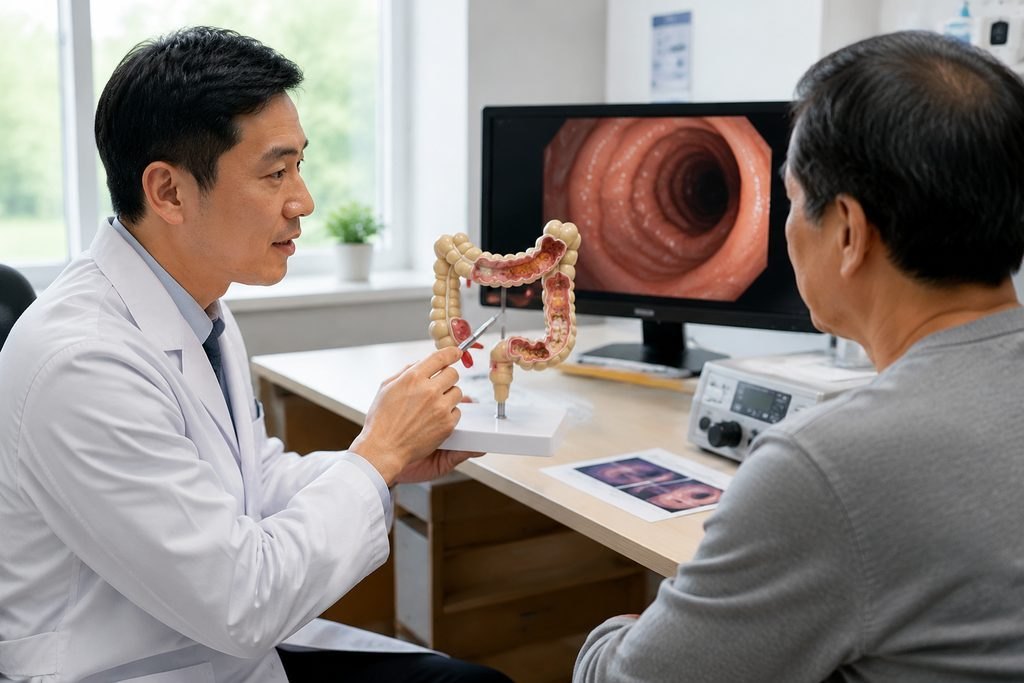
A first in-person meeting with a gastroenterologist in China usually has a fixed time slot. If you arrive with twenty questions, the clinician may answer only the first few before the appointment ends. If you arrive with three to five written questions, you can cover each one and note the answer. The written list also helps if you are using an interpreter, because the interpreter can translate each question exactly rather than summarising.
The purpose of the first discussion is not to settle every detail of your care. It is to confirm whether a colonoscopy is appropriate for your situation, what the specialist needs from you before deciding, and what the next administrative step is. Questions about recovery, diet, medication changes or results interpretation belong to the treating team and should be asked when they become relevant, not all at once at the start.
Write your questions in your own language first, then have them translated if needed. Number them. Leave space under each one for the answer. At the end of the meeting, read back the answers you wrote down and ask the clinician to confirm they are correct. This simple step prevents misunderstandings that can affect later planning.
Which records to bring and how to label them
The specialist will want to see the records that already exist, not a complete archive of your medical life. A compact folder with clear labels is more useful than a large unsorted file. Bring copies, not originals, so you can leave a set with the hospital if requested.
The exact records a Chinese hospital requires for a colonoscopy discussion can vary by institution and by your individual situation. Ask the receiving team in advance what they want to see. As a starting point, patients often bring previous endoscopy or colonoscopy reports, relevant imaging reports, pathology reports if any, a current medication list, and a short summary of your main digestive symptoms and how long you have had them. Confirm with the hospital whether translated copies are needed and in what language.
Label each document with your name, the date it was produced and the name of the facility that produced it. If a report is in a language other than Chinese or English, ask the hospital whether a certified translation is required. Do not assume that a report from your home country will be accepted without question; the receiving clinician decides what is useful.
If you do not have a particular record, say so clearly rather than leaving the clinician to guess. A missing document is a question to resolve, not a reason to delay necessary local care. If you have urgent or worsening symptoms, seek local medical assessment first and treat the China planning as a separate step.
Questions that belong in the first meeting
The first meeting is the right place for questions about suitability, scope and next steps. It is not the right place for questions that depend on findings that do not yet exist. Frame your list around decisions you need to make now.
Useful questions include: Is a colonoscopy appropriate for my situation based on the records I have brought? What information is missing that would change your recommendation? What are the alternatives to colonoscopy for my case, and what are the trade-offs? What preparation will I need, and who will give me those instructions? Will sedation be used, and what should I arrange for transport and supervision afterwards? What is the expected next step after this discussion?
Avoid asking the specialist to predict results or to confirm a diagnosis before the procedure. Also avoid asking for a fixed recovery time or a guaranteed report date. Those depend on the procedure itself and on the hospital's own processes. If you need a planning estimate, ask the hospital's international office or patient service desk, not the clinician during a short consultation.
Write down the answers in the same order as your questions. If an answer is unclear, ask the clinician to repeat it or to write the key term. At the end, summarise what you understood and ask whether your summary is accurate.
What the specialist must confirm and what remains open
The treating clinician decides whether a colonoscopy is suitable for you, what preparation is needed and what follow-up is appropriate. A coordinator or planning service does not make those decisions. This distinction matters because it tells you which questions to bring to the clinician and which to bring to the hospital's administrative team.
The clinician must confirm: whether the procedure is indicated, what records are still needed, what alternatives exist, what the preparation involves and what safety instructions apply to you. The hospital's administrative team can confirm: appointment scheduling, interpretation arrangements, payment scope and what the written quote includes. Keep these two sets of questions separate so neither gets lost.
If you receive a preliminary reply before the in-person meeting, treat it as provisional. A records-based opinion or an initial case review does not establish final suitability, and it does not replace the in-person assessment. Ask what remains to be confirmed and who will confirm it.
Do not assume that a service fee paid for coordination covers any hospital charge. Hospital fees, test fees and medicine costs are paid to the hospital or relevant provider. Coordination fees are separate. Ask for a written scope before you commit to any payment.
Practical preparation for the appointment itself
Confirm the appointment time, location and expected duration with the hospital or your coordinator before the day. Ask whether an interpreter will be present and whether that person has medical interpretation experience. If you are bringing your own interpreter, tell the hospital in advance.
Arrive with your labelled records, your written question list and a pen. If you take regular medication, bring a current list with doses and the name of the prescriber. Do not change any medication before the appointment unless a licensed clinician has told you to do so.
Ask the clinician before the appointment ends: what is the next step, who is responsible for it, and when should I expect to hear back? Write down the answer. If the next step depends on a test or a document you need to obtain, ask exactly what is needed and where it should be sent.
If you are planning travel to China for this discussion, keep the trip focused on the appointment and any confirmed next steps. Do not book non-refundable travel around a procedure date that has not been confirmed in writing by the hospital.
How ChinaSpecialistCare can help with this step
ChinaSpecialistCare can help you organise your existing records into a clear summary, request a specialist appointment at a suitable hospital and arrange interpretation for the in-person discussion. We do not decide whether a colonoscopy is appropriate, prescribe preparation or confirm hospital acceptance. Those decisions belong to the treating clinician and the hospital.
If you would like help preparing your question list or requesting an appointment, you can start with a brief enquiry. An initial enquiry is free and does not require buying a proxy consultation. You can share a short summary of your situation by the enquiry form, email or WhatsApp, and our team will explain what information would be useful next.
For confirmed service details, see the colonoscopy reference page linked below. It explains the procedure context, while this guide focuses on how to prepare for the first in-person conversation.
Sources & scope of this guide
References and official service information relevant to this guide.
This is general planning information and has not been individually reviewed by a doctor. Medical decisions and personal treatment advice come from your treating clinicians.