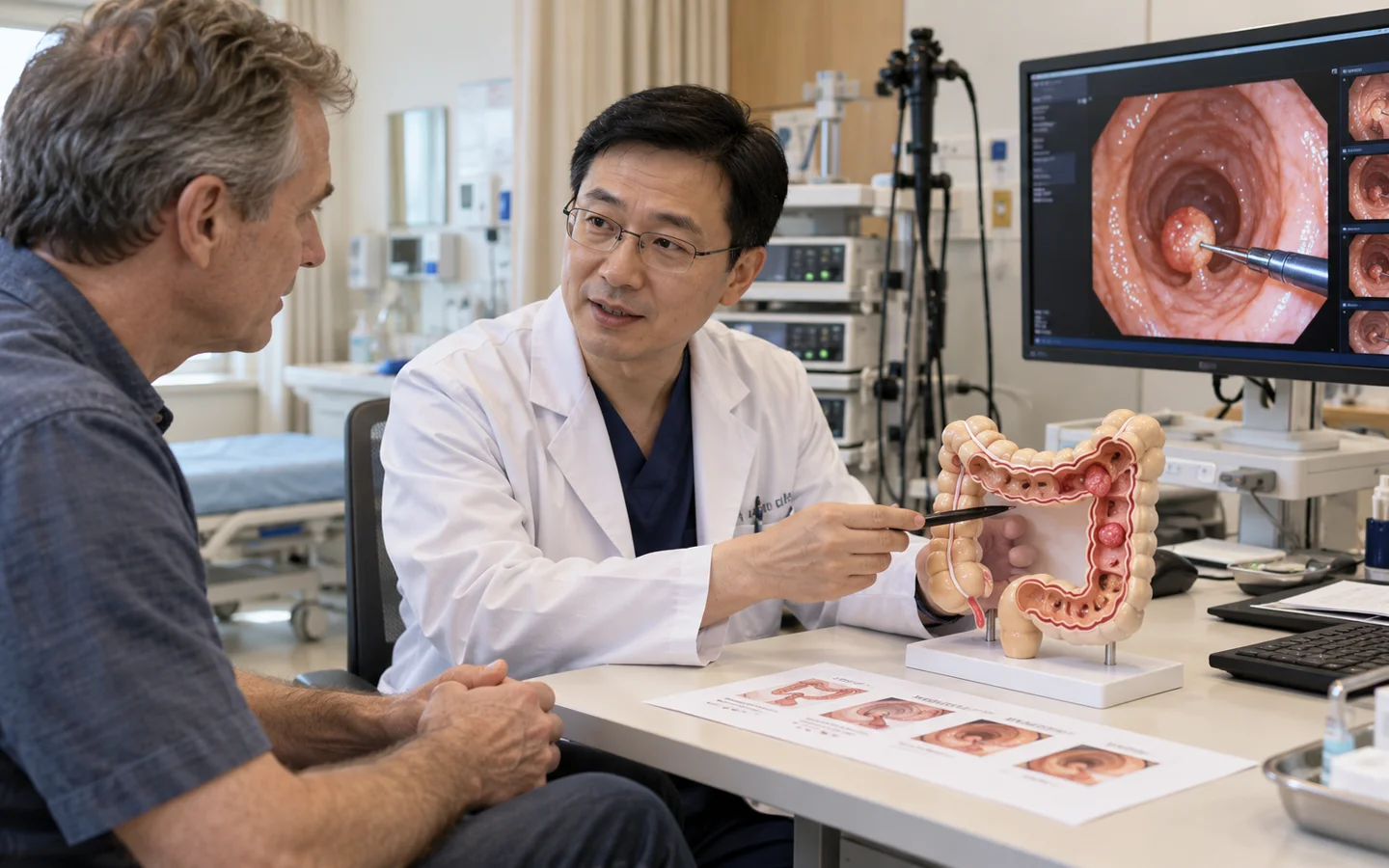
Colonoscopy examines the colon and can treat selected lesions during the same test
A flexible camera passes through the rectum around the colon. Biopsies can be taken and many polyps removed. Sedation or anesthesia practice varies.
The value of the study depends on bowel preparation, completeness, withdrawal inspection and documentation. A normal but incomplete or poorly prepared test may need repeating sooner.
Important details include bowel-preparation quality, whether the cecum was reached, number and size of polyps, resection method and pathology.
Who may be considered?
Specialist review may help when the diagnosis, symptoms and previous treatment create a focused question about colonoscopy.
- Age- or risk-based colorectal-cancer screening.
- Bleeding, iron-deficiency anemia or a change in bowel habits.
- Inflammatory bowel disease diagnosis or surveillance.
- Follow-up after polyps, cancer treatment or an abnormal imaging test.
What the specialist team must confirm
The team reviews indication, prior colonoscopy and pathology, family history, bowel symptoms, anticoagulants, diabetes medicines, kidney and heart disease, pregnancy possibility, allergies and whether preparation or sedation needs adjustment.
Key points for this treatment

From clinical question to complete documented examination
The endoscopist plans whether diagnostic biopsy, routine polypectomy or referral for advanced resection may be needed.
Pathology completes the colonoscopy result
Bloating and mild cramping may occur briefly. Sedated patients need an escort and must follow driving and activity instructions.
Polyp type, size, number, completeness of removal and bowel-preparation quality determine surveillance; the interval should not be guessed from age alone.

Risks, limits and realistic expectations
Colonoscopy can miss lesions and may cause bleeding, perforation, post-polypectomy syndrome or sedation complications. Some large or invasive lesions require a separate advanced procedure or surgery.
Severe or increasing abdominal pain, fever, persistent heavy bleeding, fainting, chest pain or breathing difficulty after colonoscopy requires urgent local care.