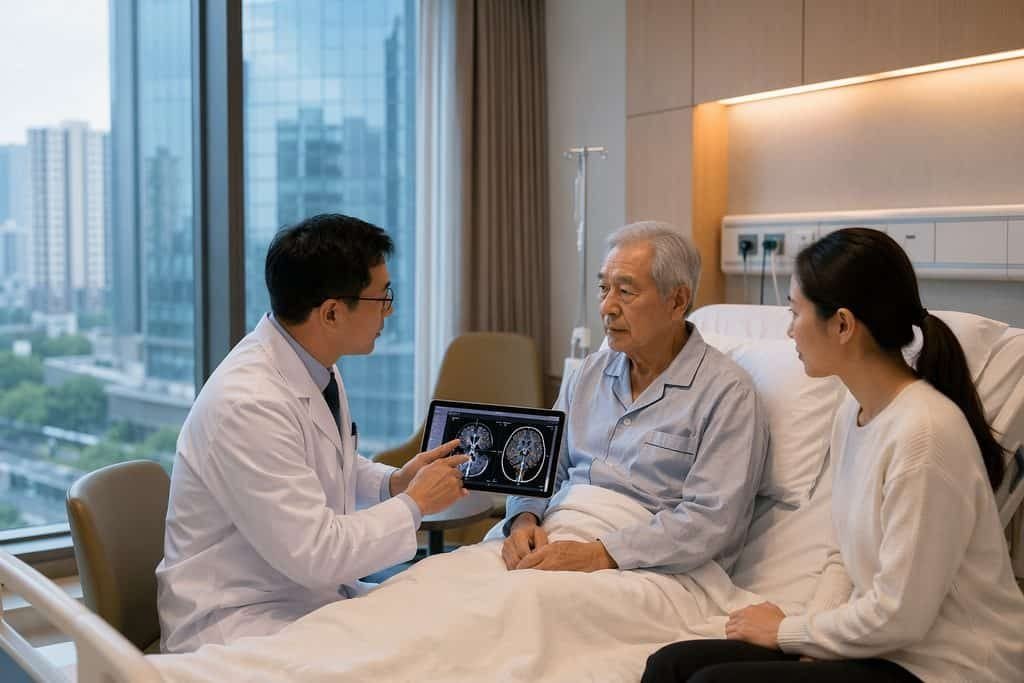
What the handover actually involves
DBS uses implanted electrodes and a pulse generator. It may help selected Parkinson's symptoms but does not cure the disease. The device itself needs periodic checks, battery monitoring and, when appropriate, programming adjustments. Those tasks sit with a clinician who has the programmer, the relevant software and the clinical context to interpret what they see.
The handover is therefore not a single document. It is a transfer of responsibility from the team that implanted and programmed the system in China to a team that will see the patient locally. That receiving team needs enough information to understand the current settings, the rationale behind them, and what has changed since surgery. Without that, a local clinician may reasonably decline to adjust a device they did not implant and cannot fully account for.
This is why the handover conversation belongs before departure, not after. A local clinic that has already agreed in principle to review the patient is far more useful than a name and phone number collected at the airport.
The records that make a handover possible
Ask the China team what they will provide in writing. The exact list depends on the hospital and the patient's history, so treat the following as items to request and confirm rather than a universal checklist.
Operative documentation matters most. This should identify the device manufacturer and model, the implanted components, the date of surgery, and any complications or revisions. The receiving clinician needs to know what is physically inside the patient before touching a programmer.
Programming history is the second pillar. Current stimulation parameters, the date and reason for each change, and the patient's response to those changes give the local team a baseline. If the China team can export or print the programmer history, that is more useful than a handwritten summary.
Medication context is the third. DBS for Parkinson's interacts with drug timing and dose, and a local neurologist will want to understand the current regimen and how it was adjusted around programming sessions. This article does not advise changing any medicine; the point is that the receiving clinician needs the record to make their own judgement.
Imaging and diagnostic reports, including the preoperative MRI and any postoperative imaging, help the local team understand electrode placement. Ask whether these can be provided as DICOM files or a disc, not only as a radiology report.
Finally, ask for a named clinical contact in China who can answer technical questions from the local team. A direct line to the programming nurse or neurologist is often more valuable than a general hospital email address.
Unresolved results and open questions
Some results may still be pending when the patient is ready to travel. A pathology report, a confirmatory imaging study or a response assessment may not be final. The receiving clinician should know what is outstanding and when it is expected.
Ask the China team to state, in writing, which results are final and which are provisional. If a result could change the programming approach or the medication plan, the local team needs to know that before they make changes.
There is also the question of unresolved symptoms. If the patient is still adjusting to stimulation, or if there are side effects that have not settled, that context should travel with the patient. A local clinician who receives only a discharge summary may not realise that a symptom is under active review.
Do not assume the local team will request these records themselves. In many health systems, the patient or family must bring them. Ask the China team how the records will be transferred, in what language, and whether a translated summary is available.
Will the receiving clinician accept the handover?
This is the question that decides everything else. A clinician near home may accept the patient, accept with conditions, or decline. Their decision depends on their own expertise, their access to the relevant programmer, their medico-legal comfort with a device they did not implant, and their current workload.
The patient or family can improve the odds by making the first contact specific. Instead of asking whether the clinic 'does DBS', describe the situation: device manufacturer and model, date of surgery, current programming status, and what is being requested. Ask whether the clinician is willing to review the records and, if so, what they need.
It helps to ask directly about the programmer. Not every neurology clinic has the manufacturer-specific equipment or software for every device. If the local clinic does not, they may refer the patient to a centre that does. That referral is a legitimate outcome, not a failure.
Ask about the clinic's process for accepting overseas records. Some clinics want a formal referral letter; others accept a patient-held summary. The answer varies by provider and country, so confirm it rather than assuming.
If the first clinician declines, ask for a recommendation. A movement disorder specialist, a neurologist with DBS experience, or a hospital-based programming service may be better placed. The goal is a named clinician who has agreed to review, not a promise of ongoing care before the records have been seen.
Communication and who does what
Once a local clinician agrees to review, clarify the division of labour. Who will programme the device? Who will manage Parkinson's medications? Who handles urgent device concerns, such as a suspected lead fracture or battery depletion?
Ask the China team what they are willing to provide after discharge. Some teams will answer specific technical questions from the local clinician; others will not. Confirm this before relying on it.
Language is a practical issue. If the records are in Chinese, ask whether an English summary can be provided. If the local clinician needs to speak with the China team, ask whether that is possible and through what channel.
Battery status deserves a specific question. Ask the China team for the current estimated battery life and the recommended monitoring interval. The local team will then decide how to act on that information.
Finally, ask what the patient should do if the device seems to malfunction before a local appointment is arranged. The answer should come from a clinician, not from this article. The China team and the local team may give different instructions; the patient needs a clear plan.
A practical sequence before leaving China
Start the local search while still in China. Identify two or three potential clinicians or centres near home and contact them with a short summary. Ask whether they are willing to review DBS records and what they need.
Request the records package from the China team. Confirm what will be included, in what format, and in what language. Ask for a named clinical contact.
Once a local clinician agrees to review, share the records with them before the first appointment if their process allows. Ask what they will need at the visit itself.
Keep a single folder, paper and electronic, with the operative note, device details, programming history, medication list, imaging and pending results. Bring it to every appointment.
If no local clinician has agreed before departure, ask the China team for guidance on interim monitoring and how to escalate a device concern. Do not leave without a plan for who to contact if something changes.
ChinaSpecialistCare can help coordinate the China-side records and, where relevant, a specialist appointment or records-based review. An initial enquiry is free and does not commit the patient to a proxy consultation. The hospital and the receiving clinician decide suitability and acceptance.
Sources & scope of this guide
References and official service information relevant to this guide.
This is general planning information and has not been individually reviewed by a doctor. Medical decisions and personal treatment advice come from your treating clinicians.