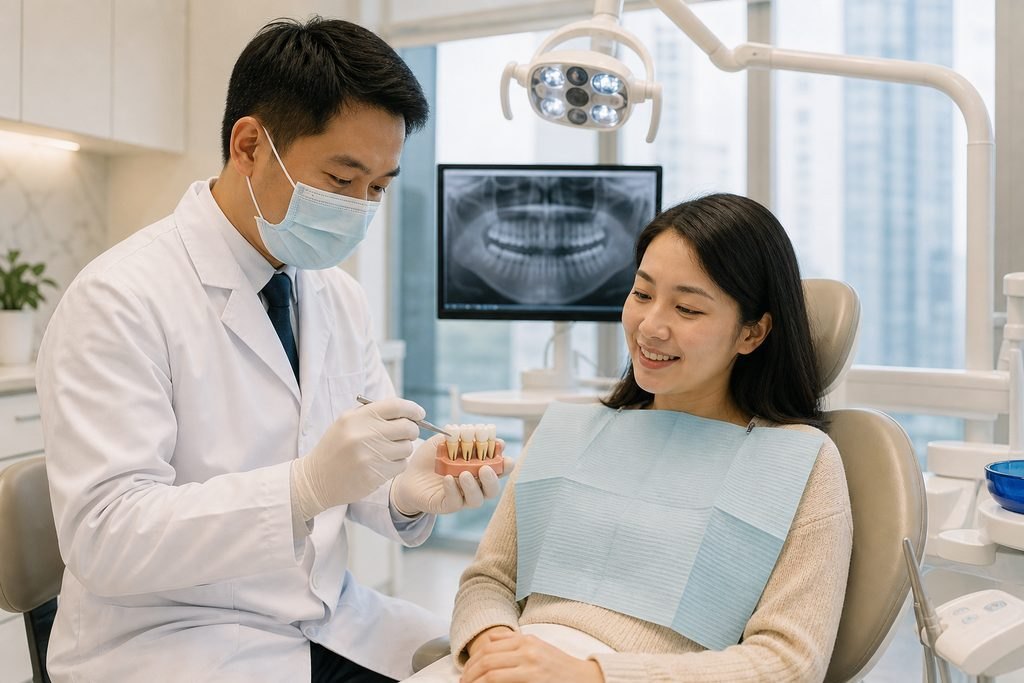
What a Crown Can and Cannot Change
A crown is a cap that covers a tooth. It can protect a tooth that has been weakened by decay, a large filling or a fracture, and it can restore the shape and appearance of a tooth that has been damaged. The dentist prepares the tooth, takes an impression or scan, and a dental laboratory makes the crown to fit that prepared shape. In many cases a temporary restoration is worn while the final crown is being made, so you are not left with a bare prepared tooth between visits.
What a crown cannot do is replace missing tooth structure that no longer exists below the gum, straighten a tilted tooth, or treat the cause of ongoing decay or gum inflammation. If the tooth root is infected, a crown alone does not remove the infection; the dentist must decide whether root canal treatment or another approach is needed first. A crown also does not stop gum disease from progressing if plaque and inflammation are not controlled. Those are separate clinical problems that need their own assessment and treatment.
The practical question for an overseas patient is not simply whether a crown is possible, but whether the tooth is stable enough to support one. A dentist needs to see the tooth, the gum, the bite and the surrounding teeth. A photograph or a written description from a previous clinic may help the first conversation, but it does not replace an examination. If you have current pain, swelling or a loose tooth, that needs local assessment before you plan travel.
What a Bridge Can and Cannot Replace
A bridge replaces one or more missing teeth. It typically uses the teeth on either side of the gap as supports, which means those neighbouring teeth are prepared to carry the bridge. The bridge is fixed in place and cannot be removed by the patient. It can restore chewing on that side and improve appearance, and it can prevent the remaining teeth from drifting into the gap over time.
A bridge cannot replace the bone that was lost when the tooth was removed. It also cannot be used if the supporting teeth are not strong enough, if gum disease is active, or if the gap is too long for a fixed bridge to be stable. In those situations a dentist may discuss other options, such as an implant-supported restoration or a removable partial denture. That decision belongs to the treating clinician after examining the mouth, not to an online description.
The number of teeth involved matters for both planning and cost. A single missing tooth may need a three-unit bridge, while a longer gap may need more units or a different design. The dentist should explain which teeth are included in the plan and which teeth are being prepared as supports. If that is not clear, ask for it in writing before treatment starts.
Materials and Visit Stages: What to Confirm
Crowns and bridges can be made from different materials, including metal, ceramic and combinations of both. Each material has different strength, appearance and wear characteristics. The right choice depends on where the tooth sits in the mouth, how much force it takes during chewing, and whether appearance is a priority. A dentist should explain the options and the trade-offs for your specific tooth rather than offering one material as universally best.
Dental laboratory work often involves more than one visit. A temporary restoration may be fitted while the final one is being made, and the final restoration is then checked for fit, bite and appearance before it is cemented. The number of visits depends on the laboratory, the material and the complexity of the case. Do not assume a fixed number of appointments; ask the treating clinic how it plans the stages for your case and whether any stage can be combined.
For an overseas patient, the useful questions are concrete. Ask which teeth are included in the estimate, what material is proposed, whether a temporary restoration will be used, and what the plan is if the final restoration needs adjustment. Ask how the clinic handles a crown or bridge that feels high or uncomfortable after you return home. Those answers tell you more about the practical fit than a general description of the procedure.
Why Individual Differences Change the Answer
Two patients with the same missing tooth can need different treatment. One may have healthy supporting teeth and stable gums; another may have bone loss, active gum disease or a bite that puts heavy force on the bridge. A dentist assessing the second patient may recommend treating the gum condition first, or may advise against a fixed bridge altogether. That is not a failure of the treatment; it is the difference between a restoration that lasts and one that fails early.
Medical history also matters. Conditions that affect healing, medications that affect bleeding or dry mouth, and habits such as grinding or clenching can all influence the plan. The treating dentist needs to know about these before preparing teeth. If you take medication or have a chronic condition, bring that information to the consultation rather than assuming it is irrelevant to a dental procedure.
Age and the stage of tooth development matter for younger patients, and the condition of the opposing teeth matters for everyone. A crown or bridge is part of a whole mouth, not an isolated product. The dentist should look at how the upper and lower teeth meet and whether the new restoration will change the bite. If that assessment is skipped, the restoration may fit the tooth but not the mouth.
Records and Questions Before You Travel
A useful first step is to gather what you already have. Recent dental X-rays, a treatment note from your dentist, and clear photographs of the teeth in question can help a clinic understand your situation before you arrive. They do not replace an in-person examination, and the treating dentist will still need to assess the tooth and gums directly. Ask the clinic what records it finds useful and how it prefers to receive them.
When you contact a clinic in China, ask specific questions rather than a general request for a price. Ask what the written estimate includes: which teeth, which material, the temporary restoration, the final fitting and any review visits. Ask what is not included and what would change the plan. Ask whether the clinic can provide the estimate in English and whether it explains the stages in writing. A clear answer to those questions is more useful than a headline figure.
It is also reasonable to ask how the clinic handles follow-up if you return home before a problem appears. Some adjustments can be managed by a local dentist; others may need the original clinic's input. Ask what records the clinic will give you at the end of treatment so another dentist can understand what was done. That is a practical question, not a sign of distrust.
What the Dentist Must Decide, and Your Next Step
The decision about whether a crown or bridge is suitable belongs to the treating dentist after examining your mouth. No article, photograph or remote opinion can confirm that a specific tooth can be restored, that a bridge will fit, or that treatment can be completed in a set number of visits. Those are clinical judgements based on the tooth, the gum, the bite and your medical history. A clinic may also need to confirm its own scheduling and laboratory arrangements for your case.
If you are considering treatment in China, start with a brief enquiry. ChinaSpecialistCare can help you describe your situation, identify what records may be useful, and ask the relevant clinic the practical questions about teeth included, materials, visit stages and follow-up. An initial enquiry is free and does not commit you to a proxy consultation or to treatment. The hospital or clinic decides whether it can accept your case and what it recommends.
Before you travel, confirm the plan in writing with the treating clinic: which teeth, which material, how many stages, what the estimate includes, and what happens if adjustment is needed. If you have pain, swelling or a loose tooth now, seek local dental care first rather than waiting for an overseas appointment. A crown or bridge can address a specific restorative problem, but it is not a substitute for treating active disease or for a full assessment of your mouth.
Sources & scope of this guide
References and official service information relevant to this guide.
This is general planning information and has not been individually reviewed by a doctor. Medical decisions and personal treatment advice come from your treating clinicians.