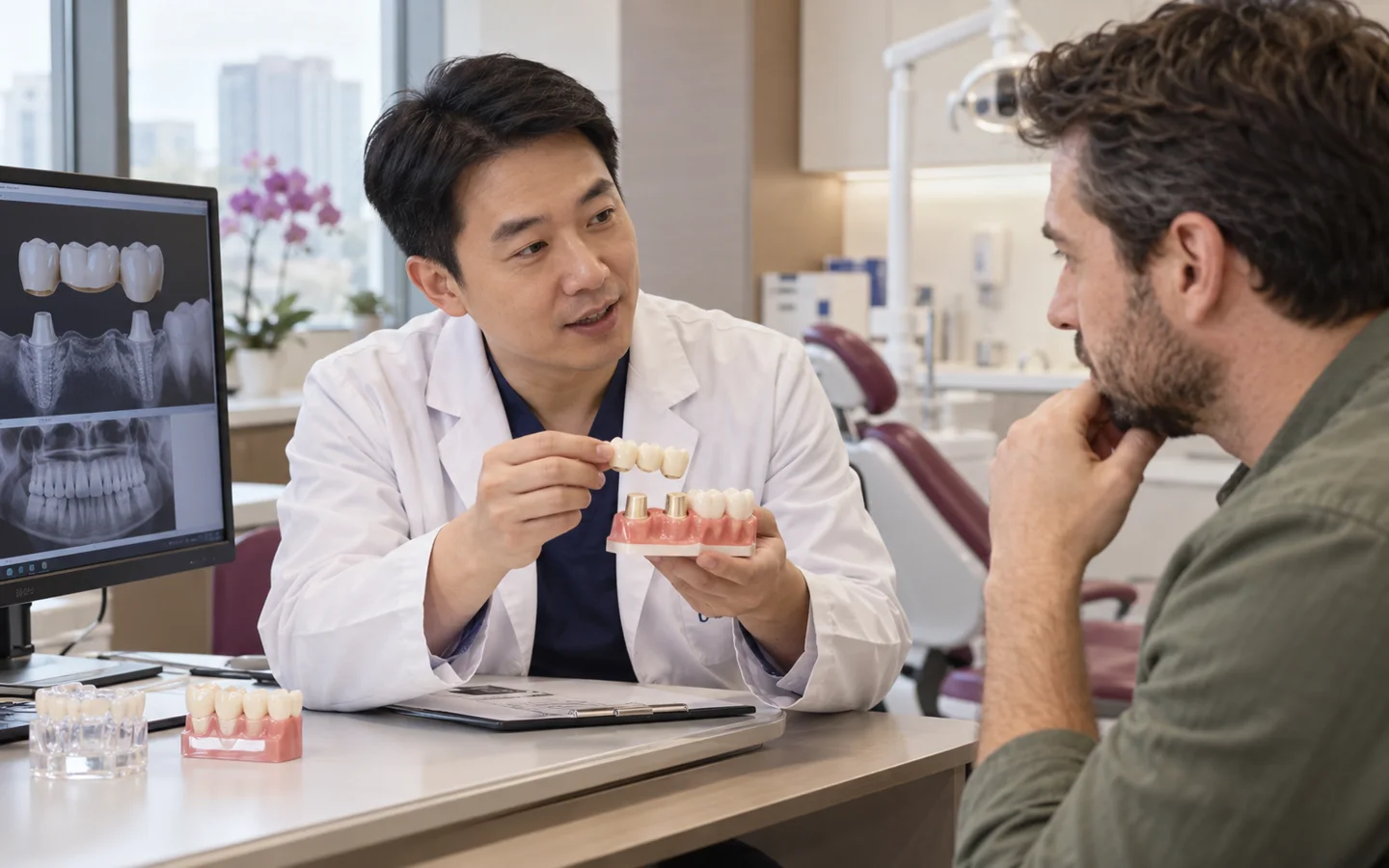
Crowns and Bridges: diagnosis, function and long-term planning
Crowns and Bridges is considered when damaged or missing teeth require fixed restoration and the supporting teeth have a defensible long-term prognosis.
Restoration design should preserve tooth tissue, control decay and gum disease, distribute force and allow cleaning; weakening sound teeth for a bridge may not be the best answer when alternatives exist.
Who may be considered?
Specialist review may help when fractured, heavily restored or missing teeth affect function and fixed options need a prognosis-based comparison.
- A structurally compromised but restorable tooth.
- A root-treated tooth needing cuspal protection.
- A short missing-tooth space with strong suitable supports.
- A patient able to maintain margins and bridge cleaning.
What the specialist team must confirm
Review tooth vitality or root-canal quality, remaining tooth structure, cracks, periodontal support, decay risk, bite, parafunction, adjacent teeth, radiographs and aesthetic requirements.
Key points for this treatment

From tooth prognosis to a repairable fixed restoration
Temporary restorations should protect the teeth and provide a chance to review comfort, contour and appearance.
Margins, bite and supporting teeth require continuing review
Short-term sensitivity or gum tenderness may occur, while a temporary restoration needs protection before final cementation.
Cleaning beneath bridges, controlling decay and grinding and checking cement or ceramic prevent small problems from becoming tooth loss.
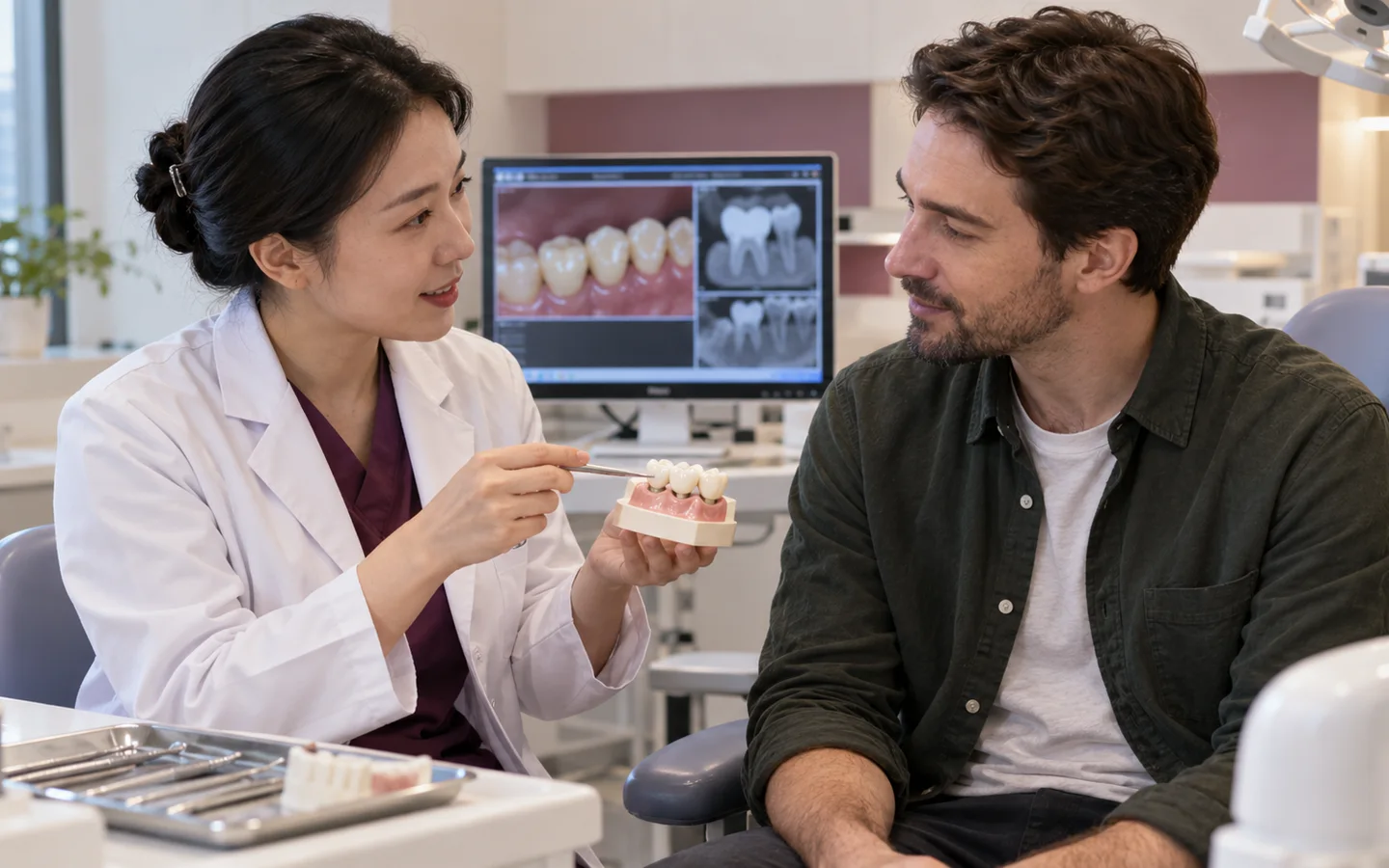
Risks, limits and realistic expectations
Risks include sensitivity, pulp injury, root-canal treatment, decay at margins, gum inflammation, fracture, debonding, aesthetic mismatch and loss of a supporting tooth.
Facial swelling, fever, severe spontaneous pain, trauma, aspiration risk or a loose restoration that prevents eating needs prompt local care.