Why the Material Question Comes Before the Appointment
Patients often arrive at a dental clinic with a clear idea of what they want fixed but no clear idea of what will be placed in their mouth. That gap matters because a crown and a bridge are not single objects. They are restorations built from materials chosen for a specific tooth, a specific bite and a specific cosmetic result. The material affects how the restoration looks, how it wears against opposing teeth, and how much healthy tooth structure must be removed to fit it.
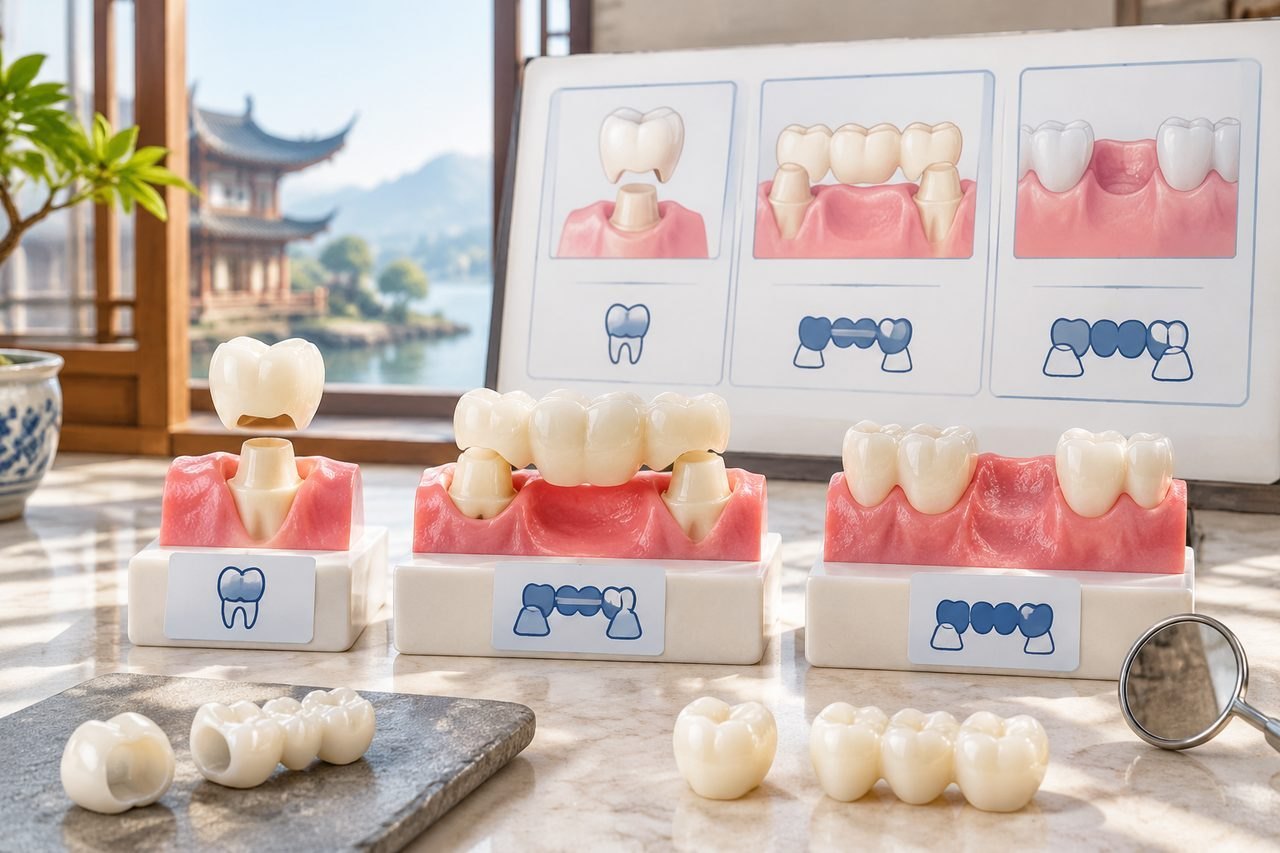
The NHS explains that a crown covers a tooth, while a bridge replaces missing teeth. Dental laboratory work may involve a temporary restoration before the final one is fitted. That is the whole clinical picture you need to start asking better questions. The rest is about making sure the plan you agree to in China matches the teeth you actually have and the result you expect.
This guide does not tell you which material is right for you. That decision belongs to the treating dentist, who can see your mouth, your X-rays and your bite. What this guide does is give you the questions that turn a vague treatment plan into a specific one you can evaluate before you travel or commit.
Which Teeth Are Included in the Estimate
A crown estimate for one tooth and a bridge estimate spanning three teeth are different treatments with different laboratory work, different material quantities and different appointment needs. Before you compare anything, ask the clinic to list the teeth by number or position. A written list removes the ambiguity that comes from phrases like 'the upper right area' or 'the back teeth'.
Ask specifically whether the estimate covers the teeth that will receive the final restoration, any teeth that will be used as bridge supports, and any tooth that will be prepared but not restored in the same stage. If a bridge is planned, the supporting teeth are part of the treatment even though they are not the missing tooth itself. Their condition affects whether a bridge is suitable at all.
This is also the point to ask whether the estimate includes any tooth that might need a different treatment first, such as a root canal or gum treatment. You are not asking the clinic to diagnose over email. You are asking what the written plan assumes about each tooth, so you can see whether those assumptions match what your own dentist has told you.
- Request a tooth-by-tooth list, not a general description of the area.
- Ask which teeth are supports for a bridge and which are being replaced.
- Ask what the plan assumes about each tooth's current condition.
- Ask whether any tooth in the plan might need separate treatment before restoration.
Temporary and Final Restorations: Two Different Material Decisions
The temporary restoration and the final restoration are separate choices. A temporary crown or bridge protects the prepared tooth or teeth while the dental laboratory makes the final restoration. It is not the same material, not the same fit and not meant to last. The final restoration is the one designed to function for the long term.
Ask what material the temporary will be made from and how long it is expected to stay in place. Ask what material the final restoration will be made from, and why that material was chosen for that specific tooth. A front tooth and a back molar often call for different materials because they face different forces and different visibility. If the clinic proposes the same material for every tooth, ask why.
You should also ask whether the temporary and final restorations are made in the same laboratory or by different providers. This is not a quality judgment. It is a practical question about who is responsible if the fit or colour needs adjustment. The answer tells you who to contact if something feels wrong after you leave the clinic.
What the Material Choice Affects in Daily Use
Material choice is not only about appearance. It affects how the restoration feels when you bite, how it wears against the opposing tooth, and how much of the natural tooth must be reshaped to make room for it. A material that looks excellent on a front tooth may not be the best choice for a molar that takes heavy chewing force.
Ask the dentist to explain the trade-offs for your specific teeth. You do not need a materials science lecture. You need to know what the proposed material is good at, what it is less good at, and what alternatives exist. If the clinic cannot explain why one material was chosen over another for a particular tooth, that is a question worth resolving before treatment starts.
This is also where you ask about colour matching. If the restoration will sit next to natural teeth, ask how the shade will be selected and whether you will have a chance to see and approve it before the final restoration is cemented. The answer may differ between a single crown and a multi-unit bridge.
Visit Stages and What Happens Between Them
Crown and bridge treatment is not a single appointment. It involves preparing the tooth or teeth, taking records, fitting a temporary restoration, and later fitting the final restoration. The number of visits and the time between them depend on the laboratory work and the clinical situation. Do not assume a fixed schedule. Ask the clinic to outline the stages for your case in writing.
Ask what happens at each stage, who you will see, and what you are expected to do between visits. If you are travelling to China for treatment, ask whether all stages can be completed within your stay or whether part of the work would need to continue after you return home. That answer affects your travel planning more than any general timeline.
Ask what the plan is if the temporary restoration comes loose or breaks before the final fitting. You need to know who to contact and what to do. This is not a sign that something will go wrong. It is basic preparation for a multi-stage treatment.
- Ask for a written stage-by-stage outline for your specific teeth.
- Ask whether all stages fit within your planned stay in China.
- Ask who to contact if the temporary restoration needs attention.
- Ask what records or images will be sent to the laboratory.
Adjustment and Maintenance After the Final Fitting
The final fitting is not always the end of the process. The bite may need adjustment after the restoration is cemented. The contact between teeth may need checking. You may need to return for a review appointment. Ask what follow-up is included in the plan and what would be considered a separate visit.
Ask how the restoration should be cleaned and whether any specific products or habits should be avoided. Ask what signs would mean you should contact the clinic rather than wait. You are not asking for a diagnosis. You are asking what the clinic's own aftercare instructions are for the treatment you are considering.
If you will return home after treatment, ask what information the clinic will provide to your own dentist. A short written summary of the materials used, the teeth treated and the date of fitting helps your local dentist understand what is in your mouth. Ask whether this is available and in what language.
The practical next step is to send a brief summary of your situation and your main question to ChinaSpecialistCare. An initial enquiry is free and does not commit you to a proxy consultation or any treatment. The team can help you identify what records to gather and what to ask the clinic before you decide whether to travel.
Sources & scope of this guide
References and official service information relevant to this guide.
This is general planning information and has not been individually reviewed by a doctor. Medical decisions and personal treatment advice come from your treating clinicians.