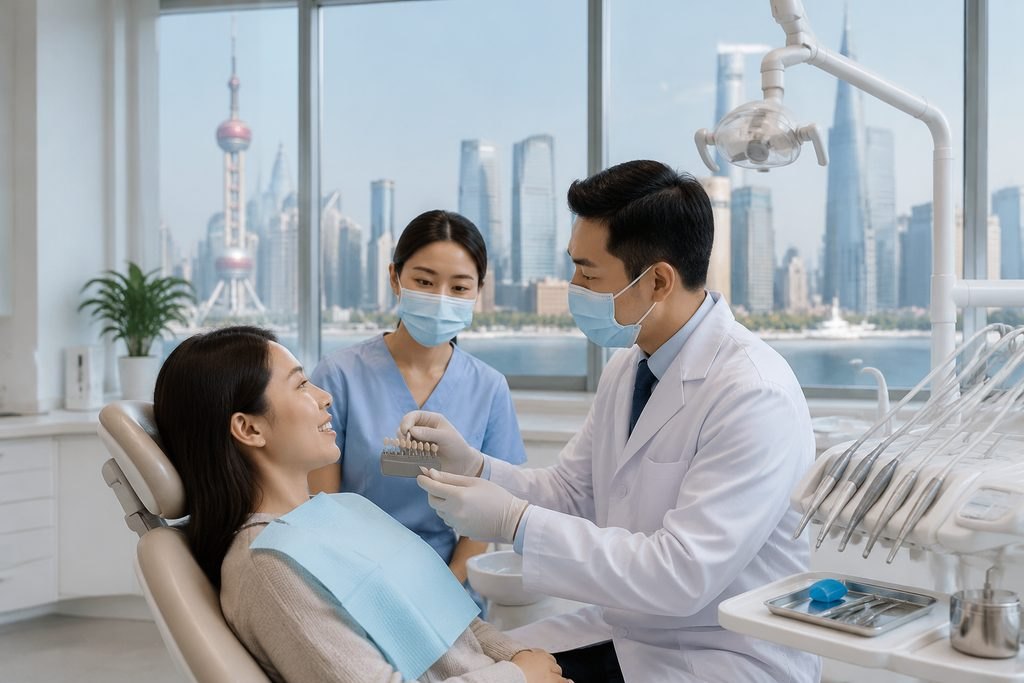
What Records Help a Dentist Understand Your Crown Case
A dental crown covers a tooth; a bridge replaces missing teeth. Dental laboratory work may involve a temporary restoration before the final one is fitted. These are general distinctions, but your case depends on the specific tooth and its condition.
If you are considering a crown in China, the first practical question is what a dentist can actually evaluate before you book travel. A records-based review is not a diagnosis, but it can clarify whether your case is straightforward or needs more information. The treating clinician in China still decides suitability and final treatment after an in-person examination.
- Recent dental X-rays showing the tooth root, bone level and adjacent teeth
- Clinical notes from your current dentist describing the tooth's condition and any previous treatment
- Clear photographs of the tooth from several angles, including the biting surface
- A short written summary of your main concern: pain, appearance, chewing difficulty or a failed old crown
- Details of any allergies, medications or medical conditions that affect dental treatment
Why Photographs and Messages Cannot Complete an Examination
Photographs can show visible damage, discolouration or the general shape of a tooth, but they cannot reveal what is happening below the gum line, inside the root or in the bone. A dentist cannot test tenderness, check the bite precisely or assess how a tooth responds to temperature or pressure through a message.
This limitation matters for planning. A records-based opinion may suggest that a crown is likely, that a root canal might be needed first, or that the tooth may not be restorable. But those are provisional possibilities, not confirmed steps. The final plan depends on clinical examination, possibly new imaging and the dentist's judgment in person.
- Ask whether your X-rays are recent enough to be useful or whether new ones will be needed in China
- Clarify if the reviewing dentist can see the tooth in question clearly in your images
- Note that a treatment plan given remotely is an estimate, not a guarantee of what will happen
Questions to Ask If a Bridge Is Proposed Instead of a Crown
Sometimes a dentist may suggest a bridge rather than a single crown, especially if a tooth is missing or cannot be saved. A bridge involves preparing adjacent teeth, so the decision affects more than one tooth. Before travelling, ask what the difference would mean for your case.
These questions help you understand the scope without committing to a plan you have not discussed with a clinician who has examined you.
- If a bridge is proposed, which teeth would be involved and why?
- What are the advantages and disadvantages of a bridge compared with a single crown or an implant in your situation?
- How would a bridge affect cleaning and maintenance around the supporting teeth?
- What happens if the supporting teeth are not healthy enough for a bridge?
- Would a temporary restoration be needed, and how would that affect your travel schedule?
Practical Preparation Before You Travel
Once you have gathered your records, the next step is to share a brief summary with a coordination team. An initial enquiry is free and does not require buying a proxy consultation. The team can check what information is available, identify gaps and suggest the relevant next step.
Keep your expectations realistic. A remote review can help you prepare questions and understand what to bring, but it cannot promise hospital acceptance, a specific dentist or a particular outcome. The treating hospital decides suitability after examining you.
- Collect your dental records and ask your current dentist for copies of X-rays and notes
- Write down your main concern and what you hope to achieve
- Prepare a list of questions for the clinical team in China
- Do not delay urgent local care if you have severe pain, swelling or signs of infection
Sources & scope of this guide
References and official service information relevant to this guide.
This is general planning information and has not been individually reviewed by a doctor. Medical decisions and personal treatment advice come from your treating clinicians.