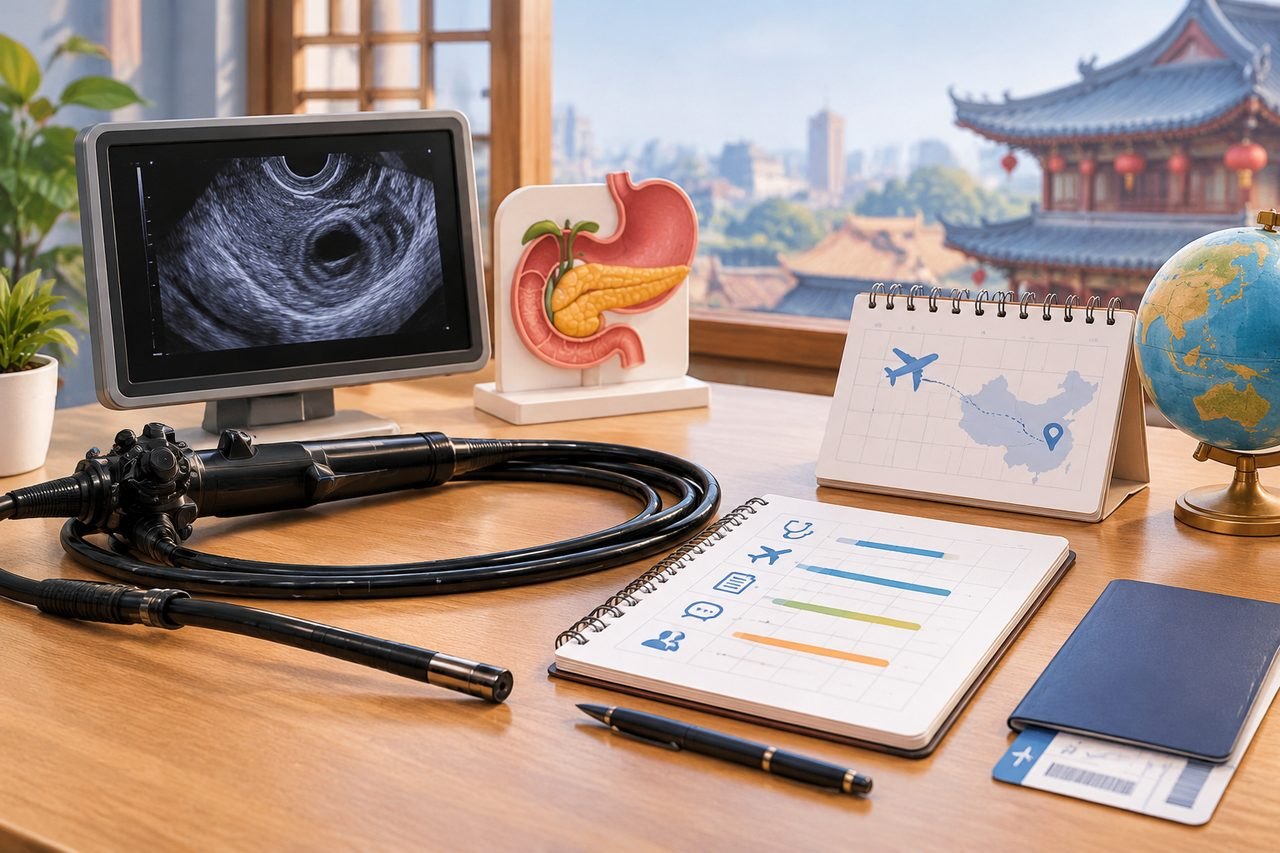
Why an EUS estimate can be narrower than the examination itself
Endoscopic ultrasound combines an endoscope with ultrasound to examine digestive structures and nearby organs. That single sentence already contains a planning problem: the examination can be proposed for different reasons, and the reason changes what the estimate needs to cover. A referral to look at a structure is not the same as a referral to obtain a tissue sample from it. If the written estimate describes only the examination, it may not describe everything the clinician later proposes.
This is why the useful question is not simply what the total cost is. The useful question is what the estimate is an estimate of. Ask the provider to name the procedure in the same words used in your referral, then ask whether that procedure includes any sampling or other intervention during the same session. If the answer is that sampling would be decided during the examination, the estimate has a boundary you need to understand before you travel.
The distinction matters because the decision to sample is often clinical and may depend on what the ultrasound shows. A plan that says sampling may be needed is not the same as a plan that includes sampling. Neither is wrong, but only one of them gives you a predictable scope.
The items most likely to sit outside a quoted examination
Rather than guess which line items a particular hospital separates, ask the named provider to classify each of the following as included, excluded or undecided in its written estimate. The point is not that these items are always charged separately. The point is that you cannot tell from a short quotation whether they are inside it.
Tissue sampling or another intervention during the same session. Ask whether the proposed examination includes biopsy, fine-needle aspiration or any other sampling, and if so, whether that is inside the quoted scope. If sampling is not included, ask what would trigger it and how the additional scope would be authorised.
Pathology processing and interpretation, if a sample is taken. A sample that is obtained still has to be examined, and that work may be handled by a different department. Ask whether pathology is inside the estimate and, if not, how it is quoted.
Additional imaging or tests requested before or after the examination. Ask whether the estimate assumes any prior imaging, blood tests or other preparation investigations, and what happens if the clinician requests more.
Sedation, anaesthesia and monitoring. Ask what level of sedation the plan assumes and whether those items are inside the quoted scope.
Hospital charges that are not procedure charges, such as bed, nursing, medicines and consumables. Ask which of these the estimate covers and which are billed by the hospital on a separate basis.
Coordination or interpretation services arranged by a third party. These are separate from hospital charges. If you use such a service, ask for its own written scope and fee rather than assuming it is folded into a hospital quotation.
Follow-up consultation or a repeat examination. Ask whether the estimate covers one visit or a pathway, and what a review appointment would add.
How to ask for a written scope you can actually rely on
A verbal answer is difficult to act on. Ask the provider to send the estimate in writing with three columns: item, status, and who authorises it. Status should be one of included, excluded or undecided. If the provider cannot mark an item as included or excluded, undecided is the honest answer, and it tells you where the uncertainty sits.
Ask specifically how an addition is authorised. Who decides that sampling is needed? Who tells you the additional scope and cost? Do you receive that in writing before the additional step, or is it confirmed afterwards? These are administrative questions, and the named provider is the only reliable source for its own process.
Ask what the estimate assumes about your clinical picture. An estimate built on one referral question may not hold if the clinician, on reviewing your records, proposes a different examination. Ask whether the estimate is conditional on a records review, and what would change it.
Ask what currency the estimate is in, when it was prepared, and how long it is held. Do not assume a quotation remains valid indefinitely. If the provider states a validity period, note it; if it does not, ask.
Keep the written estimate with your other records. If you later receive a different figure, you can compare the two documents item by item rather than trying to reconstruct a conversation.
What the examination can and cannot tell you
Endoscopic ultrasound is an examination. It is not a diagnosis by itself, and it does not predict cancer. If sampling is proposed, the sample still has to be assessed, and the result has to be interpreted in the context of your history and other investigations. A plan that treats the examination as the answer rather than as one step is worth questioning.
Preparation is individual. Diet, medication and sedation planning depend on your circumstances and on the clinician's assessment. Do not follow a generic preparation instruction from a website, including this one. Ask the treating team what applies to you, and tell them about medicines you take, allergies and previous reactions to sedation.
If you have worsening symptoms, do not delay local assessment while pursuing an overseas quotation. Urgent problems take priority over travel planning.
How the result reaches your treating team
This is a separate question from cost, and it is easy to leave until later. Ask how the examination report and, if applicable, the pathology result would be shared with the clinician who referred you. Ask whether you receive a copy, in what language, and whether images are included.
If you are coordinating care across two health systems, ask who is responsible for sending the result onward. Do not assume the receiving clinician will automatically obtain it. Confirm the route in writing, and confirm what you are expected to carry yourself.
If a decision about further treatment depends on the result, ask when that discussion would happen and with whom. The answer may be that it happens after the result is available, which is a scheduling question rather than a clinical one, but it affects your planning.
What to confirm before you commit
Before you accept an estimate or make travel arrangements, confirm the following with the named provider. First, the exact procedure name and whether sampling or another intervention is inside or outside the quoted scope. Second, the written status of each item listed above. Third, who authorises an addition and how you are informed. Fourth, how the report and any sample result reach your treating team. Fifth, what the estimate assumes about your records and what would change it.
If any of these answers is unclear, ask again in writing. A provider that cannot describe its own scope in writing is giving you information you cannot plan around. That is not a reason to assume the worst; it is a reason to keep asking until the boundary is clear.
You can begin with a short summary of your situation rather than a complete medical archive. An initial enquiry is free, and it does not commit you to a proxy consultation or to any purchase. The hospital decides whether the examination is suitable and how it would be performed. The relevant procedure reference is linked below.
A brief next step: send the referral question, any relevant imaging or reports you already have, and your specific question about what the estimate includes. Ask for the written scope in return.
Sources & scope of this guide
References and official service information relevant to this guide.
This is general planning information and has not been individually reviewed by a doctor. Medical decisions and personal treatment advice come from your treating clinicians.