Home / Gastroenterology / Endoscopic Ultrasound (EUS)
Gastroenterology patient guide · 超声内镜检查

Endoscopic Ultrasound in China

Considering endoscopic ultrasound in China? Start with imaging findings, sampling needs and examination scope. This guide helps you identify the relevant records, questions for the receiving team and the scope of an individual estimate before a visit is agreed.

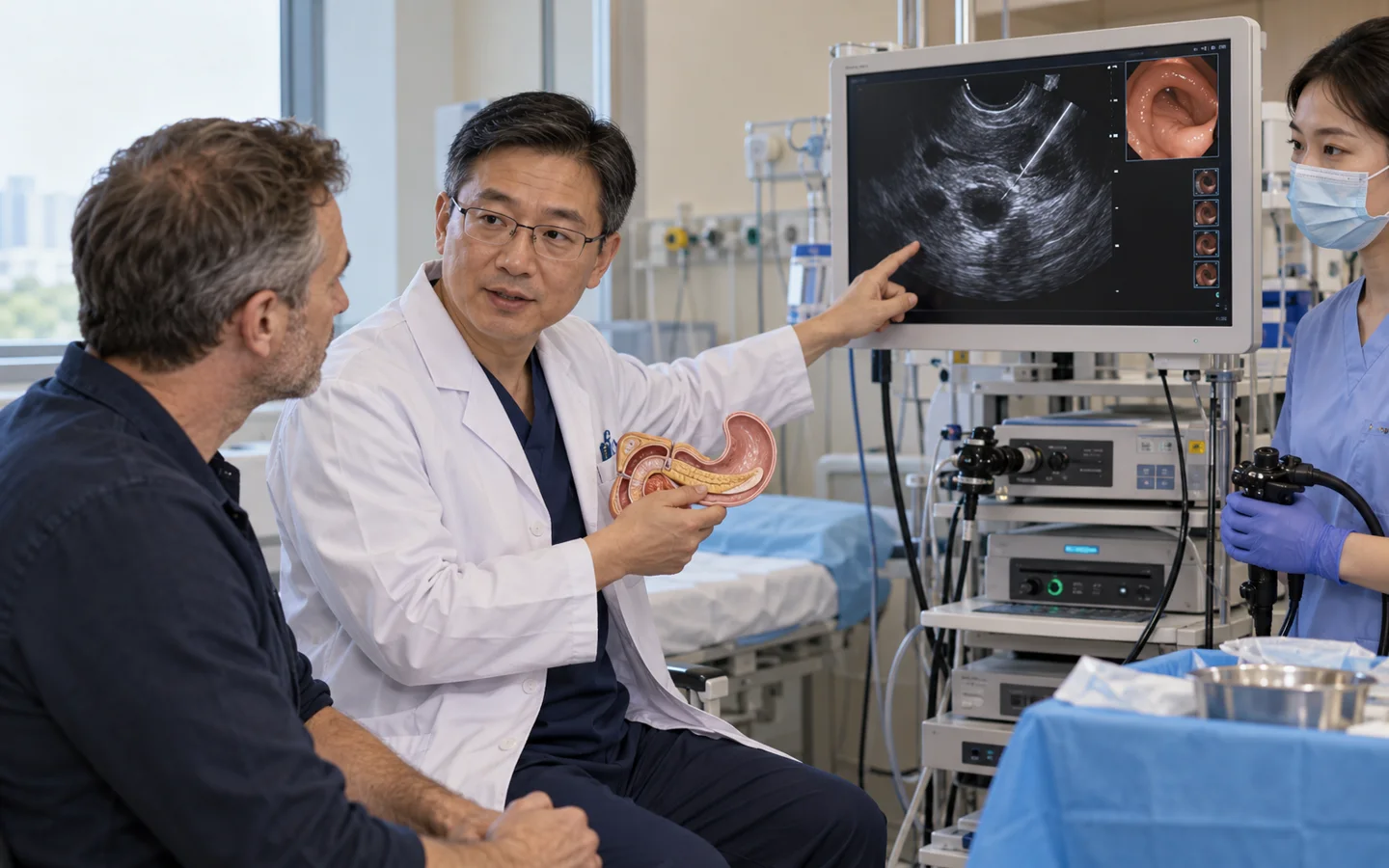
Chinese endosonography specialist explaining EUS and needle sampling to an international patient

Medical records & cost enquiry

Endoscopic Ultrasound: assessment and cost questions

For Endoscopic Ultrasound (EUS), the budget depends on the proposed care and the hospital. A useful estimate needs to distinguish:

  • Diagnostic imaging or tissue sampling
  • Sedation, needles and pathology requirements
  • Whether another intervention is proposed

Hospital medical fees, travel and our coordination services are separate. Any paid specialist review or coordination service is explained and agreed before you proceed.

Your next step

Start with your question

Tell us your diagnosis and what you need. Our free initial review checks the information and helps identify a suitable next step; it is not a specialist opinion or a hospital quotation.

Request a case-based estimate

Not ready to send records? Ask us first. Where hospital review is appropriate, we can help request an estimate. No travel commitment or mandatory proxy consultation.

Planning endoscopic ultrasound in ChinaHospital review · individual costs · visit and follow-up

Plan the visit around imaging findings, sampling needs and examination scope. Agree the assessment route before travel.

Records for the endoscopic ultrasound review

Tell us what you already have: CT MRI MRCP or PET DICOM; Previous endoscopy and EUS reports; Pathology cytology and tumor markers. Start with a short summary; after first contact we explain which records the receiving team needs and how to share them.

Confirm the proposed scope and costs

Before asking for a personal estimate, clarify: Diagnostic imaging or tissue sampling; Sedation, needles and pathology requirements; Whether another intervention is proposed. The receiving team confirms the proposed scope and hospital charges; coordination is agreed separately.

Visits and care after returning home

Ask whether the proposed examination includes tissue sampling or another intervention, and how results would reach your treating team. Tell us if you need interpretation or English-language documents, and confirm the relevant arrangements with the receiving team.

EUS places ultrasound next to deep digestive organs

An ultrasound probe on the endoscope images structures through the esophagus, stomach or duodenum. Needles can sample a mass, cyst or lymph node under real-time guidance.

The value depends on a defined question: tumor staging, pancreatic lesion characterization, bile-duct stone evaluation, tissue diagnosis or planning an advanced drainage procedure.

Sampling strategy matters

Ask whether tissue is needed, which needle and route are planned, how infection risk is handled and whether the sample will support histology, cytology or molecular testing.

Who may be considered?

Specialist review may help when the diagnosis, symptoms and previous treatment create a focused question about endoscopic ultrasound.

  • A pancreatic mass or cyst needing characterization or tissue.
  • Possible bile-duct stones not resolved by noninvasive imaging.
  • An esophageal, gastric or rectal lesion requiring wall-layer staging.
  • A mediastinal or abdominal lymph node requiring minimally invasive sampling.

What the specialist team must confirm

The team reviews CT MRI MRCP or PET, endoscopy, the exact diagnostic question, cyst fluid or tumor markers when relevant, anticoagulation, altered anatomy, infection risk and whether EUS findings would change surgery, oncology or ERCP.

Key points for this treatment
Methodendoscope with ultrasound transducer
Targetspancreas bile ducts GI wall and nodes
Samplingfine needle aspiration or biopsy
Planningdiagnosis stage or drainage
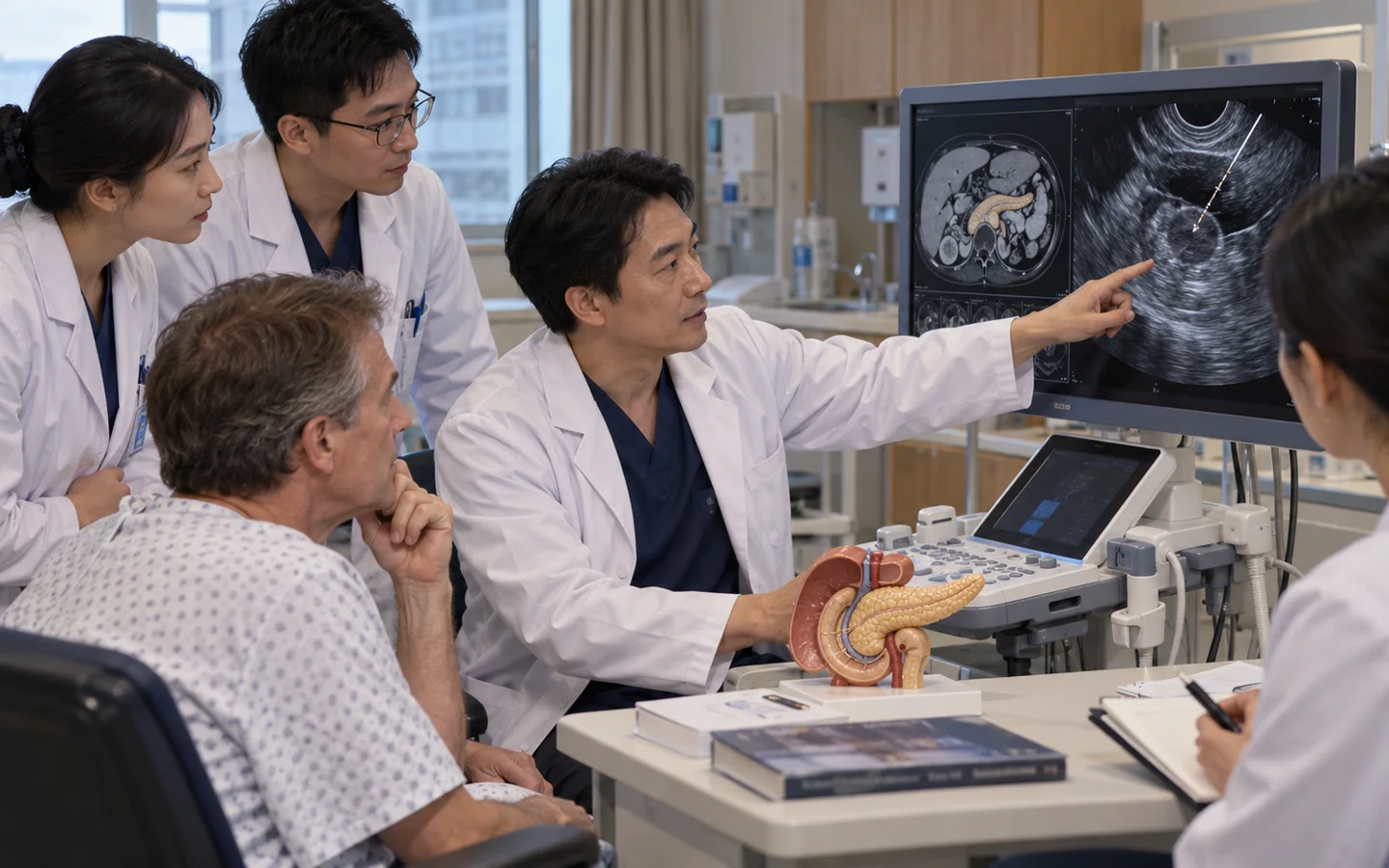
Chinese EUS team reviewing pancreatic MRI ultrasound layers and a safe biopsy route
The shortest safe route is planned before needle passageVessels, ducts, tumor planes and the consequences of traversing normal tissue influence whether and how a lesion is sampled.

From cross-sectional imaging to close-range diagnosis

EUS complements rather than replaces CT or MRI and is most useful when the result changes a concrete management decision.

ReviewDefine the unanswered imaging question
ImageExamine wall layers organs and vessels
SampleObtain tissue or fluid when useful
IntegrateUse findings for stage or treatment

Pathology may take longer than the ultrasound result

The endoscopist can often describe imaging findings immediately, while cytology, histology, cultures or molecular results require additional time.

Next steps may include surveillance, ERCP, surgery, oncology review or repeat sampling if tissue is inadequate and the question remains important.

International patient discussing pathology and next treatment steps after endoscopic ultrasound
A negative sample is not always a negative diagnosisAdequacy, lesion type and pretest probability determine whether observation or another biopsy is appropriate.
Diagnostic tissueProceed with disease-specific care
Benign-appearing lesionUse risk-based surveillance
Inadequate sampleReassess need and route
Duct stone foundPlan therapeutic ERCP when indicated

Risks, limits and realistic expectations

Risks include bleeding, infection, perforation, pancreatitis and sedation complications. Sampling can be nondiagnostic, and some lesions remain difficult or unsafe to reach.

Do not delay urgent local care

Severe abdominal or chest pain, fever, vomiting blood, black stool, breathlessness or fainting after EUS requires urgent local assessment.

Before hospital review

Records for endoscopic ultrasound assessment

A safe international review depends on dated source reports, original imaging and a complete treatment timeline—not a diagnosis label alone.

CT MRI MRCP or PET DICOM
Previous endoscopy and EUS reports
Pathology cytology and tumor markers
Pancreatitis and infection history
Surgical and altered-anatomy records
Anticoagulation and medicine list
Allergies and anesthesia assessment
Oncology or surgical decision question

Tell us what you need

Ask about your care,
your hospital and your budget.

You can ask about suitability, an expert opinion, an appointment or the likely medical cost. If you are unsure, choose “Not sure — please advise”.

This enquiry is aboutEndoscopic Ultrasound (EUS)Not sure — please advise

How a personal estimate is prepared

  1. Tell us about your case.Describe your diagnosis, main question and preferred city, if any.
  2. Share the relevant records.We explain what is needed and how to send it by WhatsApp or email.
  3. Request a hospital estimate.Where appropriate, we help request hospital review and a cost estimate. Any paid review is agreed first.

This is an enquiry, not an order or payment. Proxy consultation is not mandatory. Any service scope is agreed separately before you proceed.

Ask about Endoscopic Ultrasound (EUS)

A first enquiry is free. Email and permission to respond are required; the other details are optional. Any paid clinical review or coordination is discussed separately.

Included automatically so we know which procedure you are asking about.
A preference, not a confirmed appointment.
Please do not send passport numbers, card details or full medical files in this first enquiry. We will explain which records are needed next.

Send a short summary first. This is an enquiry, not an order, payment or confirmed appointment.

No booking or payment is made by sending this enquiry.
Editorial transparency

Medical sources

Patient information is based on established government and professional guidance. Content updated 5 October 2026. This is patient information, not an individual clinical assessment.