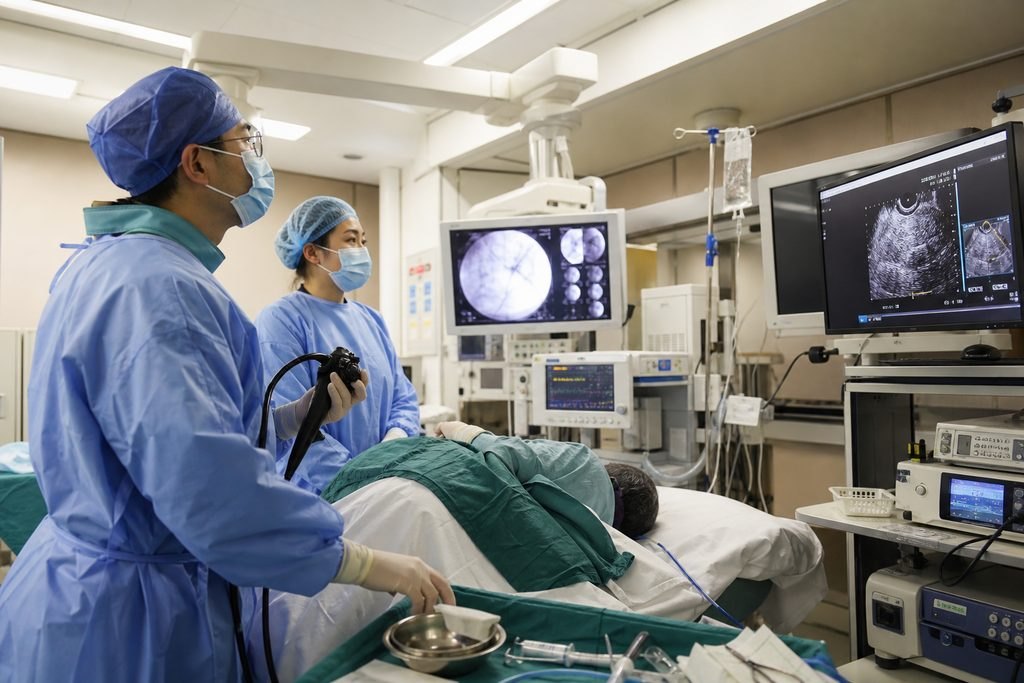
Why the same examination can produce two different totals
Endoscopic ultrasound combines an endoscope with ultrasound to examine digestive structures and nearby organs. That single sentence describes a family of examinations rather than one fixed product. A quote for a diagnostic survey of the pancreas is not comparable with a quote for the same scan plus a needle pass into a lymph node, even if both are labelled endoscopic ultrasound.
The practical consequence is that a lower total may simply describe less. It may exclude sedation, pathology processing, a repeat pass, an overnight bed or the involvement of a second specialist. A higher total may include items you do not need. Neither number tells you which is better value until you know what each one covers.
This is why the useful comparison is not hospital A versus hospital B on price. It is scope against scope, then price against price. Ask for the written estimate before you discuss totals, and keep the same list of questions for every hospital you approach.
The first question: does the proposed examination include sampling?
Endoscopic ultrasound can be used to look, and it can also be used to obtain tissue. Those are different clinical decisions with different preparation, different risks and different billing scope. The source material for this guide distinguishes the examination from separately proposed tissue sampling, and that distinction should sit at the top of your comparison sheet.
Ask directly: does the quoted examination include tissue sampling, or is sampling a separate proposal that would be decided during or after the scan? If sampling is included, ask which site and how many passes the estimate assumes. If it is not included, ask what a sampling procedure would add to the scope and how that would be quoted.
Do not assume that every endoscopic ultrasound includes a biopsy, and do not assume that a biopsy result predicts cancer. The clinical team decides whether sampling is appropriate for your case. Your job at the quoting stage is to make sure you are comparing the same intention, not two different procedures that happen to share a name.
What an itemised estimate should actually list
An itemised estimate is useful only if it separates the components you can compare. Ask each hospital to state, in writing, what is included, what is excluded, and what remains undecided until the clinician sees you or your records. That three-part structure is more informative than a single figure, because it shows you where the two quotes actually diverge.
Included items might cover the endoscopy suite, the ultrasound examination, sedation or anaesthesia, and routine monitoring. Excluded items might cover histopathology, additional imaging, ward or bed charges, medicines, and follow-up visits. Undecided items are the ones that depend on findings: a second pass, a stent, an admission, or a repeat examination. When you place two estimates side by side, sort every line into one of those three buckets before you look at the totals. A line that appears in one quote and not the other is the first thing to question, because it may explain the whole gap.
Ask how the hospital handles an estimate that changes. If the clinician finds something during the examination that requires an additional step, is a revised estimate issued and agreed before that step proceeds? Ask what the written quote says about this, rather than assuming a rule. Hospitals differ, and the answer belongs in the document you are comparing.
It also helps to ask which items are charged per session and which are charged once. A quote that bundles several components into a single figure is harder to compare than one that lists them, but you can still ask the hospital to break the bundle down. If it will not, note that as a limitation of that quote rather than treating the missing detail as a saving. The goal is not to find the longest list. It is to reach the point where the two figures describe the same examination, the same sedation plan and the same follow-up, so that any remaining difference is a real difference in price rather than a difference in what is being sold.
- Ask for the estimate in writing, with included, excluded and undecided items listed separately.
- Ask whether the figure is fixed or an estimate subject to revision after findings.
- Ask who to contact if the scope changes and how a revised figure is confirmed.
Sedation, pathology and the items patients forget to compare
Three components are easy to overlook because they sit at the edges of the procedure. The first is sedation. Ask what type is planned, who administers it, and whether the estimate covers the sedation itself, the recovery area and any extended monitoring. Ask what the treating team requires afterwards regarding escort, transport and supervision, because those safety instructions affect your practical arrangements and may affect cost.
The second is pathology. If tissue is taken, the specimen must be processed and reported. Ask whether histopathology is inside the quoted scope, whether a rapid on-site assessment is available, and how the report reaches your treating team. If you are travelling home afterwards, ask how results would be sent and to whom.
The third is the second procedure. Some patients need a repeat examination or a related endoscopic step. Ask whether the estimate covers one session only, and what a further session would involve. None of these questions require you to decide anything clinical. They simply make the two quotes describe the same thing.
How results reach your treating team
A quote comparison is incomplete if it ignores the output. The examination produces images and, if sampling occurs, a pathology report. Ask how those documents are issued, in what language, and whether they can be shared with the clinician who referred you or who will continue your care.
This matters for two reasons. First, the value of the examination depends on the information reaching the people who will act on it. Second, if you are comparing hospitals, the ability to send a clear report to your existing team is part of what you are buying. Ask whether the report includes images, measurements and a written interpretation, and ask how long after the examination the report is expected. Treat any timing answer as hospital-specific and confirm it with that hospital rather than relying on a general expectation.
If you are already in contact with a coordinator, this is the point where records, language and appointment questions can be handled together. ChinaSpecialistCare can help with record organisation, interpretation and specialist appointment requests for this kind of examination, while the hospital and its clinicians decide suitability, scope and scheduling.
Turning two quotes into one decision
Once you have written estimates, put them side by side using the same headings: examination scope, sampling, sedation, pathology, bed or admission, follow-up, and report delivery. Where one hospital leaves an item undecided, mark it undecided rather than treating it as zero. A blank is not a saving; it is an unanswered question.
Then ask each hospital the same closing question: if my clinician recommends sampling during the examination, what would the total become, and how would I be asked to agree? The answer tells you how predictable the final figure is. It also tells you how clearly the hospital communicates when the plan changes.
Finally, separate the hospital's charges from any coordination or travel costs you may incur. Hospital fees for consultations, tests, treatment, medicines and rooms are paid to the hospital or the relevant provider. Coordination fees are separate. Keeping those categories apart prevents a comparison from mixing clinical scope with logistics.
You do not need a proxy consultation to begin. A short summary of your situation and your main question is enough for an initial enquiry, and the team can explain what records would help and what to ask next. The hospital remains the decision-maker on whether endoscopic ultrasound is suitable for you and what the examination will include.
Sources & scope of this guide
References and official service information relevant to this guide.
This is general planning information and has not been individually reviewed by a doctor. Medical decisions and personal treatment advice come from your treating clinicians.