What the endosonographer actually needs from your history
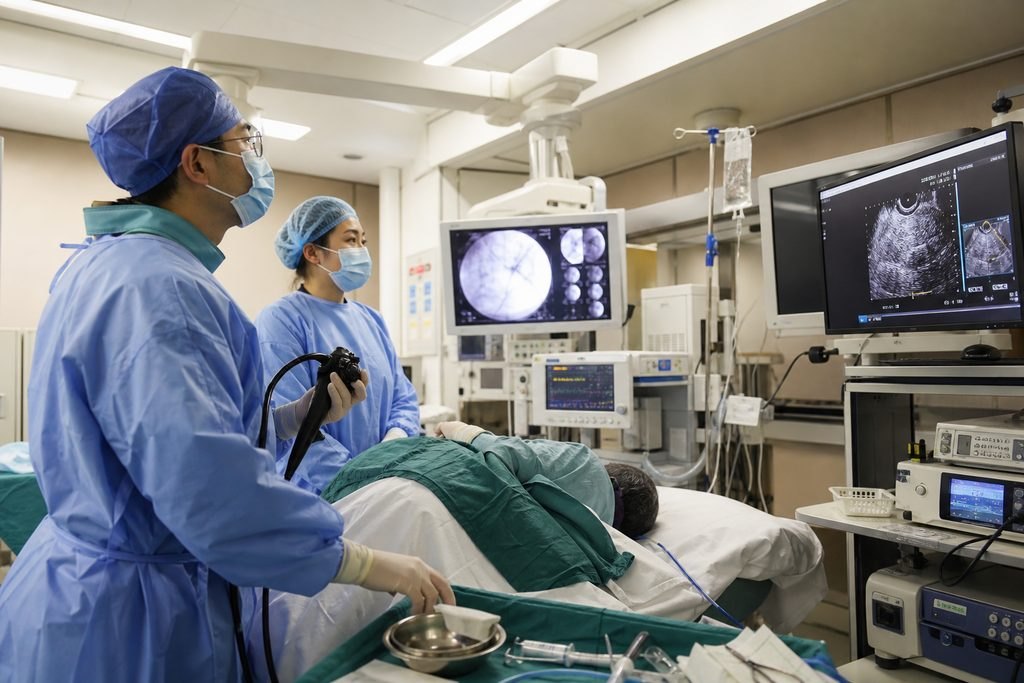
Endoscopic ultrasound combines an endoscope with ultrasound to examine digestive structures and nearby organs. That sentence describes the examination, not a treatment plan. The clinician holding the probe needs to know what is already known about you, because the same ultrasound view can mean different things depending on your history. A pancreatic finding in someone with a known chronic pancreatic condition is read differently from the same appearance in someone with no prior imaging.
The practical point is that your existing conditions are not background noise. They change how the examination is planned, which areas are examined closely, and whether a sedative or anaesthetic approach needs adjustment. If you have diabetes, heart or lung disease, kidney problems, a bleeding disorder, or a previous reaction to sedation, that information belongs in the summary the endosonographer reads before the procedure, not in a conversation afterwards.
You do not need to send your entire archive to make the first contact useful. A one-page summary plus the key reports is enough for the team to understand what questions to ask next. The full records can follow once a clinician has confirmed what is relevant.
Separate the examination from sampling before you discuss records
Endoscopic ultrasound and endoscopic ultrasound-guided tissue sampling are related but distinct. The ultrasound examination produces images. Sampling, when separately proposed, involves passing a needle through the endoscope to obtain tissue, and it carries its own preparation, consent and risk discussion. Not every endoscopic ultrasound includes biopsy, and the examination itself does not predict whether you have cancer.
This distinction matters for how you present your records. If sampling is being considered, the team will want your coagulation status, any anticoagulant or antiplatelet medicines, and prior pathology reports. If only imaging is planned, the emphasis shifts to your anatomy, previous surgery and how you tolerate sedation. Ask directly: does the proposed examination include tissue sampling or another intervention, or is it imaging only? The answer changes what you should send and what you should ask about.
The reason the answer changes so much is that sampling adds a second clinical decision on top of the imaging question. Imaging asks what is visible and how it compares with your previous studies. Sampling asks whether a tissue diagnosis is needed, whether the target can be reached safely, and whether the result would alter your treatment. A patient whose prior imaging already answers the clinical question may not need a needle pass at all; a patient whose treating team needs a tissue diagnosis may need one planned in advance, with the medicine adjustments that go with it.
That is why the records you send should be matched to the question being asked. If sampling is on the table, include the reports that describe the target lesion, any prior biopsy or cytology results, and the blood results that speak to clotting. If imaging alone is planned, include the comparison scans and the operative notes from any previous abdominal or digestive surgery, because altered anatomy changes how the endoscope is passed and what can be seen.
Do not assume that a request for endoscopic ultrasound means a biopsy has been decided. The two decisions are made separately, and the treating clinician must confirm which applies to you. If you are unsure which one is being proposed, ask the referring team to state it in writing before you send anything, so the records you gather are the ones the endosonographer will actually use.
Medicines, allergies and sedation: what to confirm rather than assume
Sedation practice is individual. The endoscopy team decides the approach based on your airway, your heart and lung function, your medicines and your previous experiences. Preparation instructions are also individual, and they are not something you can reconstruct from a general article.
The useful action is to prepare a medicine list that a clinician can act on. Include the medicine name, the dose, how often you take it, and why you take it. Include anything you take without a prescription, including herbal products, because these can interact with sedatives or affect bleeding. Include allergies and any previous reaction to anaesthesia or sedation, even if it was mild.
Then ask the specific questions that only the treating team can answer: which of my medicines should I continue, adjust or pause before this examination, and who will tell me? What sedation plan is proposed for someone with my conditions? What should I do if I become unwell in the days before the appointment? Write the answers down. Do not change any prescribed medicine on your own based on something you read.
How to hand over records without sending everything at once
A common worry is that a partial file will be treated as a complete one. You can prevent that by labelling what you send. Put a short cover note at the front: your name, the main question you want answered, the diagnoses you already have, and a list of the documents attached. Then note what is missing and where it is. That single page does more for the clinician than a large unlabelled file.
For an endoscopic ultrasound assessment, the records that usually carry the most information are recent imaging reports and the images themselves where available, previous endoscopy or biopsy reports, relevant blood results, your medicine list, and any discharge summaries from recent hospital care. If a report is in a language other than English or Chinese, ask whether a translation is needed and who should provide it. Do not pay for certified translation before the receiving team confirms its requirement.
Keep the first message short. The initial enquiry is a summary, not a full medical archive. Once a clinician has reviewed the summary, they can tell you which additional documents matter for your case. This avoids sending sensitive material that is never read and keeps the clinical question in front.
Getting the result back to the team that is treating you
An endoscopic ultrasound report is only useful if it reaches the people making decisions about your care. Before the examination, ask how the report and any pathology results will be issued, to whom, and in what language. If you are travelling to China for the examination and then returning home, ask how the findings will be communicated to your treating doctor at home, and whether that doctor needs to request them directly.
Pathology results from sampling, when sampling is performed, follow a different timeline from the imaging report. Ask when each result is expected and who will explain it to you. Do not assume that the endosonographer who performed the examination will also be the clinician who discusses the overall plan with you. Those roles can be separate, and you should know which clinician is responsible for the next step.
If you are considering care in China, the relevant reference page for this examination is the endoscopic ultrasound procedure page, which explains the service context. Use it alongside the questions above rather than as a substitute for the treating team's instructions.
What to confirm with the hospital before you travel
Suitability for endoscopic ultrasound, the need for sampling, the sedation plan and the preparation instructions are all clinical decisions. They belong to the hospital and the licensed clinicians who will perform the examination. A records review can help clarify what information is missing and which questions to ask, but it does not establish that the examination is appropriate for you, that it can be scheduled, or that you are fit to travel.
Before making arrangements, ask the named provider how its written plan and estimate are structured, what is included, what is excluded and what remains undecided. Ask what preparation you must follow, what medicines to bring, and what to do if your symptoms worsen before the appointment. If your symptoms are severe or getting worse, seek local medical care first rather than waiting for an overseas appointment.
A practical next step is to send a short summary through the enquiry form: your main question, your existing diagnoses, your current medicines and the reports you already have. The initial review is free and non-clinical. It identifies missing information and suggests the relevant next step. You do not need to buy a proxy consultation to make that first contact, and no outcome or acceptance is guaranteed.
Sources & scope of this guide
References and official service information relevant to this guide.
This is general planning information and has not been individually reviewed by a doctor. Medical decisions and personal treatment advice come from your treating clinicians.