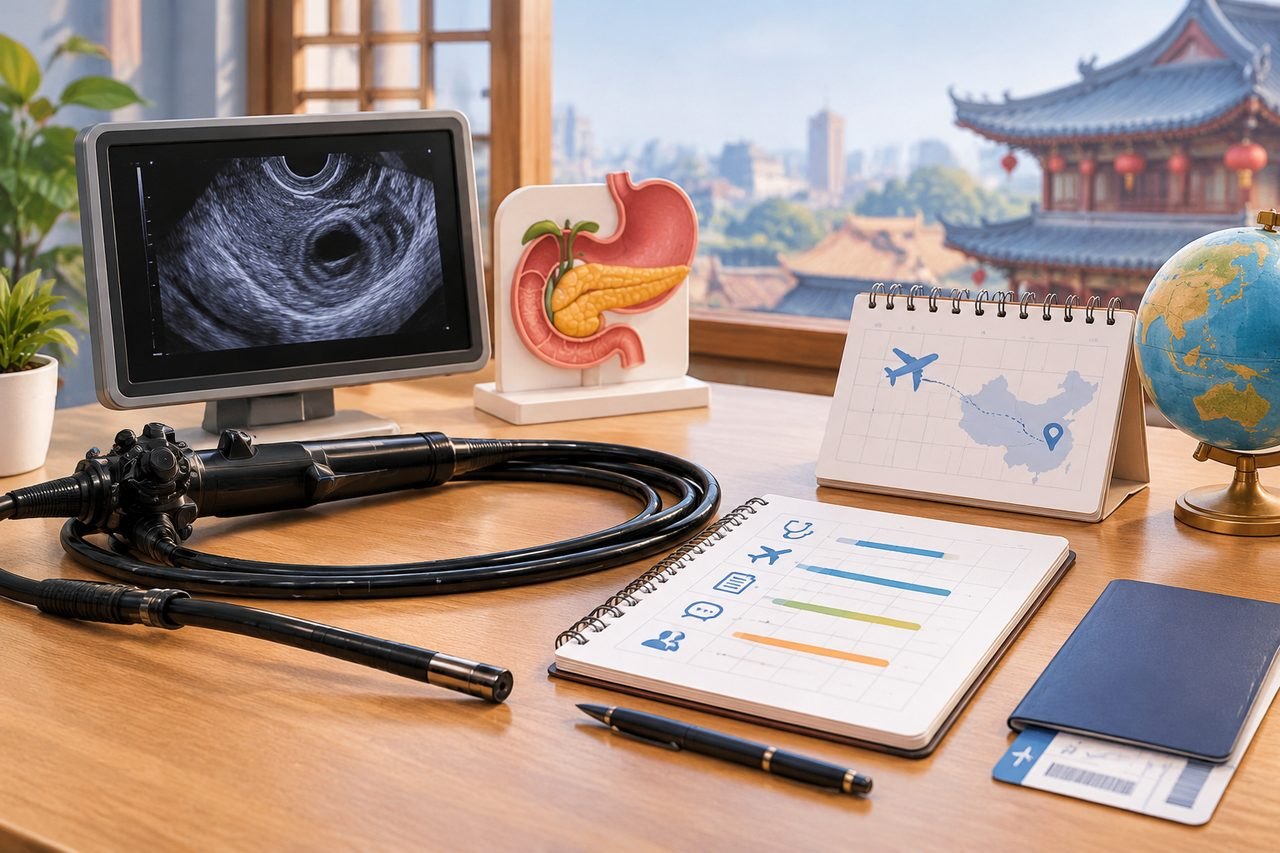
Why the Medical and Travel Timelines Must Be Confirmed Separately
Endoscopic ultrasound combines an endoscope with ultrasound to examine digestive structures and nearby organs. That description covers the examination itself, but it does not tell you what the hospital has actually proposed for your case. The clinical plan may include only imaging, or it may include a separately proposed tissue sampling step. Those are different commitments, and they can carry different preparation instructions.
Travel planning fails when it is built on an assumed clinical sequence. If you book flights around a guessed procedure date, a change in the examination plan or an added sampling step can leave you with unusable tickets. If you book too little time, a request for additional information or a change in scheduling can force a second trip. The practical fix is to confirm the clinical steps first, in writing, and then build travel around the confirmed dates.
This is not about delaying necessary care. If you have urgent or worsening symptoms, local assessment takes priority over any overseas enquiry. The separation described here applies to planned, non-urgent evaluation where you are deciding how to organise a trip.
Confirm the Examination Scope Before Anything Else
The first question is not about dates. It is about what the hospital has proposed. Ask whether the plan is the endoscopic ultrasound examination alone, or whether it also includes a tissue sampling step such as a biopsy or fine-needle aspiration. This matters because sampling may require separate consent, separate preparation, and a different discussion of risks and limitations.
Ask directly: does the proposed examination include tissue sampling or another intervention? If the answer is yes, ask what that step involves, who performs it, and what the expected pathway is if sampling is not possible or does not yield a conclusive result. If the answer is no, ask whether sampling might be proposed later depending on what the examination shows.
Do not assume that every endoscopic ultrasound includes a biopsy. It does not. Do not assume the examination will confirm or exclude a particular diagnosis. It may provide information that your treating team uses alongside other results. The hospital decides what is suitable for your case, and that decision belongs to the treating clinicians, not to a coordination service.
Ask How Results Will Reach Your Treating Team
A result that stays in one hospital does not help the clinician who is managing your care elsewhere. Before you travel, ask how the findings and any sampling results will be documented and shared. Ask whether you will receive a written report, whether images are included, and whether the report will be in a language your treating team can use.
Ask what the hospital needs from you to release results to another clinician. This may involve a signed authorisation or a specific request from your treating team. Confirm this before the examination, not after, because arranging it later can be slower and more difficult.
Ask your treating team what they need to receive. A short list from them is more useful than a general request for everything. If they need the images as well as the report, say so. If they need the sampling result separately, say so. The hospital can then tell you what it can provide and on what basis.
Separate the Appointment Confirmation From the Travel Booking
Once the clinical scope is clear, confirm the appointment. Ask the hospital or your coordination contact for written confirmation of the date, the time, and the location. Ask whether the appointment is confirmed or provisional. A provisional clinical stage is not the same as a confirmed appointment, and booking travel against a provisional date is a common source of wasted cost.
Ask what preparation the hospital requires. Endoscopic ultrasound preparation is individual. It may involve fasting, medication instructions, or arrangements for sedation. Ask who will give you those instructions and when. Do not rely on a general assumption about preparation.
Only after you have a confirmed appointment and written preparation instructions should you book flights and accommodation. Build in a margin that you can afford to lose if the date changes. Ask the hospital whether the date is likely to move and what would cause a change. You will not get a guarantee, but you will get a clearer picture of the risk.
Plan Consent and Sedation Discussions Before the Day
If sedation is planned, the consent discussion and any important questions should happen before the day of the examination, not in a rushed moment afterwards. Ask when the consent discussion will take place and who will lead it. Ask what you need to understand before you sign. If you are relying on an interpreter, ask whether interpretation is available for that discussion. Consent given through a family member who is paraphrasing is not the same as consent given with a qualified interpreter present, and the difference matters when the decision involves sampling or sedation.
Ask about transport and supervision after sedation. The treating team's safety instructions govern this, and they may differ from what you expect. Ask whether you need someone to accompany you and whether you can return to your accommodation alone. If you are travelling without a companion, raise this before the appointment rather than on the day. The hospital may have a view on whether you can be discharged to a hotel alone, and that view should shape your travel arrangements, not the other way round.
If you take regular medication, ask the prescribing clinician and the hospital how it should be managed around the examination. Do not change any medication on your own. This is a clinical decision, and it belongs to the clinicians who know your case. If you are taking an anticoagulant or a medicine that affects bleeding, ask specifically how the hospital wants it handled, and ask early enough that the answer does not force a change of date.
Ask what happens if the examination cannot be completed as planned. Endoscopic ultrasound may not reach a clear view of the area of interest, and a sampling attempt may not yield a conclusive sample. Ask the hospital what the fallback is in that situation: whether a repeat attempt would be proposed, whether another examination would be suggested, and how that would affect your schedule. This is not a reason to expect failure. It is a reason to know the plan before you commit to non-refundable travel.
Ask who to contact if something changes before the appointment. A single named contact, with a clear channel and a stated response expectation, is more useful than a general hospital switchboard. If your symptoms change, or if you develop a fever or new pain before the examination, that contact should know, and your local clinicians should be involved. Do not travel for a planned examination while an acute problem is developing.
Finally, ask what the hospital expects from you on the day: arrival time, documents, payment arrangements, and who to report to. Confirm whether the appointment time is the examination time or an earlier registration time. A gap of an hour or two between arrival and the procedure changes how you plan the day, especially if you are fasting.
What to Confirm in Writing, and the Next Step
A written record reduces the chance of a misunderstanding. Ask the hospital or your coordination contact to confirm, in writing, the proposed examination and whether sampling is included, the appointment date and whether it is confirmed, the preparation instructions, and how results will be shared with your treating team.
If you are working with a coordination service, keep the clinical and the practical questions separate. Clinical suitability, the examination plan, and the decision about sampling belong to the hospital and its clinicians. Practical arrangements such as appointment requests, interpretation, and local support are separate. An initial enquiry is free and does not require buying a proxy consultation. You can start with a brief summary of your situation and your main question, then share records after first contact.
For readers who want help with records, interpretation, or a specialist appointment request for endoscopic ultrasound, ChinaSpecialistCare can assist with those coordination steps. The hospital still decides suitability, the examination plan, and whether sampling is appropriate.
The next step is to ask the hospital two questions in writing: does the proposed examination include tissue sampling or another intervention, and how will the results reach your treating team? Once you have those answers, confirm the appointment, and only then book flights and accommodation around the confirmed date.
Sources & scope of this guide
References and official service information relevant to this guide.
This is general planning information and has not been individually reviewed by a doctor. Medical decisions and personal treatment advice come from your treating clinicians.