What Endoscopic Ultrasound Can and Cannot Tell You
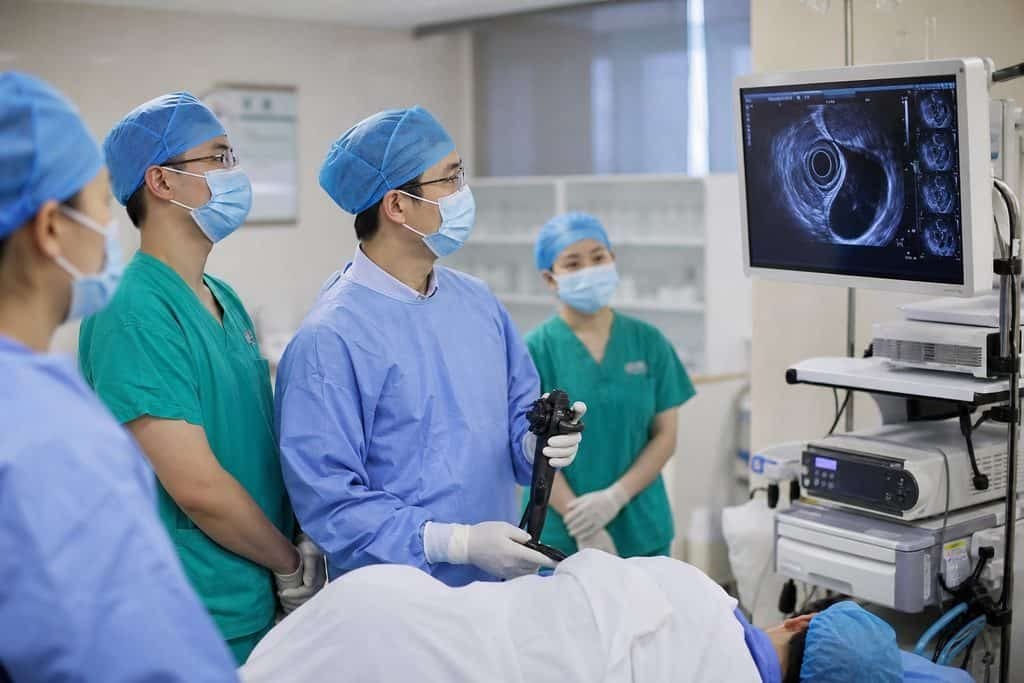
Endoscopic ultrasound, often shortened to EUS, combines a flexible endoscope with an ultrasound probe. The endoscope passes through the mouth or rectum, and the ultrasound component produces images of the digestive tract wall and structures close to it, such as the pancreas, bile ducts and nearby lymph nodes. It is an imaging examination first. The images help a clinician see detail that a standard endoscopy or external ultrasound may not show as clearly.
That imaging role is separate from any decision to take tissue. An EUS examination can be performed to look, measure and describe. It does not automatically include a biopsy, and it does not by itself confirm or exclude cancer. If tissue is needed, that is a distinct step with its own purpose, technique and risks. Your treating clinician decides whether sampling is appropriate based on what the images show, what earlier tests found and what question the examination is meant to answer.
For an overseas patient, this distinction matters before you commit to travel. You may be offered an appointment for diagnostic EUS, or for EUS with a planned sampling procedure, or for a repeat examination after earlier tests. These are not interchangeable. The preparation, the consent discussion, the equipment and the expected recovery can differ. Ask which one is being proposed for you, in writing, before you plan anything else.
The Sampling Question You Should Ask First
The single most useful question is direct: does the proposed examination include tissue sampling, or is it imaging only? Ask the hospital's international office or the treating department to answer in writing. A clear answer lets you prepare correctly and understand what the visit is for.
If sampling is planned, ask what type. EUS-guided fine needle aspiration and EUS-guided fine needle biopsy are different techniques with different needles and different amounts of tissue. They are not the same as a standard endoscopic biopsy taken from the surface of the gut lining. The choice affects how the sample is processed and what the pathologist can report. You do not need to select the technique yourself, but you should know which one is being discussed so you can ask sensible follow-up questions.
Ask who decides during the procedure whether sampling goes ahead. In some plans, the endoscopist decides based on the live images. In others, the decision is made beforehand after a multidisciplinary review. Ask whether the plan is fixed or conditional, and what would happen if the clinician decides sampling is not needed or not safe on the day. This is not a challenge to clinical judgement. It is information you need to understand the consent you are giving.
Ask what happens to the sample. Where is it analysed, how long does processing take, and will a written pathology report be issued? Ask whether the report will be in English and whether it will include the information your own doctors need. These are practical questions, and the hospital is the only reliable source of the answers.
Why the Answer Changes Your Preparation
If the examination is imaging only, preparation may be simpler. If sampling is planned, the consent discussion must cover bleeding, infection, pancreatitis and other procedure-specific risks. Those risks belong to the treating team to explain, not to an article. What you can do is make sure the discussion happens before sedation, when you can ask questions and understand the answers.
Sedation is another point where the sampling answer matters. Many EUS examinations use sedation or anaesthesia. If you will be sedated, you may need an escort and someone to stay with you afterwards. The treating team's safety instructions about transport, supervision and when you can eat or drink must be followed exactly. Do not treat these as travel logistics. They are clinical safety requirements, and the hospital should tell you what they are for your case.
Medication is a common source of confusion. If you take blood-thinning or antiplatelet medicines, the sampling decision may affect whether they need to be adjusted and when. Do not change any medicine on your own. Ask the prescribing clinician and the endoscopy team what they want you to do, and get the answer in writing. The same applies to diabetes medicines, insulin and any other regular treatment.
Your existing records also shape the plan. Bring the reports and images from earlier endoscopy, ultrasound, CT, MRI or PET scans if you have them. Bring pathology reports from any previous biopsy. Bring a list of your medicines with doses and a short summary of your main symptoms and the question your own doctors want answered. These records help the Chinese team understand why the examination is being requested and what they are looking for.
How Results Should Reach Your Treating Team
Before you travel, agree on how the results will be shared. Ask the hospital whether it can provide a written report, whether images or video from the examination are available, and whether a pathology report will follow separately. Ask how long each part is expected to take, understanding that the hospital must give you its own estimate rather than a general figure.
Ask whether the report will be issued in English or whether translation is needed. If translation is needed, ask who provides it and whether it is included in the hospital's written quote or arranged separately. Do not assume a particular arrangement. Ask the named provider what its written estimate includes and what remains undecided.
Tell the Chinese team who your treating doctors are at home and how they prefer to receive records. Some clinicians accept reports by secure email, some through a patient portal, some by hand. Ask the hospital what it can provide and in what format. Then confirm with your own team what they will accept. This step prevents a situation where the examination is done but the results cannot be used where you need them.
If a tissue sample is taken, the pathology report may take longer than the procedure report. Ask the hospital how the two documents will be delivered and whether you will receive them while still in China or after you return home. If you return home before the pathology is ready, agree in advance how it will be sent and to whom.
What to Confirm Before You Commit to Travel
An initial enquiry to a Chinese hospital or coordination service does not commit you to treatment, and it does not confirm that you are suitable for EUS or for sampling. Suitability is decided by the treating hospital after it reviews your records. A records-based opinion can help you understand whether the examination is likely to be useful, but it cannot replace the hospital's own assessment or guarantee acceptance.
Ask the hospital to confirm in writing what the proposed examination includes, whether sampling is part of the plan, what preparation is required, what the written estimate covers, and how results will be delivered. If any of these points is unclear, ask again before you book travel. A short delay to clarify the plan is better than arriving for an examination that does not answer your question.
If your symptoms are worsening, do not delay local assessment to pursue an overseas appointment. Urgent problems need local care first. An overseas EUS plan can be developed alongside that care, not instead of it.
You can start with a brief summary of your situation rather than a complete medical archive. The initial enquiry is free and is used to identify missing information and suggest a relevant next step. A proxy consultation is optional and is not a prerequisite for an appointment.
Clinical background and planning scope
North Tees and Hartlepool NHS Foundation Trust. Endoscopic Ultrasound (EUS).
Sources & scope of this guide
References and official service information relevant to this guide.
This is general planning information and has not been individually reviewed by a doctor. Medical decisions and personal treatment advice come from your treating clinicians.