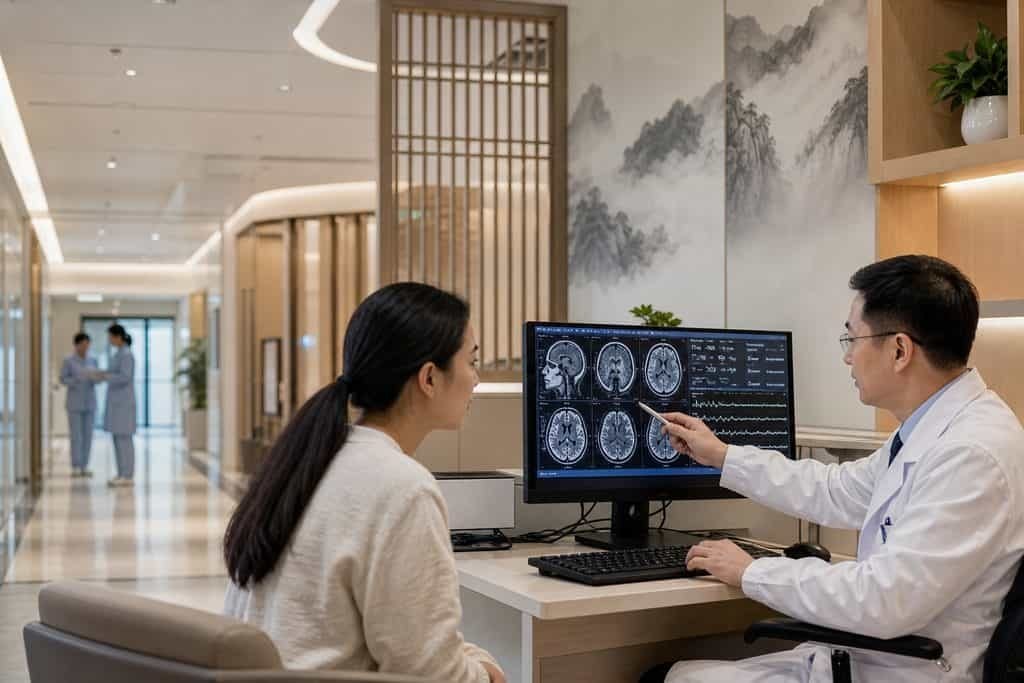
What the two teams actually need from each other
A Chinese presurgical evaluation cannot begin from a discharge summary alone. The receiving team needs the raw material that shows how your epilepsy has behaved over time and what has already been tried. The home team needs to know what the Chinese hospital intends to do, so it can judge whether the plan is reasonable and prepare for your return.
The exchange is not a single email. It is a defined set of documents moving in both directions, with named owners on each side. Before anything is sent, agree who at home will act as the clinical contact, who will compile the file, and who in China will receive it. Without those names, records sit in an inbox and the evaluation stalls.
The most useful thing you can do is write a one-page cover note in English that states your main question. For example: is surgery a reasonable option, and if so, what assessment is still needed? That note travels with the records and gives both teams the same target.
The records that carry the real clinical information
Seizure history is the backbone. The receiving team needs a dated description of seizure types, frequency, triggers, and how each has changed. A short seizure diary covering recent months is more useful than a vague statement that seizures are frequent. Include descriptions from witnesses where possible, because focal features may not be visible to you.
Diagnostic studies should be sent as original files, not photographs of a screen. EEG reports and, where available, the underlying EEG data or clips help the team see the electrical pattern rather than a summary. MRI should be sent as the original DICOM images on disc or through a secure transfer method, because a radiology report alone does not let a surgeon review the anatomy.
Medication history matters as much as the images. List every antiseizure medicine tried, the dose, how long it was taken, and why it was stopped or changed. This is the record that shows whether your seizures are genuinely drug-resistant, which is the starting point for considering surgery in selected people.
Ask your home team for a current clinical summary letter addressed to the Chinese hospital. It should state the diagnosis, the working hypothesis about where seizures begin if one exists, and the outstanding questions. A letter written for this purpose is more useful than a general referral.
Questions to send in writing, not to raise on arrival
Written questions force specific answers and create a record you can compare later. Send them with the records so the Chinese team can respond after reviewing the file rather than in a brief corridor conversation.
Ask which presurgical assessments the Chinese team considers necessary in your case and why. Assessment for epilepsy surgery examines potential benefits and risks, and the tests chosen depend on what the existing records already show. A team may need video-EEG monitoring, a repeat or higher-resolution MRI, neuropsychological testing, or other investigations. The exact list is a clinical decision, so ask them to state it in writing with the reason for each item.
Ask how the team will communicate findings back to your home neurologist, and in what form. Ask who will be responsible for sending the assessment summary and imaging after the visit. Ask what they need from home before they can give a view on whether you are a candidate for further evaluation.
Ask how continuing neurological care would be coordinated after the visit. If you return home, your local neurologist needs a clear plan covering medication, follow-up intervals and what to do if seizures change. That handover should be agreed before you travel, not arranged at discharge.
Why a preliminary reply is not a decision
You may receive an early response saying that your records have been received and that an appointment or further review is possible. Treat that as an administrative acknowledgement, not a clinical conclusion. It does not confirm that you are a surgical candidate, that an operation will be offered, or that any particular test will be performed.
The distinction matters because it changes what you do next. A preliminary reply should trigger two actions: confirm exactly which records arrived and which are still missing, and ask what the next clinical step is and who will take it. If the reply does not answer those two points, ask again before making travel arrangements.
Equally, a request for more records is not a rejection. It usually means the team cannot form a view without a specific item, such as the original MRI or the EEG data. Find out precisely what is missing rather than resending the whole file.
Dividing responsibility between the two teams
Write down who owns each task. Your home neurologist owns the clinical summary, the medication history and the referral letter. The Chinese hospital owns the assessment plan, the findings and the written summary of what was done. You or your family own the master checklist and the confirmation that each item was actually received.
Ask both sides to copy each other on clinical correspondence. If the Chinese team sends a plan only to you, forward it to your home neurologist and ask for a written comment. If your home team sends an updated summary, forward it to China and ask for confirmation that it has been added to the file.
Clarify early who will discuss risks and alternatives with you. The treating team in China is responsible for explaining what an assessment involves, what it can and cannot show, and what the uncertainties are. Your home team can help you interpret that discussion in the context of your longer history. Neither replaces the other.
Practical preparation and the next step
Keep one folder, physical or digital, containing the cover note, the seizure history, the medication table, the EEG reports, the imaging files and the current clinical summary. Number the items and keep a copy of what was sent and when. If a file is too large to email, ask the receiving hospital which secure transfer method it accepts before sending anything.
Confirm language arrangements in advance. Ask whether interpretation will be available for clinical discussions and who provides it. If a family member will interpret, agree beforehand that important consent discussions should use a qualified interpreter so nothing is lost.
Do not delay urgent local care while an overseas enquiry is in progress. Worsening seizures, new neurological symptoms or medication problems need assessment where you are. An overseas records review is not a substitute for that.
ChinaSpecialistCare can help with the practical side of this exchange: collecting and organising records, arranging interpretation, and requesting a specialist appointment so the clinical questions reach the right team. The hospital decides suitability and the assessment plan; an initial enquiry is free and does not require buying a proxy consultation.
The next step is to write your one-page question, ask your home neurologist to prepare the summary letter, and send a short enquiry describing your situation. From there, confirm in writing which records were received and what the Chinese team proposes to do next.
Sources & scope of this guide
References and official service information relevant to this guide.
This is general planning information and has not been individually reviewed by a doctor. Medical decisions and personal treatment advice come from your treating clinicians.