
Home / Neurosurgery / Epilepsy Surgery
Neurosurgery patient guide · 癫痫外科手术

Epilepsy Surgery in China

Considering epilepsy surgery in China? Start with seizure history, diagnostic studies and surgical evaluation. This guide helps you identify the relevant records, questions for the receiving team and the scope of an individual estimate before a visit is agreed.

Chinese epilepsy neurosurgeon and neurologist explaining seizure localization to an international family

Medical cost reference

Indicative · not a quotation

Epilepsy Surgery costs in China

US$16,000–42,000

Original USD reference

Other currencies are approximate equivalents, not a quote or payment rate. Reference FX: ECB · 2 October 2026. Local snapshot, not live.

Epilepsy surgery; confirm whether localisation tests and invasive monitoring are included.

This published reference range is a starting point for planning, not a fixed price or a China-wide average. Cities, public and private hospitals, procedure details and individual care needs affect costs. The hospital must confirm what is included and provide an estimate after reviewing your case.

  • Localisation assessment and proposed operation
  • Whether invasive monitoring is needed
  • Admission and neurological follow-up

Hospital medical fees, travel and our coordination services are separate. Any paid specialist review or coordination service is explained and agreed before you proceed.

Your next step

Start with your question

Tell us your diagnosis and what you need. Our free initial review checks the information and helps identify a suitable next step; it is not a specialist opinion or a hospital quotation.

Request a case-based estimate

Not ready to send records? Ask us first. Where hospital review is appropriate, we can help request an estimate. No travel commitment or mandatory proxy consultation.

Planning epilepsy surgery in ChinaHospital review · individual costs · visit and follow-up

Plan the visit around seizure history, diagnostic studies and surgical evaluation. Agree the assessment route before travel.

Records for the epilepsy surgery review

Tell us what you already have: Detailed seizure descriptions and videos; All antiseizure medicines with doses and response; Video EEG monitoring data. Start with a short summary; after first contact we explain which records the receiving team needs and how to share them.

Confirm the proposed scope and costs

Review the published reference below with the receiving team. Confirm the particular procedure, hospital and items included in your own estimate; the reference is not a confirmed quotation.

Visits and care after returning home

Ask which presurgical assessments are needed and how continuing neurological care would be coordinated after the visit. Tell us if you need interpretation or English-language documents, and confirm the relevant arrangements with the receiving team.

Epilepsy surgery is a localization and network decision

Surgery is considered when seizures persist despite appropriate antiseizure medicines and a removable or disconnectable seizure-onset zone can be identified.

Evaluation combines seizure history, prolonged video EEG, epilepsy-protocol MRI, neuropsychology and sometimes PET, SPECT, MEG or intracranial EEG. The evidence must be interpreted together.

Do not skip the full epilepsy evaluation

A visible MRI lesion is not automatically the seizure source, and a normal MRI does not exclude a surgically treatable epilepsy.

Who may be considered?

Specialist review may help when the diagnosis, symptoms and previous treatment create a focused question about epilepsy surgery evaluation.

  • Focal seizures persisting after appropriate medication trials.
  • A structural lesion with electroclinical evidence of seizure onset.
  • Disabling drop attacks or network epilepsy considered for disconnection.
  • A patient unsuitable for resection who may benefit from neuromodulation.

What the specialist team must confirm

The epilepsy team reviews seizure semiology, medication history and adherence, video EEG, epilepsy MRI, neuropsychology, language and memory dominance, psychiatric health, PET or other functional imaging and the potential need for invasive monitoring.

Key points for this treatment
Entrydrug-resistant focal epilepsy
Localizationvideo EEG plus imaging
Goalseizure freedom or meaningful reduction
Protectionlanguage, memory and function
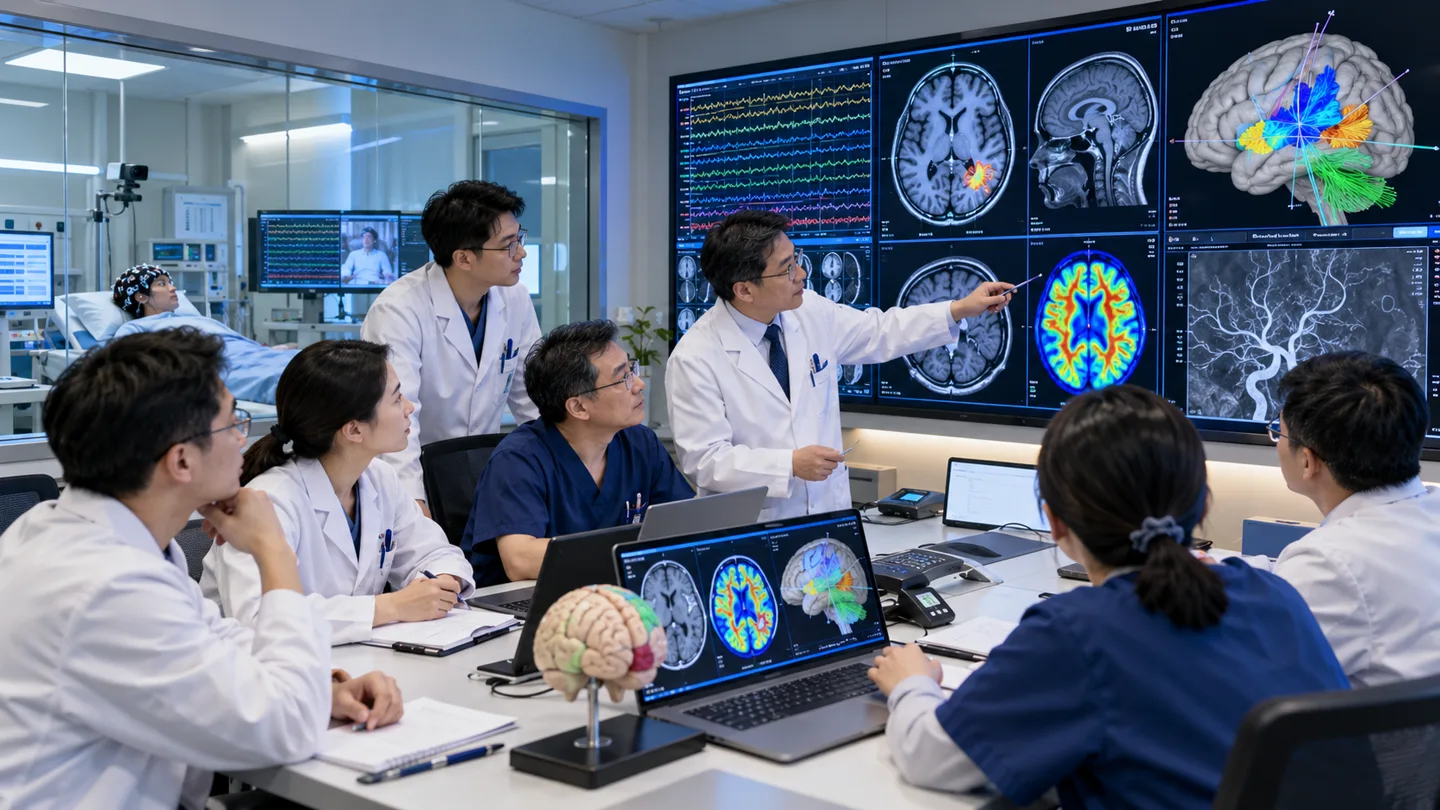
Chinese epilepsy monitoring and surgical team reviewing video EEG MRI PET and brain mapping
Concordance is stronger than any single testSeizure behavior, EEG, imaging and cognition should point toward a coherent network before irreversible treatment.

From recorded seizures to a testable surgical hypothesis

When non-invasive data are insufficient, intracranial electrodes may be used to refine onset and functional boundaries.

ConfirmEstablish drug-resistant focal epilepsy
LocalizeCombine video EEG imaging and cognition
ProtectMap eloquent function and memory risk
TreatResect ablate disconnect or stimulate

Seizure outcome and function are followed over years

Early care monitors seizures, mood, cognition and neurologic function. Antiseizure medicines are usually continued initially.

Long-term follow-up uses seizure diaries, EEG when needed and neuropsychological or rehabilitation support. Medication reduction is individualized and gradual.

International patient completing seizure diary memory and medication follow-up after epilepsy surgery
Seizure freedom is not the only outcomeMemory, language, mood, independence, injuries and medication burden all contribute to meaningful benefit.
Resection candidateRemove a localized safe target
Invasive monitoringTest an uncertain network
NeuromodulationReduce seizures when resection is unsafe
No surgeryRefine medical and supportive care

Risks, limits and realistic expectations

Risks include bleeding, infection, stroke, weakness, language or memory decline, mood change, visual-field loss, persistent seizures and death. Surgery cannot guarantee seizure freedom.

Do not delay urgent local care

A seizure lasting five minutes, repeated seizures without recovery, serious injury, breathing difficulty or new persistent weakness requires emergency local care.

Before hospital review

Records for epilepsy surgery assessment

A safe international review depends on dated source reports, original imaging and a complete treatment timeline—not a diagnosis label alone.

Detailed seizure descriptions and videos
All antiseizure medicines with doses and response
Video EEG monitoring data
Epilepsy-protocol MRI DICOM
PET SPECT MEG if performed
Neuropsychological testing
Psychiatric and functional assessment
Previous surgery or stimulation records

Tell us what you need

Ask about your care,
your hospital and your budget.

You can ask about suitability, an expert opinion, an appointment or the likely medical cost. If you are unsure, choose “Not sure — please advise”.

This enquiry is aboutEpilepsy SurgeryNot sure — please advise

How a personal estimate is prepared

  1. Tell us about your case.Describe your diagnosis, main question and preferred city, if any.
  2. Share the relevant records.We explain what is needed and how to send it by WhatsApp or email.
  3. Request a hospital estimate.Where appropriate, we help request hospital review and a cost estimate. Any paid review is agreed first.

This is an enquiry, not an order or payment. Proxy consultation is not mandatory. Any service scope is agreed separately before you proceed.

Ask about Epilepsy Surgery

A first enquiry is free. Email and permission to respond are required; the other details are optional. Any paid clinical review or coordination is discussed separately.

Included automatically so we know which procedure you are asking about.
A preference, not a confirmed appointment.
Please do not send passport numbers, card details or full medical files in this first enquiry. We will explain which records are needed next.

Send a short summary first. This is an enquiry, not an order, payment or confirmed appointment.

No booking or payment is made by sending this enquiry.
Editorial transparency

Medical sources

Patient information is based on established government and professional guidance. Content updated 5 October 2026. This is patient information, not an individual clinical assessment.