What the home neurologist actually needs from the China admission
A neurology handover works when the receiving clinician can reconstruct what was done, why, and what has changed since. That means more than a one-page discharge letter. The most useful package usually contains the operative note, the discharge summary, the imaging performed before and after surgery, any pathology or histology report, the medication chart with doses and changes, and a dated seizure diary covering the period before and after the operation.
Epilepsy surgery is considered for selected people whose seizures are not controlled by medicines, and assessment weighs potential benefits against risks. Because the decision to operate is individual, the home team needs the reasoning behind the choice, not only the outcome. Ask the China team for the presurgical evaluation summary, the consent discussion record if available, and any neuropsychology or language assessment. These documents explain why this operation was chosen for this patient.
If the patient is still in China, request the records before discharge rather than after. Hospital medical record offices can take time to copy and certify documents, and some reports are easier to obtain while the patient is still an inpatient. Ask the ward clerk or international office what the hospital's process is for releasing records to a patient or family member, and whether certified translations are available. Confirm the exact scope with that hospital rather than assuming a standard package.
Operation-specific records: what to ask for by name
A generic request for 'all medical records' often produces an incomplete file. Name the documents. For epilepsy surgery, the list typically includes the operative report, the anaesthesia record, the immediate postoperative notes, the intensive care or high-dependency notes if the patient went there, and the discharge summary. If a device was implanted, ask for the device identification card and programming parameters.
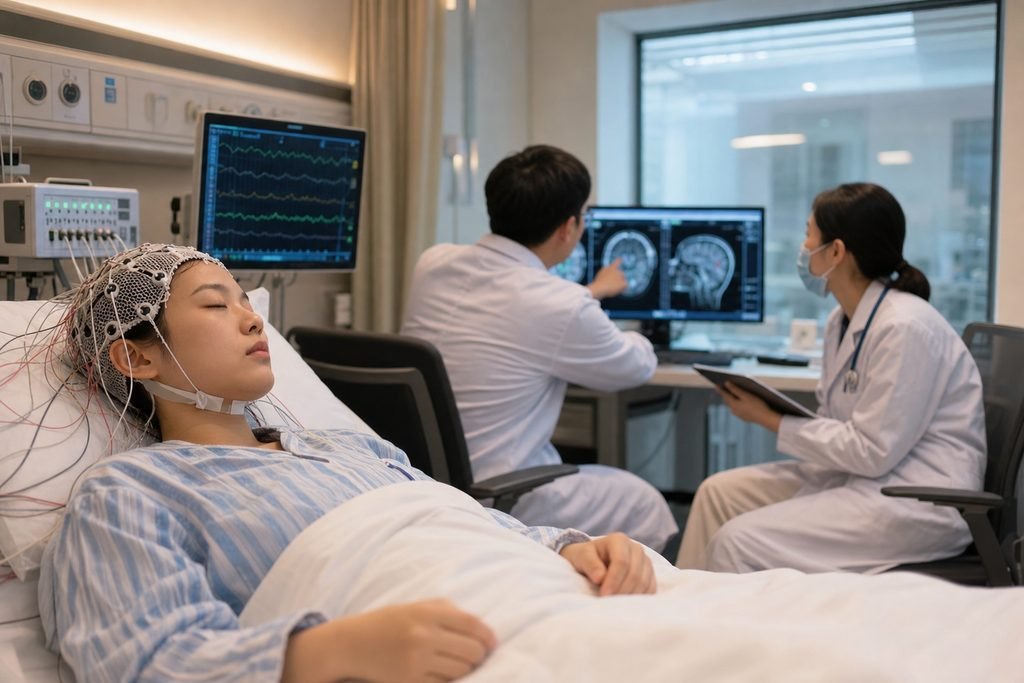
Imaging deserves separate attention. Request the actual image files on disc or via a secure transfer link, not only the radiologist's report. The home team may want to review the MRI, and in some cases the EEG or video-EEG telemetry reports. Ask whether the hospital can provide the raw EEG data or only the interpretation. If the answer is unclear, ask the treating neurologist what they would want a colleague to receive.
Pathology matters when tissue was removed. Ask for the histopathology report with the specimen description. If the report is in Chinese, ask whether an English translation is available or whether the hospital can provide a bilingual version. Do not assume the home clinician can interpret an untranslated report; ask them what format they prefer before you request copies.
Unresolved results and pending tests: how to flag them honestly
Some results will not be ready before the patient flies home. Blood tests, pathology, genetic studies or prolonged EEG review may still be pending. The handover should state clearly which results are outstanding, who is responsible for following them up, and how the home team will receive them. A short cover note listing pending items prevents the home neurologist from assuming the file is complete.
Ask the China team to write down the expected reporting route for each pending test. Will the result be sent to the patient, to a family member, or to a named clinician? Is there a contact person at the China hospital who can answer questions after discharge? Get that person's role and email address, not just a general hospital phone number. Confirm whether the hospital will communicate in English or whether you need to arrange interpretation.
Do not ask the home neurologist to chase results from China. That is not their responsibility and it rarely works. Instead, agree with the China team who will send each result and by what method. If the hospital cannot send results internationally, ask what alternatives they offer. The answer may vary by hospital and by department, so confirm it rather than assuming a standard process.
Receiving clinician acceptance: what the home team decides
The home neurologist or epilepsy team decides whether to accept the handover and how to continue care. They may want to see the patient before reviewing the full file, or they may ask for records in advance. Their preference is not a judgment on the China treatment. It reflects their own workflow, local guidelines and the need to examine the patient themselves.
When you contact the home clinic, describe the situation briefly: epilepsy surgery performed in China on a specific date, records available, and the patient's current condition. Ask what they need and in what format. Some clinics accept scanned PDFs by secure email; others require a physical copy or a specific referral. Do not send a complete medical archive through an unsecured channel. Ask the clinic's administrative team what they accept.
If the home clinician asks for clarification that you cannot provide, say so and offer to request it from China. Do not attempt to interpret the operative note or explain the surgical decision yourself. The receiving clinician's independent assessment is the point of the handover. Your role is to make the records available and to answer practical questions about dates, medications and follow-up.
Communication and responsibilities after you leave China
A handover is not finished when the records are sent. It needs a named contact on each side. On the China side, that might be the surgeon's office, the international patient department or a case coordinator. On the home side, it is the neurologist or epilepsy nurse specialist who has agreed to take over care. Write down who is responsible for what, and share that list with both sides.
Language is a practical barrier. If the home clinician does not read Chinese, the records need translation. Ask the China hospital whether they provide certified translations or whether you need a separate translation service. Do not rely on machine translation for operative notes or pathology reports. If a question arises later, the home team may need to speak with the China team directly. Ask whether the China hospital can arrange a brief clinical call or written clarification, and who would coordinate it.
Medication is a common source of confusion. The handover should include the exact medication names, doses, frequency and any changes made during the admission. If the home clinician plans to adjust medication, that is their decision. Do not change doses yourself based on the China discharge instructions alone. Ask the home team to confirm the plan before any change.
A practical handover checklist and the next step
Before you leave China, gather the documents in one folder, digital and paper. Label each file clearly with the date and the type of record. Include a one-page cover summary written by the China team, listing the operation performed, the date, the surgeon's name, the discharge medications and any pending results. This cover page is what the home neurologist will read first.
When you get home, contact the receiving clinic before the first appointment. Confirm what they have received and what they still need. If something is missing, request it from the China contact immediately. Keep a copy of every request and response. If the home clinician asks a question you cannot answer, pass it to the China contact rather than guessing.
For general information about epilepsy surgery as a procedure, see the related reference page. If you are planning care in China and want help identifying the right hospital or preparing records, you can start with a free initial enquiry. The team checks the available diagnosis and records, identifies missing information and suggests a relevant next step. This is not a diagnosis or a promise of acceptance, and it does not replace the receiving clinician's assessment.
- Operative report and anaesthesia record
- Discharge summary and medication chart
- Imaging files, not only reports
- Pathology or histology report
- Seizure diary with dates and descriptions
- Pending results list with responsible contact
- Device card and settings if implanted
- Translation status for each document
Sources & scope of this guide
References and official service information relevant to this guide.
This is general planning information and has not been individually reviewed by a doctor. Medical decisions and personal treatment advice come from your treating clinicians.