First, separate the imaging question from the treatment question
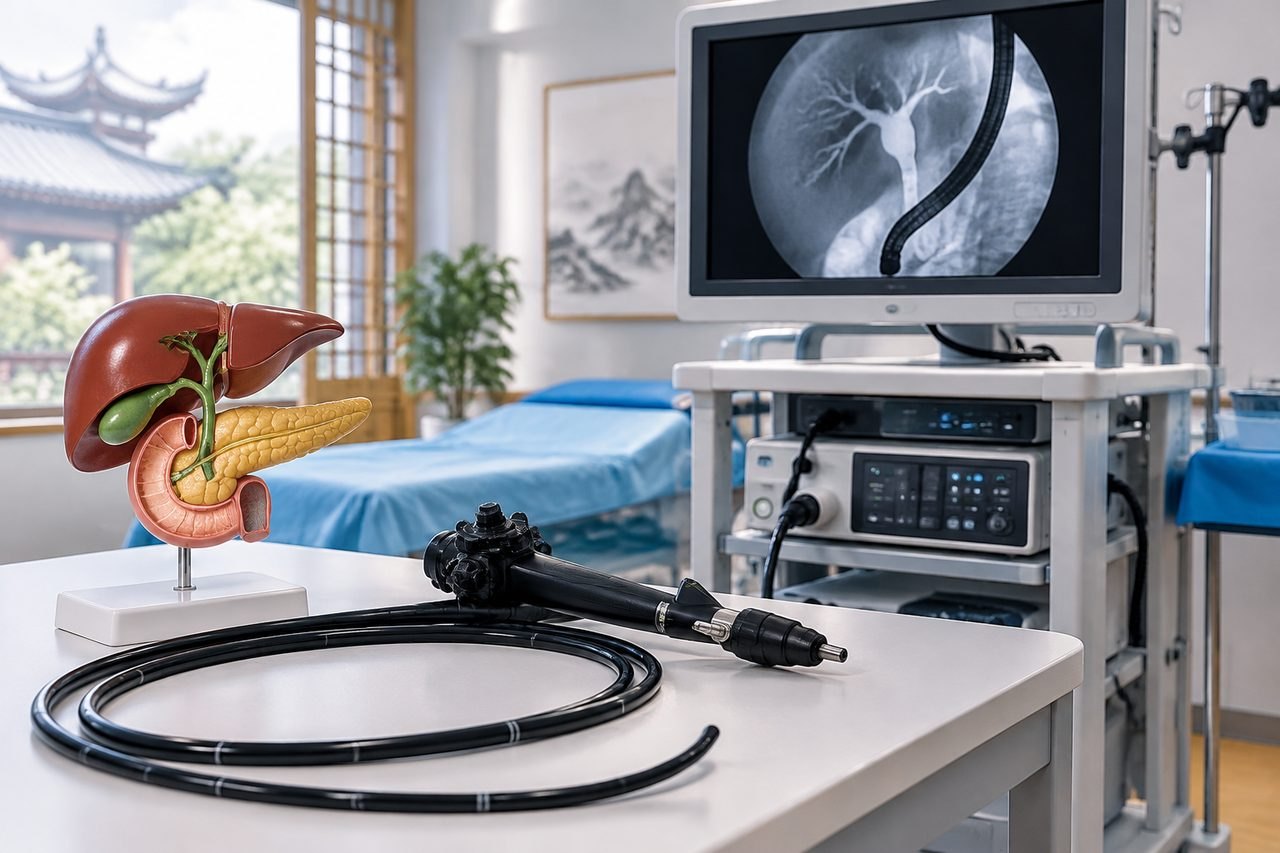
ERCP combines endoscopy and X-rays to examine and treat bile or pancreatic duct problems. That single sentence hides the decision most overseas patients actually face. The procedure is not one thing. It can be used to look at a duct, to remove a stone, to place or change a stent, to take tissue, or to combine several of those steps in one session. The risks and the alternatives differ depending on which of these the team intends.
So the first question is not "do I need ERCP?" It is "what specifically do you plan to do during this ERCP, and why?" Ask the clinician to state the intended intervention in plain terms. If the answer is vague, or if the plan is described only as "ERCP" without naming the step, that is a signal to slow down and ask again before you commit to travel or to the procedure itself.
This matters because a diagnostic question and a treatment question have different alternatives. If the team mainly needs more information about the duct, other imaging may be relevant, and ERCP may not be the only route. If the team already knows a stone or a blockage needs treatment, the conversation shifts to how that treatment is best delivered and what happens if it is delayed. Ask which situation applies to you.
Ask what the duct imaging already showed
ERCP is not a first-line look at the bile or pancreatic ducts in every situation. It is usually considered when there is a specific duct problem to examine or treat, and the decision often follows earlier imaging such as ultrasound, CT or MRI. Ask the team to walk you through what the existing imaging showed and what question remains open.
A useful way to frame this: "What did the imaging already tell you, and what is ERCP expected to add that the imaging could not?" If the answer is that ERCP is needed to confirm something, ask what the alternatives for confirmation are and why ERCP is preferred in your case. If the answer is that treatment is needed, ask which finding on the imaging drives that plan.
You do not need to interpret the images yourself. You need to understand whether the proposed ERCP is answering a diagnostic question, delivering a treatment, or both. That distinction shapes the risks you are being asked to accept and the alternatives worth discussing.
Name the intended intervention and the follow-up it implies
Ask directly whether the proposed ERCP involves stone treatment, stenting, tissue sampling or another intervention. Then ask whether later procedures are expected. A stent, for example, may be placed with a plan to remove or exchange it later, and that follow-up is part of the decision, not an afterthought.
The follow-up question is often where overseas planning breaks down. If a second procedure is likely, ask when it would be needed, whether it can be done in the same visit or requires a return trip, and what happens if you cannot return on the suggested schedule. Do not accept a vague "we will see" if the plan depends on follow-up. Ask the team to describe the expected sequence in writing.
Also ask who would perform any follow-up and whether the same team would be involved. This is not about doubting the clinician. It is about knowing whether the plan is a single event or a course of care, because that changes travel, cost and timing decisions.
- What is the intended intervention during this ERCP: stone treatment, stenting, sampling or another step?
- Is a later procedure expected, and if so, what would it involve?
- Can the follow-up be done in the same visit, or does it require a return trip?
- What happens if the follow-up cannot be done on the suggested schedule?
Ask about risks in terms of your situation, not a general list
Every procedure has risks, and ERCP is no exception. The useful question is not "what are the risks of ERCP?" in general. It is "what are the main risks for me, given my duct problem, my other conditions and the specific step you plan?" Ask the clinician to name the risks that are most relevant to your case and to explain how the team would manage them if they occurred.
Ask what would make the team stop or change the plan during the procedure. Ask what the recovery involves and what symptoms should prompt you to seek care. Ask whether any of your current medicines or conditions change the risk. These are questions for the treating clinician, not something to resolve from a general article.
If you are considering care in China, also ask how urgent the procedure is. If the team says it can wait, that affects your planning. If the team says it should not wait, that is a reason to prioritise local assessment rather than delay for an overseas enquiry. Do not postpone necessary care to travel.
Ask what the alternatives are, including doing nothing for now
Alternatives to ERCP depend on what the team is trying to achieve. If the goal is diagnosis, ask whether other imaging or tests could answer the question. If the goal is treatment, ask whether there are other ways to address the duct problem and what the trade-offs are. Ask what is likely to happen if the procedure is not done now.
It is reasonable to ask whether a period of observation is an option, and what would change that. It is also reasonable to ask whether a less invasive step could come first. The clinician may explain why ERCP is preferred in your case, or may agree that another route is worth considering. Either way, you should leave the conversation understanding why this procedure, at this time, is being proposed.
If you are seeking a records-based opinion before travelling, be clear about what that can and cannot do. A remote review can help you understand the options and prepare questions, but it does not establish final suitability or hospital acceptance. The treating hospital decides whether ERCP is appropriate for you.
Prepare your records and put the answers in writing
Before an appointment or a remote review, gather the imaging reports and images, any previous endoscopy or ERCP reports, your current medicine list, and a short summary of your main question. You do not need to send a complete archive at first contact. A brief summary is enough to start, and the team can tell you what else is needed.
During the consultation, ask the clinician to put the key answers in writing: the intended intervention, the expected follow-up, the main risks for you, the alternatives discussed, and what would happen if you chose not to proceed now. Written answers help you compare options and avoid relying on memory after a long appointment.
If you are planning care in China, you can ask the hospital what its written plan and quote include, what is excluded, and what remains undecided. Ask how the team handles language and interpretation during consent discussions, and ask about practical arrangements for the day of the procedure. These are questions to confirm with the specific provider, not assumptions to carry from one hospital to another.
A free initial enquiry with ChinaSpecialistCare can help you organise your records and identify the relevant next step. It is not a diagnosis or a promise of acceptance, and it does not replace the treating team's assessment. You can start with a short summary, and the team will explain how to share records after first contact. The hospital decides suitability.
Sources & scope of this guide
References and official service information relevant to this guide.
This is general planning information and has not been individually reviewed by a doctor. Medical decisions and personal treatment advice come from your treating clinicians.