
Home / Gastroenterology / ERCP
Gastroenterology patient guide · 内镜逆行胰胆管造影

ERCP in China

Considering ERCP in China? Start with duct imaging, intended intervention and stent follow-up. This guide helps you identify the relevant records, questions for the receiving team and the scope of an individual estimate before a visit is agreed.

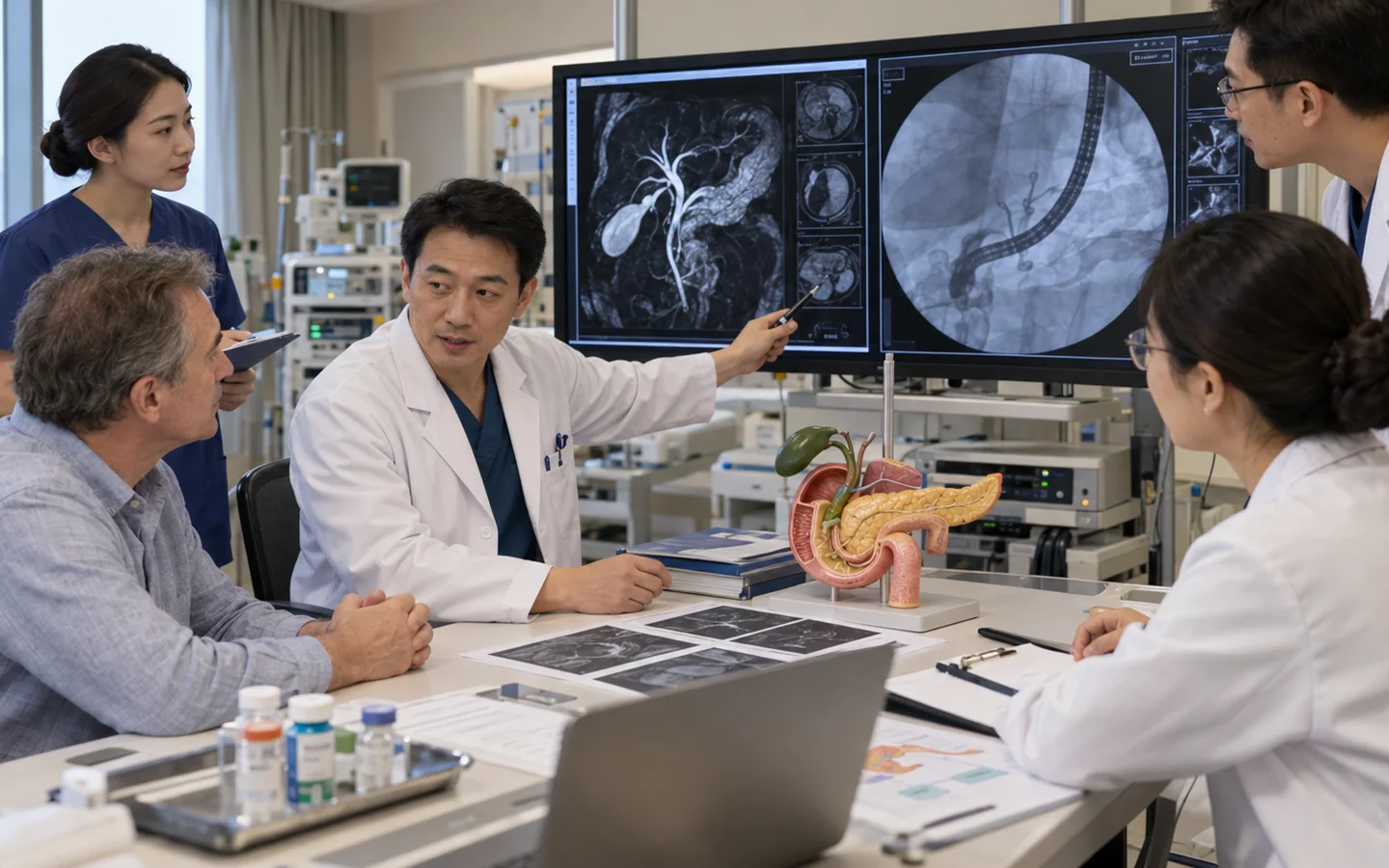
Chinese therapeutic endoscopist explaining ERCP stone extraction and stenting to an international patient

Medical records & cost enquiry

ERCP: assessment and cost questions

For ERCP, the budget depends on the proposed care and the hospital. A useful estimate needs to distinguish:

  • Diagnostic question and intended intervention
  • Stone treatment, stents or other consumables
  • Admission and possible repeat procedures

Hospital medical fees, travel and our coordination services are separate. Any paid specialist review or coordination service is explained and agreed before you proceed.

Your next step

Start with your question

Tell us your diagnosis and what you need. Our free initial review checks the information and helps identify a suitable next step; it is not a specialist opinion or a hospital quotation.

Request a case-based estimate

Not ready to send records? Ask us first. Where hospital review is appropriate, we can help request an estimate. No travel commitment or mandatory proxy consultation.

Planning ERCP in ChinaHospital review · individual costs · visit and follow-up

Plan the visit around duct imaging, intended intervention and stent follow-up. Agree the assessment route before travel.

Records for the ERCP review

Tell us what you already have: MRCP CT ultrasound and EUS DICOM; Liver pancreatic and infection laboratory trends; Previous ERCP reports and images. Start with a short summary; after first contact we explain which records the receiving team needs and how to share them.

Confirm the proposed scope and costs

Before asking for a personal estimate, clarify: Diagnostic question and intended intervention; Stone treatment, stents or other consumables; Admission and possible repeat procedures. The receiving team confirms the proposed scope and hospital charges; coordination is agreed separately.

Visits and care after returning home

Ask whether the proposed ERCP involves stone treatment, stenting or another intervention, and whether later procedures are expected. Tell us if you need interpretation or English-language documents, and confirm the relevant arrangements with the receiving team.

ERCP accesses bile and pancreatic ducts to diagnose and treat obstruction

A catheter passes through an endoscope into the duct opening in the duodenum. Contrast and X-ray imaging show the ducts while small tools remove stones, dilate strictures, sample tissue or place stents.

Because ERCP can cause serious complications, MRCP or EUS often answers purely diagnostic questions first. Urgent drainage may be lifesaving in cholangitis.

Clarify the therapeutic goal before consent

The plan should state whether ERCP will remove a stone, drain infection, treat a leak, sample a stricture or place a temporary or permanent stent.

Who may be considered?

Specialist review may help when the diagnosis, symptoms and previous treatment create a focused question about ERCP.

  • Common bile-duct stone requiring extraction.
  • Obstructed infected bile duct needing drainage.
  • Benign or malignant stricture requiring sampling or stenting.
  • Selected pancreatic-duct leak, stone or narrowing.

What the specialist team must confirm

Review includes liver and pancreatic tests, ultrasound CT MRCP or EUS, infection and cultures, previous surgery or ERCP, altered anatomy, pregnancy possibility, allergies, anticoagulation and individual risk of pancreatitis, bleeding and sedation problems.

Key points for this treatment
Combinesupper endoscopy and fluoroscopy
Treatsstones strictures leaks and selected duct problems
AlternativesMRCP ultrasound or EUS for diagnosis
Key riskpost ERCP pancreatitis
Chinese ERCP team reviewing MRCP fluoroscopy anatomy antibiotics and pancreatitis prevention plan
Imaging defines the target before duct accessMRCP, EUS or CT helps the team choose equipment, antibiotics, sampling and a backup drainage route.

From noninvasive imaging to targeted duct therapy

ERCP is most appropriate when its ability to treat the problem justifies the risk of pancreatitis and other complications.

ConfirmDefine duct problem and urgency
AccessCannulate the target duct
TreatExtract dilate sample or stent
TrackMonitor complications and temporary devices

Pain, fever and stent plans require attention

Patients are observed for pancreatitis, bleeding, perforation, infection and sedation effects. Some results are immediate, while brushings or biopsies take longer.

Temporary pancreatic or biliary stents require documented removal or exchange. Persistent jaundice or fever may mean drainage is incomplete or the stent has blocked.

International patient reviewing liver tests symptoms and stent follow up after ERCP
The procedure report should travel with the patientIt should record access, findings, treatment, stent details, complications and the exact follow-up action.
Stone clearedConfirm clinical and laboratory recovery
Stricture sampledAwait pathology and plan drainage
Stent placedSchedule removal exchange or review
Access unsuccessfulChoose EUS percutaneous or surgical route

Risks, limits and realistic expectations

Risks include pancreatitis, bleeding, cholangitis, cholecystitis, perforation, aspiration and sedation complications. Cannulation or complete treatment may fail and repeat or alternative drainage may be required.

Do not delay urgent local care

Severe or worsening abdominal pain, fever, vomiting, jaundice, black stool, vomiting blood or breathing difficulty after ERCP requires urgent local care.

Before hospital review

Records for ERCP assessment

A safe international review depends on dated source reports, original imaging and a complete treatment timeline—not a diagnosis label alone.

MRCP CT ultrasound and EUS DICOM
Liver pancreatic and infection laboratory trends
Previous ERCP reports and images
Exact prior stent details
Pathology cytology and cultures
Surgery and altered-anatomy records
Anticoagulation allergies and medicines
Planned follow-up and removal dates

Tell us what you need

Ask about your care,
your hospital and your budget.

You can ask about suitability, an expert opinion, an appointment or the likely medical cost. If you are unsure, choose “Not sure — please advise”.

This enquiry is aboutERCPNot sure — please advise

How a personal estimate is prepared

  1. Tell us about your case.Describe your diagnosis, main question and preferred city, if any.
  2. Share the relevant records.We explain what is needed and how to send it by WhatsApp or email.
  3. Request a hospital estimate.Where appropriate, we help request hospital review and a cost estimate. Any paid review is agreed first.

This is an enquiry, not an order or payment. Proxy consultation is not mandatory. Any service scope is agreed separately before you proceed.

Ask about ERCP

A first enquiry is free. Email and permission to respond are required; the other details are optional. Any paid clinical review or coordination is discussed separately.

Included automatically so we know which procedure you are asking about.
A preference, not a confirmed appointment.
Please do not send passport numbers, card details or full medical files in this first enquiry. We will explain which records are needed next.

Send a short summary first. This is an enquiry, not an order, payment or confirmed appointment.

No booking or payment is made by sending this enquiry.
Editorial transparency

Medical sources

Patient information is based on established government and professional guidance. Content updated 5 October 2026. This is patient information, not an individual clinical assessment.