
What each option actually does
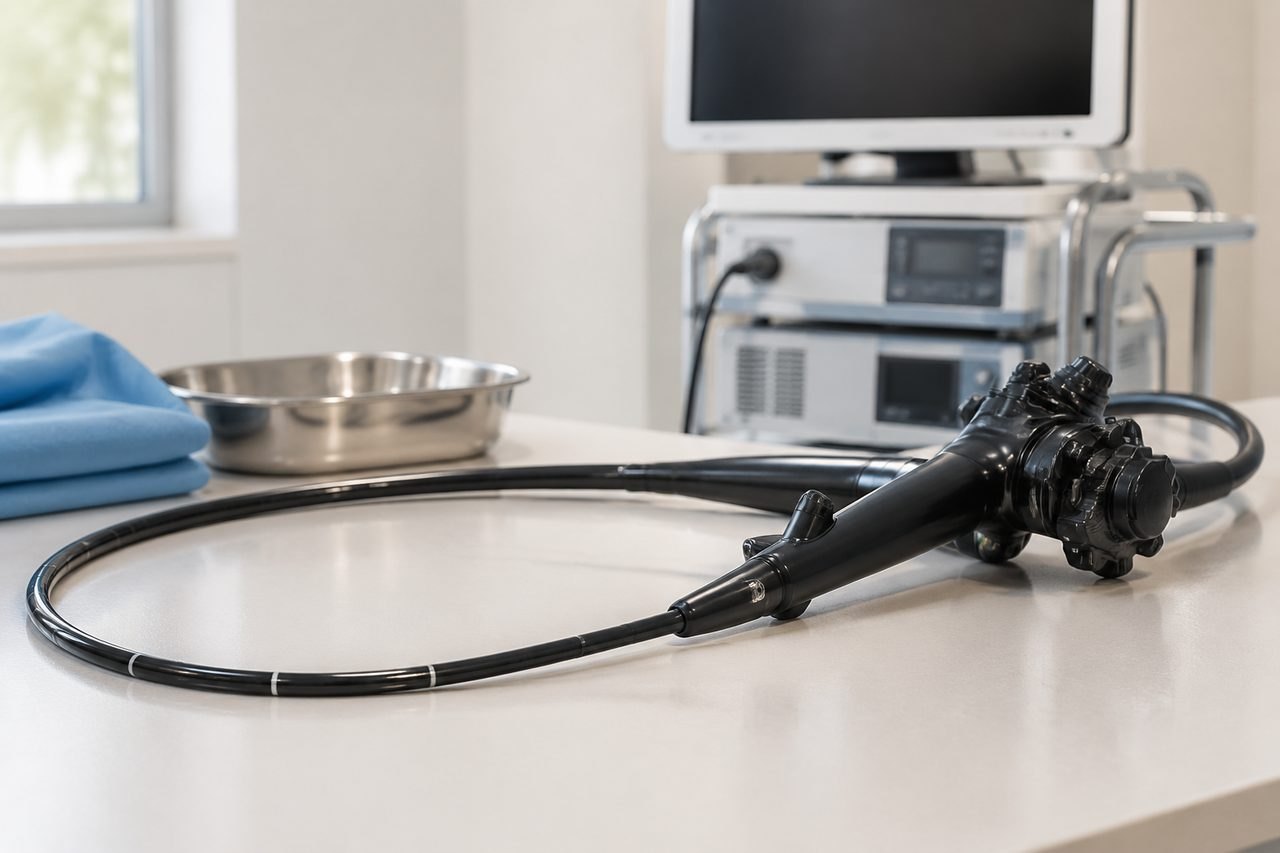
ERCP (endoscopic retrograde cholangiopancreatography) is an endoscopic procedure. A flexible scope is passed through the mouth, stomach and into the small bowel to reach the opening of the bile duct. The team can then inject contrast to outline the duct, take samples, remove stones, place a stent to hold a narrowed duct open, or relieve a blockage. It is used for problems inside the duct itself, and it avoids an abdominal incision.
Bile duct surgery means an operation on the duct or the surrounding drainage route. Depending on the cause, this can involve removing a section of duct and rejoining it, diverting bile flow into the bowel, or removing the gallbladder when stones there are the source. It is a bigger undertaking than ERCP, with a longer recovery and its own risks, but it can address problems that an endoscopic approach cannot reach or cannot fix durably.
The two are not rivals in a single contest. They answer different questions. ERCP asks whether the problem can be reached and corrected from inside the duct. Surgery asks whether the problem needs to be removed, bypassed or reconstructed from outside. A patient may be considered for one, the other, or a sequence of both.
The findings that drive the decision
Clinicians weigh several concrete features of the case. The first is the nature of the blockage. A stone in the duct is often approached endoscopically, because ERCP can remove it without opening the abdomen. A stricture or tumour may need tissue sampling and a plan for longer-term drainage, and the team must judge whether a stent or an operation gives better control.
The second is the level and length of the problem. A blockage near the duct's lower end is generally easier to reach with a scope than one high in the duct near the liver. Anatomy matters too: previous surgery on the stomach or bile duct, certain congenital variations, or a changed bowel layout can make the endoscopic route difficult or impossible. The team needs to know about these before planning.
The third is the clinical state. Infection in the bile duct (cholangitis), worsening jaundice, fever or pain can make urgent drainage the priority, and the least invasive route that achieves drainage may be preferred first. The fourth is the patient's overall fitness for anaesthesia and surgery, and what the imaging shows about nearby blood vessels and the liver.
These factors are assessed together, not one at a time. A patient may be told that ERCP is the first step to relieve infection, with surgery considered later once the cause is clearer and the patient is stable. That sequence is a clinical judgement, not a fixed rule.
Why the imaging and records matter so much
The choice is only as good as the information behind it. The treating team will want to see what has already been done: ultrasound, CT, MRI with MRCP (magnetic resonance cholangiopancreatography), any previous ERCP report, biopsy results, blood tests showing liver and bile markers, and a record of prior abdominal operations. These documents tell the team where the problem is, how long it is, and whether the duct has been instrumented before.
For an overseas patient, gathering these records before travel is the practical step that most affects planning. A report that says only 'bile duct obstruction' is far less useful than the images and the original procedure notes. If a previous ERCP was attempted and failed, the reason matters: was the opening not reachable, was the stone too large, or was there a stricture that could not be passed? That detail changes what the next team would consider.
It is reasonable to ask the receiving clinicians which specific images and reports they need, and whether they want the original files rather than a summary. Do not assume a complete archive is required before any conversation; a short summary of the diagnosis and the main question is enough to start, and the team can then say what else would help.
Questions that make the discussion concrete
A useful consultation is one where the patient leaves understanding why one route is being proposed. These questions help, and the treating team should be able to answer them in plain terms for the individual case:
What is causing the blockage, and how certain is that diagnosis? Where exactly is it, and how long is the narrowed or blocked segment? Is there infection or severe jaundice that needs draining first? What would ERCP be expected to achieve here, and what would make it unsuitable or likely to fail? If surgery is proposed, what operation is meant, and what are its risks and recovery compared with the endoscopic route? Is a combined or staged approach being considered, and why?
Ask also what would happen if the first approach did not work. A plan that includes a fallback is more honest than one that assumes a single procedure will settle everything. The answers belong to the treating clinicians; no article can decide them for an individual.
Risks, consent and what ERCP does not settle
ERCP is less invasive than surgery but not risk-free. Recognised risks include pancreatitis after the procedure, bleeding, infection and perforation, and the balance of these depends on the procedure performed and the patient. Sedation carries its own considerations. Surgery carries the risks of anaesthesia, bleeding, infection, leakage from a rejoined duct and longer recovery. The treating team should discuss the specific risks for this patient before consent, and important discussions are best held before sedation rather than after.
Consent is not a formality. The patient should understand what is being attempted, what alternatives exist, and what the team will do if the findings during the procedure differ from the plan. A stent placed at ERCP may need later exchange or removal; that is a management plan, not a cure, and the team should explain what follow-up it expects.
One boundary is worth stating plainly: a records-based opinion, however detailed, does not establish that a procedure is suitable or that a hospital will accept the patient. Suitability is confirmed by the treating hospital after its own assessment.
Planning care in China and the next step
For an international patient, the practical question is how to get a clear, evidence-based view of the choice before committing to travel. ChinaSpecialistCare's team can review a short summary of the diagnosis, the imaging and procedure reports, and the patient's main question, and suggest the relevant next step. This initial review is free and is not a diagnosis or a promise of acceptance. A proxy consultation, in which a doctor takes the records to a relevant hospital specialist while the patient remains at home, is optional and not a prerequisite for every appointment.
Where a procedure is later arranged, cost is one of the things to settle in writing before committing. ERCP and bile duct surgery are different procedures with different scope, and the fee for one does not tell you the fee for the other. Ask the treating hospital for a written quote that states which procedure is planned and what the quoted scope covers, rather than assuming a figure carries across. Our published procedure reference pages set out the cost context for each, and the team can point you to the relevant one for your case.
The next step is simple: send a brief summary of the diagnosis, the key imaging or procedure reports, and the specific question about ERCP versus surgery. The treating hospital, not this service, decides which route is appropriate.
Sources & scope of this guide
References and official service information relevant to this guide.
- Related treatment reference
- procedures
- ASGE | ERCP
- Management of Acute Cholangitis and Choledocholithiasis.
- The best approach to treat concomitant gallstones and common bile duct stones. Is ERCP still needed?
- Common bile duct stones: the role of preoperative, intraoperative, and postoperative ERCP.
This is general planning information and has not been individually reviewed by a doctor. Medical decisions and personal treatment advice come from your treating clinicians.