
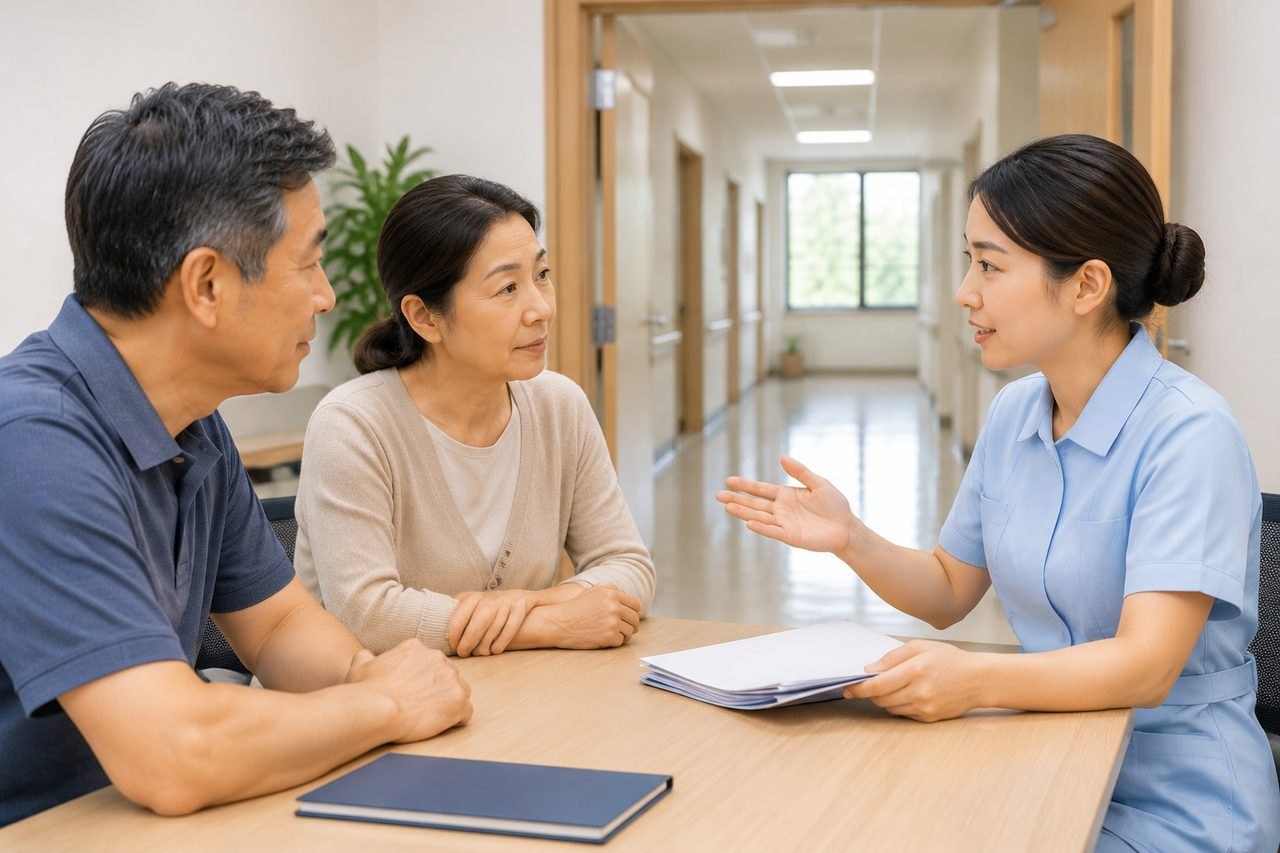
What caregiver training actually means in a Chinese hospital
The phrase can mislead. There is no single national curriculum that every hospital follows for foreign families, and no qualification that a relative automatically earns by attending. In practice, caregiver training is the teaching a ward team gives to the person who will manage the patient after discharge: how to help with movement, how to handle a wound or a device, what to watch for, when to call for help, and how follow-up is organised.
That teaching is shaped by the patient's diagnosis and the treatment performed. A family member helping after joint replacement needs different instruction from one managing a feeding tube, a stoma, a tracheostomy, or a child's medicines. The content follows the clinical plan, not a generic syllabus.
Because of this, the most useful question is not 'what does the course include' but 'what will this patient's team expect me to do at home, and who will teach me'. The answer comes from the treating clinicians, and it should be confirmed before discharge planning is treated as settled.
Who teaches, and where the teaching happens
Teaching is normally delivered by ward nurses, and sometimes by physiotherapists, dietitians, pharmacists or the treating doctor, depending on the task. It usually happens at the bedside or in a treatment area during the admission, rather than in a separate classroom. Some hospitals run group sessions for common tasks; others teach one family at a time.
For international patients, language is the practical variable. A ward nurse may demonstrate a technique correctly while explaining it in Mandarin, and a family member may understand the demonstration but not the safety instructions attached to it. Interpretation during the teaching session matters more than interpretation during a general ward round, because the caregiver has to reproduce the task later without supervision.
Ask the ward in advance whether an interpreter can be present for the specific teaching sessions, and whether written instructions can be provided in English. Do not assume either is available. The hospital decides what it can offer, and the answer may differ between a public tertiary hospital and a private international department.
What a caregiver should be able to do before leaving
The realistic goal is not broad medical competence. It is safe performance of the specific tasks this patient needs, plus recognition of when to stop and seek help. A useful way to frame preparation is to ask the team to walk through the actual daily routine the caregiver will follow at home.
That conversation should cover the tasks themselves, the equipment involved, what a normal appearance or reading looks like for this patient, and which changes should prompt a call to the hospital rather than a wait. It should also cover medicines: what each is for, how it is given, and what the caregiver should do if a dose is missed. Medicine instructions belong to the prescribing clinician and the dispensing pharmacy, not to a coordinator.
Ask whether the caregiver will be observed performing the task before discharge, and whether there is a chance to ask questions afterwards. Demonstration plus supervised practice is more useful than a verbal explanation alone, but the ward decides how this is organised.
- The daily tasks the caregiver will perform, in the order they occur
- Equipment to be used and how it is cleaned or stored
- What the team considers a normal appearance, reading or response for this patient
- Which changes mean calling the hospital and which mean emergency local care
- Each medicine's purpose, timing and what to do about a missed dose
- Who to contact at the hospital after discharge, and during which hours
Planning the caregiver's role before the patient travels
Families often decide who will act as caregiver only after arrival. That creates avoidable problems: the nominated person may not be present for the teaching, may not speak the language used in the ward, and may not be able to stay for the discharge period. It is worth deciding early who will take on the role and making sure that person is physically present when instruction is given.
It also helps to be honest about what the caregiver can realistically manage. Lifting a patient, changing a dressing, or managing a device at home requires physical capacity and, in some cases, a second pair of hands. If the plan assumes one person will do everything, raise that with the team before discharge rather than after.
Practical arrangements around accommodation, transport and time off work affect whether the caregiver can attend teaching sessions at the times the ward offers them. These are logistics the family controls, but they interact with the clinical plan, so it is better to discuss them with the hospital's discharge planning contact early.
Questions to put to the treating hospital
Because practice varies, the family should ask the hospital directly rather than rely on general descriptions. The answers establish what will actually happen for this patient, and they can be requested before travel so that expectations are set early.
Frame the questions around the patient's own plan. A hospital that cannot answer them in advance may still be able to answer once the patient is assessed, but the family should know which parts remain open. This is also where a records-based conversation can help: sharing the diagnosis and planned procedure lets the team describe the likely caregiver tasks in general terms before arrival, while making clear that the final instructions follow the actual clinical course.
- Will a family member be taught the specific tasks this patient will need at home?
- Who will provide that teaching, and at what point in the admission?
- Can an interpreter be present for the teaching sessions?
- Can written instructions be provided in English?
- Will the caregiver be observed performing the tasks before discharge?
- What contact arrangements exist for questions after discharge?
What training cannot settle, and the next step
Teaching a family member does not transfer clinical responsibility to them, and it does not guarantee that home care will be straightforward. The treating team remains responsible for the medical plan, and the caregiver's role is to follow it and recognise when to seek help. A caregiver who is unsure should be able to reach the hospital rather than improvise.
It is also worth being clear that caregiver training is not the same as a formal caregiving qualification, and it does not authorise the family member to make clinical decisions or adjust treatment. If the patient's needs exceed what one relative can safely manage, that is a conversation to have with the hospital's discharge team, not something to solve by attending more sessions.
If you are planning care in China and want to understand what the hospital is likely to expect from a family caregiver, start with a short summary of the diagnosis, the planned treatment and who will accompany the patient. Our team can help identify the relevant questions and the appropriate next step; the hospital and its clinicians decide the clinical plan and what caregiver instruction is provided.
Sources & scope of this guide
References and official service information relevant to this guide.
This is general planning information and has not been individually reviewed by a doctor. Medical decisions and personal treatment advice come from your treating clinicians.