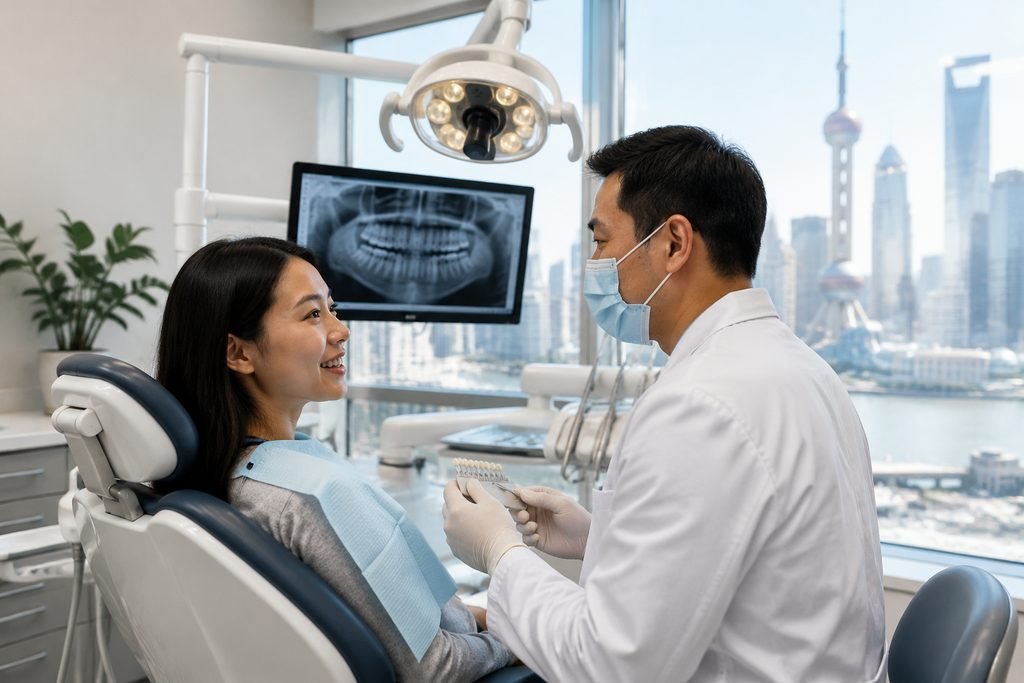
Why a single full-mouth figure is hard to compare
Full-mouth reconstruction is not one treatment with one fee. It is an individual combination of procedures chosen for a particular mouth, and the combination differs from patient to patient. Crowns, bridges, dentures and implants address different dental problems and are not interchangeable treatments, as the NHS dental treatments guidance explains. That matters for cost comparison: two quotes described as full-mouth work may contain entirely different procedures, so the totals are not measuring the same thing.
A plan might include periodontal treatment before any reconstruction, root canal treatment on some teeth, extractions, implant placement, and then crowns, bridges or a denture. Each of those stages has its own clinical decision, its own materials and its own place in the sequence. Comparing only the final figure hides which stages are included, which are provisional, and which depend on healing or on a tooth being saved.
This is why the practical question is not what full-mouth reconstruction costs in China, but what this proposed plan contains at each stage and what remains unconfirmed. A stage-by-stage comparison lets you see where two plans genuinely differ and where they are simply describing the same work in different words.
The comparison fields that actually change the estimate
When you place two proposed plans side by side, compare them on the same fields. The first is tooth-by-tooth scope: which teeth are being restored, which are being replaced, and which are being extracted. A plan that keeps a tooth with a crown is a different plan from one that removes it and places an implant, and the difference runs through every later stage.
The second field is the type of restoration or replacement for each site. A crown, a bridge, a partial denture, a full denture and an implant-supported restoration solve different problems and are not substitutes for one another. The third field is material and design: what the crown or bridge is made from, what the denture base and teeth are made from, and what the implant system and abutment are. These choices affect both the clinical plan and the cost line.
The fourth field is the number of visits and the sequence. Some stages must wait for healing or for a laboratory step; others can be combined. The fifth field is what is included in each stage: the clinical time, the laboratory work, the components, and any review appointments. Ask the provider to state this in writing rather than assuming a stage is all-inclusive.
The sixth field is who does what. A plan may involve more than one clinician, for example a periodontist, an oral surgeon and a prosthodontist. Ask how the stages are divided between them and whether that changes the estimate.
What each missing answer changes
If the plan does not say which teeth are involved, you cannot tell whether the estimate covers a few crowns or a full arch. That single missing answer can change the number of laboratory units, the number of appointments and whether implants are needed at all.
If the plan does not name the restoration type for each site, you cannot compare it with another quote. A bridge and an implant-supported crown may both replace a missing tooth, but they are different treatments with different preparation, different components and different maintenance.
If the plan does not state the material, you cannot judge whether two quotes are for the same thing. A metal-ceramic crown and a zirconia crown are not the same item, and a denture with different tooth types is not the same denture.
If the plan does not state the implant system, you cannot check whether components will be available for future maintenance, including after you return home. Ask the treating clinician which system is proposed and what documentation you will receive.
If the plan does not separate stages, you cannot see which costs are certain and which are provisional. A stage that depends on saving a tooth, on healing, or on a laboratory decision is not the same as a stage that is already fixed.
If the plan does not say what is included, you cannot tell whether a later invoice will add items. Ask for the inclusion list in writing for each stage.
Questions that turn a proposal into a comparable plan
Ask the provider to give you a written plan organised by stage, with the tooth-by-tooth scope, the restoration or replacement type, the material, the implant system where relevant, and the number of visits each stage requires. Ask which stages are confirmed and which are provisional, and what clinical finding would change a provisional stage.
Ask what records the clinician needs to produce a records-based estimate, and what cannot be estimated without an in-person examination. Do not assume that a photograph or a single X-ray is enough to diagnose the whole mouth; ask what the clinician can and cannot conclude from what you send.
Ask how the plan handles the transition back to your home dentist. Which records, laboratory details and component information will you receive? Who will maintain the work after you leave China? These questions affect the value of the plan even though they are not cost lines.
Ask whether the quoted stages include review appointments, and what the plan is if a stage needs revision. Ask the provider to state its own policy rather than relying on a general expectation.
How to compare two plans without a common price list
Because full-mouth reconstruction is individual, there is no single China-wide figure to compare against. The workable method is to compare plans on the fields above, not on the bottom line alone. Put the two plans in a table with the same rows: teeth involved, restoration type per site, material, implant system, number of visits, inclusions, and what remains provisional.
Where one plan is silent on a field, mark it as unanswered rather than assuming it matches the other. A plan that omits the material is not necessarily cheaper; it may simply be less specific. A plan that lists fewer stages may be less complete rather than more efficient.
Ask each provider to confirm its own written quote and what that quote includes. Do not apply another hospital's inclusion rules, another country's fee schedule or a general assumption about how Chinese hospitals bill. Those are provider-specific questions, and the answer belongs in the written plan you receive.
What to prepare before asking for an estimate
Prepare a short summary of your main dental concern, any previous dental treatment, and what you want the plan to achieve. Include recent dental records if you have them, and ask the provider which records would help. Do not send a complete archive or payment details at the first contact.
List your questions in the order that matters to you: which teeth, which type of restoration, which material, how many visits, what is included, and what happens after you return home. A written question list makes the reply easier to compare with another plan.
Keep the enquiry brief. An initial enquiry is free and does not require buying a proxy consultation. The hospital and its clinicians decide whether the proposed plan is suitable for you, and they confirm the estimate after reviewing your records and, where needed, examining you in person.
For context on how full-mouth reconstruction is planned as an individual combination rather than a fixed package, see the related reference on full-mouth reconstruction.
Sources & scope of this guide
References and official service information relevant to this guide.
This is general planning information and has not been individually reviewed by a doctor. Medical decisions and personal treatment advice come from your treating clinicians.