
Full-Mouth Reconstruction: diagnosis, function and long-term planning
Full-Mouth Reconstruction is considered when widespread tooth wear, missing teeth, failing restorations or bite collapse requires coordinated rehabilitation across the whole mouth.
A full-mouth plan must distinguish active disease from mechanical damage, define which teeth are restorable and test changes in bite, tooth length, speech and appearance before irreversible preparation.
Who may be considered?
Specialist review may help when multiple dental problems interact and isolated treatment no longer produces a stable or maintainable result.
- Severe generalized wear or erosion.
- Multiple failing teeth and restorations.
- Loss of bite support with functional problems.
- Complex rehabilitation after trauma or cancer care.
What the specialist team must confirm
Review complete charting, periodontal health, caries and endodontic status, photographs, radiographs, jaw-joint and muscle symptoms, mounted or digital bite analysis, smile and phonetic assessment and medical causes of erosion or dry mouth.
Key points for this treatment
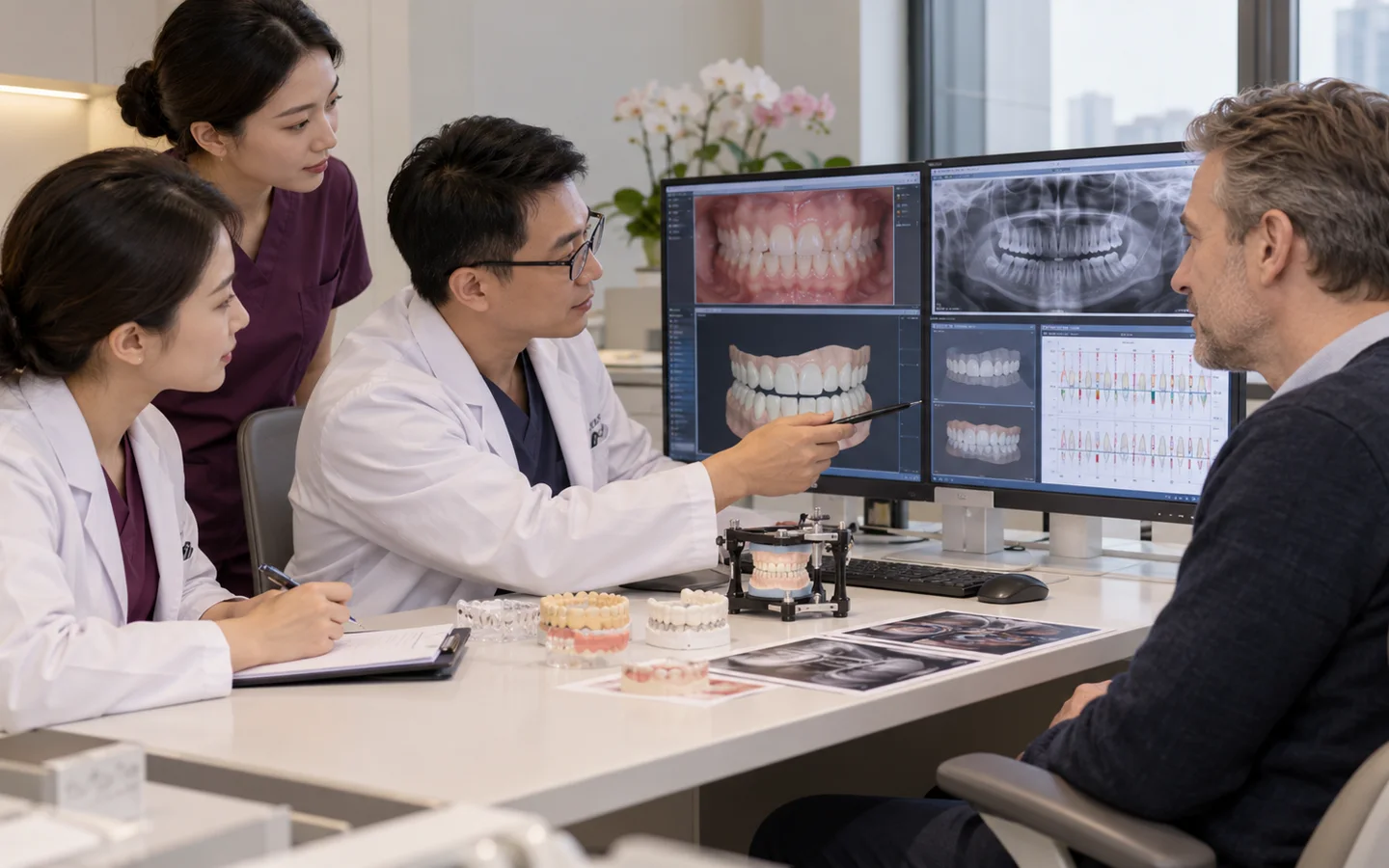
From disease control to tested whole-mouth rehabilitation
Sequencing should minimize repeated treatment and preserve fallback options if a tooth or implant prognosis changes.
A complex reconstruction needs an explicit maintenance contract
Temporary sensitivity, muscle adaptation and repeated provisional adjustments may occur as the new bite is tested.
Gum health, decay risk, ceramic or component wear, bite stability, night protection and home hygiene determine longevity.

Risks, limits and realistic expectations
Risks include sensitivity, root-canal treatment, tooth fracture, gum recession, restoration chipping, bite discomfort, jaw-muscle symptoms, aesthetic dissatisfaction and extensive future maintenance.
Facial swelling, fever, uncontrolled dental pain, spreading infection, trauma or inability to eat requires prompt local dental care.