Why full-mouth treatment is a sequence, not one appointment
Full-mouth reconstruction is an individual combination of treatments, not one fixed procedure. It is not automatically All-on-4, and it does not automatically mean extracting every tooth. Depending on what the dentist finds, your plan might combine gum treatment, root canal treatment, crowns, bridges, dentures or implants in a specific order. Each element has its own healing or fabrication stage, and some stages cannot start until an earlier one has settled.
That is why the number of visits is a clinical question, not a travel question. A dentist cannot responsibly tell you how many trips you need before examining your mouth, your X-rays and your dental history. If a clinic offers a fixed visit count before seeing you, treat that as a rough planning assumption rather than a confirmed schedule.
The practical consequence is simple: plan your first trip around assessment and the start of treatment, not around completion. Ask the treating team to explain which stages could be done in one visit and which require a return, and ask them to put that in writing before you book flights.
What to send before anyone quotes a plan
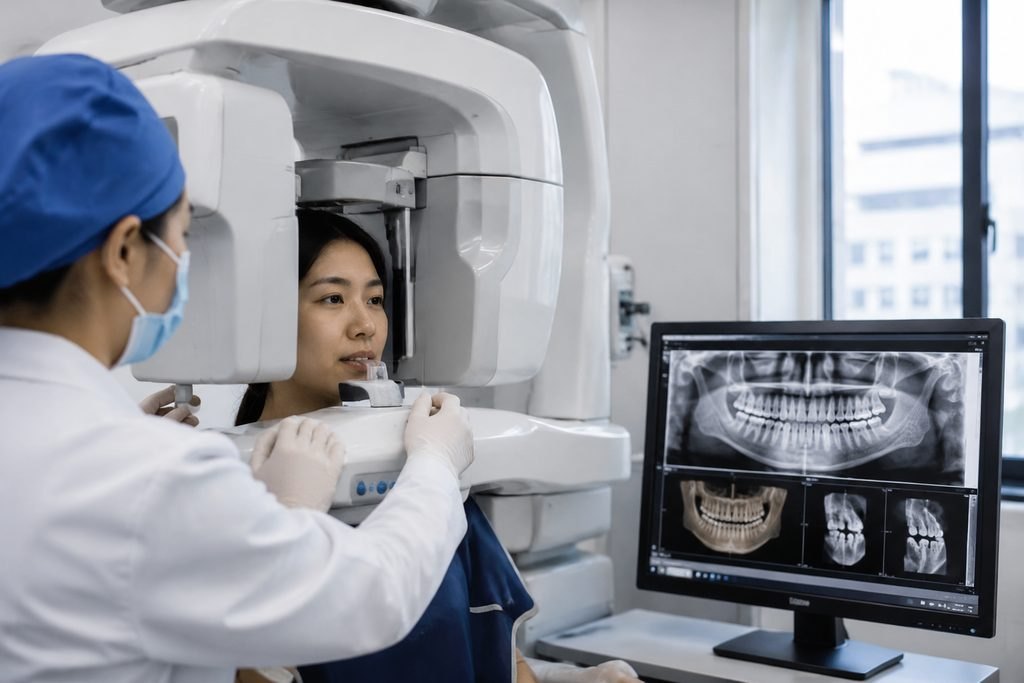
A useful pre-travel review depends on records, not on photographs alone. A single image cannot show bone condition, root health or bite relationships, and no responsible clinician should diagnose from one picture. Ask the receiving dentist exactly which records they want, then send only what they request.
Typical items a dental team may ask about include recent X-rays or a panoramic image, any CBCT scan you already have, notes or letters from your current dentist, a list of previous dental work, and details of medications and relevant medical conditions. Do not assume every clinic requires the same set; ask what this provider needs and in what format.
If you do not have recent imaging, ask whether it can be taken at the first appointment in China rather than arranging it at home. Do not order new scans on your own initiative. The treating clinician decides what imaging is appropriate and when.
It also helps to write down your own priorities before contact: which teeth bother you, whether chewing or appearance matters more, whether you want to keep as many natural teeth as possible, and what you are willing to accept in terms of treatment time. These answers change the plan more than most patients expect.
Questions that decide whether one trip or several make sense
The answers to a small set of questions determine your travel planning. Ask them in writing so you can compare answers and keep a record.
First: what is the proposed treatment sequence, and which stages depend on healing or laboratory work before the next step? Second: which stages must be done in China, and which could be completed or monitored by your own dentist at home? Third: if a temporary restoration is placed, what is it protecting, and what are the restrictions until the definitive restoration is fitted? A temporary filling does not by itself establish whether root canal treatment is complete, so ask specifically what stage your tooth is at.
Fourth: what happens if a component fails or feels wrong after you return home? Ask who would assess it locally and what information the China team would need. Fifth: what is the written scope of the quote, including which materials, laboratory work and follow-up visits are included, excluded or still undecided? Do not accept a verbal estimate for a multi-stage plan.
Sixth: how will the team communicate with you between visits, and in what language? These are administrative questions, but they shape whether a multi-visit plan is realistic for you.
Planning the trips themselves
Once you have a written sequence, build travel around it rather than the other way round. Leave the assessment appointment enough time for imaging, discussion and consent, and do not schedule a flight home on the same day as a treatment stage that may involve sedation or a long appointment.
For any stage involving sedation or anaesthesia, ask the treating team for their own instructions on escort, transport and supervision afterwards. Do not rely on general advice from the internet, and do not treat logistics as the only risk. Follow the clinical safety instructions you are given.
Between visits, keep a simple file: the written plan, the quote, imaging reports, medication lists and contact details for the treating team. If you see a dentist at home in the interval, that file is what they will need.
If your plans change, tell the treating team early. A delayed return visit may affect what can be done at the next appointment, and the dentist needs to know before you arrive.
Contingencies worth deciding before you travel
Multi-visit dental treatment has predictable uncertainties. Decide in advance how you would handle a delayed flight, an unwell family member, or a stage that needs more time than expected. Ask the clinic what notice they need to reschedule and whether a missed appointment affects the plan.
Ask what you should do if a temporary restoration becomes loose or uncomfortable while you are at home. You need a named local contact and a clear instruction on when to seek urgent care rather than waiting for your next trip.
If you have a medical condition or take medication that affects bleeding, healing or infection risk, tell the dental team before any procedure. The dentist, not the coordination service, decides whether treatment can proceed and what precautions are needed.
Finally, keep your expectations realistic. Full-mouth reconstruction aims to restore function and appearance, but no clinic can promise a particular bite outcome or a guaranteed number of visits. The treating clinician confirms suitability, sequence and restrictions for your individual case.
How ChinaSpecialistCare fits in, and what it does not decide
ChinaSpecialistCare provides information and non-clinical coordination. Our team can review a short summary of your situation, identify what records are missing and suggest a relevant next step. That initial enquiry is free and does not require buying a proxy consultation.
If you want a records-based opinion before travelling, a proxy consultation is available as an optional service, but it is not a prerequisite for an appointment. Diagnosis, treatment planning, suitability and hospital acceptance belong to the treating hospital and licensed clinicians. We cannot confirm acceptance in advance, and we do not decide your treatment sequence.
A practical first step is to send a brief summary of your dental situation and your main question through the enquiry form, email or WhatsApp. Do not send passport numbers, card details or a complete medical archive at this stage. Once the team understands your question, they can tell you what to prepare and which records the receiving dentist is likely to request.
Before that first contact, it helps to separate what you already know from what you still need to find out. Write down the teeth or areas that bother you, any previous dental work you can remember, and the single question that matters most to your decision. A short, specific summary is more useful to the receiving team than a long narrative, and it gives them something concrete to respond to.
If you are comparing more than one route, ask each provider the same written questions so the answers can be compared directly. The treatment sequence, the stages that depend on healing or laboratory work, and the scope of the written quote are the items that decide whether a multi-visit plan is realistic for you.
Keep your own copy of everything you send and receive. If you later see a dentist at home between visits, that file is what they will need to understand where your treatment has reached and what the China team has planned next.
The aim of the first exchange is not to secure a fixed schedule or a final price. It is to establish whether the treating team can assess your case, what records they want, and which questions still need a clinical answer before you commit to flights.
Sources & scope of this guide
References and official service information relevant to this guide.
This is general planning information and has not been individually reviewed by a doctor. Medical decisions and personal treatment advice come from your treating clinicians.