What Old Dental Records Can and Cannot Answer
When you send previous X-rays, treatment notes or a dentist's summary, the receiving clinician can see a history. Those records may show which teeth have been treated, what restorations are already in place, and what problems were noted at an earlier date. They help the new team avoid repeating questions and give context for why a particular tooth was treated in a certain way.
What old records cannot do is confirm your current condition. A crown, bridge or implant recorded two years ago may still be functioning well, or it may have changed. Bone and gum status can shift. A bite that felt acceptable then may now feel different. The records are a starting point, not a substitute for examining you now.
This distinction matters for your decision. If you are considering full-mouth reconstruction in China, you are not simply asking a clinician to continue an old plan. You are asking for a fresh assessment of how your mouth functions today. The old records help that assessment; they do not replace it.
What a New Bite and Restoration Assessment Adds
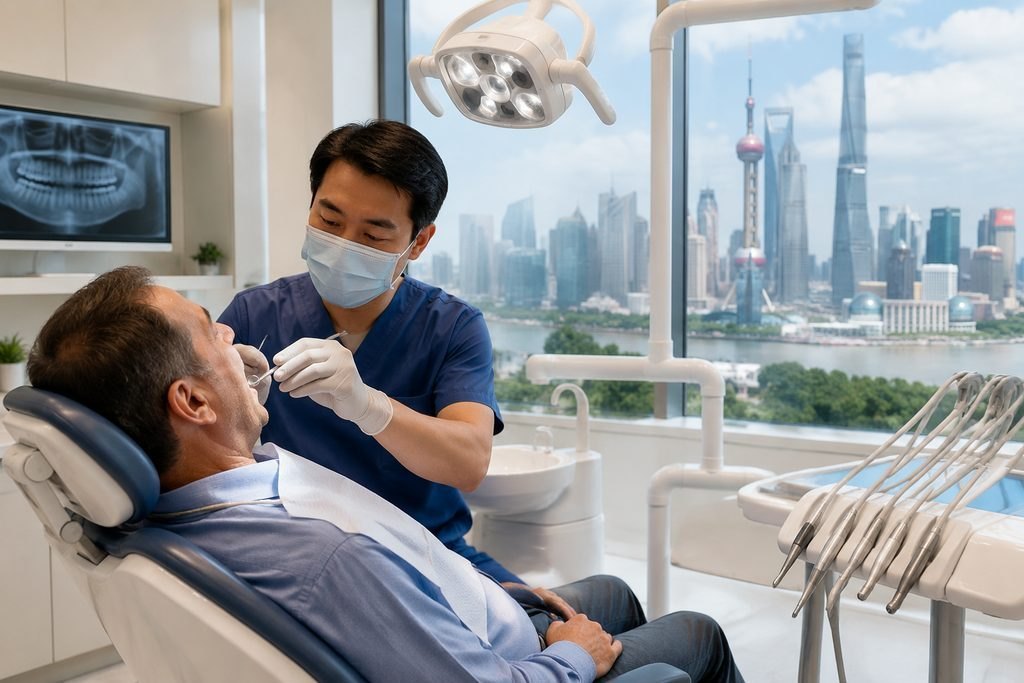
A new assessment looks at the relationship between your upper and lower teeth when you bite, how your jaw moves, and how existing restorations are wearing. It also examines the condition of each tooth and the supporting gum and bone. These findings determine whether treatment should focus on a few teeth, one arch, or both arches.
The assessment also clarifies what type of restoration is appropriate for each problem. Crowns, bridges, dentures and implants address different dental problems and are not interchangeable treatments. A tooth with a failing crown may need a new crown; a missing tooth may need an implant or a bridge; a badly worn bite may need a different approach altogether. The new assessment identifies which category each problem falls into.
This is why a full-mouth reconstruction is an individual combination, not a single procedure. It is not automatically All-on-4 implants, and it does not automatically mean extracting every tooth. The clinician decides the combination after examining you and discussing your goals.
Why the Scope of a Plan Matters More Than One Component Price
If you ask only for the price of one crown or one implant, you will not learn what the full treatment involves. A useful plan identifies the specific teeth being treated, what provisional work is needed before final restorations, what the final restorations will be, and what maintenance will be required afterwards.
Provisional work matters because some treatments need a temporary stage while gums heal or while a bite is being adjusted. Final restorations are the permanent crowns, bridges, dentures or implant-supported teeth. Maintenance includes how you clean the restorations, how often they should be reviewed, and what signs of trouble to watch for.
When you request an estimate, ask the provider to state what is included, what is excluded, and what remains undecided until after the examination. A written scope with these categories is more useful than a single figure for one component. The hospital or clinic decides its own fees, and those fees are separate from any coordination service you may use.
Phased Visits: What to Ask Before Agreeing to a Schedule
Some full-mouth reconstruction plans are completed in stages. A first visit may involve examination, records and provisional treatment. Later visits may involve fitting final restorations or reviewing healing. The number of visits and the spacing between them depend on your clinical situation and the treating team's plan.
Do not assume that everything can be completed in one trip. Ask the receiving clinician how many visits the proposed plan involves, what happens at each visit, and whether any stage requires you to remain in China for a period of healing or review. If you are travelling from abroad, this affects your planning.
Also ask what would cause the plan to change. If a tooth turns out to be unsalvageable, or if gum healing takes longer than expected, the sequence may need adjustment. A clinician who explains these possibilities in advance is giving you a more honest picture than one who promises a fixed schedule.
Questions That Clarify the Difference Between Old and New Findings
Before you travel, you can ask the receiving team to explain how it will use your old records and what the new assessment will add. This is not a test of the clinician; it is a way for you to understand the plan. The answer tells you whether the team is treating your old plan as a fixed blueprint or as background for a fresh examination.
A useful way to frame the question is to separate what is already known from what still needs to be established. Old records may show which teeth were treated and what restorations are in place. They do not show how those restorations are functioning now, whether the bite has shifted, or whether the gum and bone supporting a treated tooth have changed. Ask the team to state which findings come from your records and which will come from the new examination.
Useful questions include: Which teeth are being treated, and what type of restoration is planned for each? What provisional work is needed, and why? What final restorations are planned? What maintenance will be required, and how often? What remains undecided until after the examination? What would change the plan?
The last two questions are the ones that get skipped. A plan that lists every tooth and every restoration but never says what could change is presenting a fixed sequence as if nothing could alter it. A plan that names the uncertainties is more useful, because it tells you where the clinician expects to make a judgement after seeing you.
You can also ask whether the clinician needs any specific records from your previous dentist, such as recent X-rays or a treatment summary. Sending a brief summary first is enough for an initial enquiry. The team can then tell you what additional records would be useful.
If you have a written treatment plan from a previous dentist, send that too. It shows what was proposed and what was actually completed, which are not always the same. The receiving clinician can compare the earlier plan with the current examination findings and explain where the two differ and why.
One more question is worth asking before you commit: who will decide the final restoration type for each tooth, and when? In some plans, the decision is made after provisional work and a period of review. In others, the clinician expects to decide during the examination. Knowing when the decision is made helps you understand how much of the plan is fixed before you travel and how much depends on what the examination finds.
Preparing for an Assessment in China
If you decide to seek an assessment in China, prepare a short summary of your dental history and your main concern. Include what treatment you have already had, what problems you notice now, and what you hope to achieve. You do not need to send a complete archive at the first contact.
Ask the provider how it structures a full-mouth reconstruction assessment, what records it needs, and how it presents the plan and estimate. Confirm whether the assessment includes a written plan that identifies the teeth, provisional work, final restorations and maintenance. This is the document that helps you compare options and understand the scope.
An initial enquiry through ChinaSpecialistCare is free. The team can review your summary, identify missing information and suggest a relevant next step. A proxy consultation is optional and not a prerequisite for every appointment. The treating hospital decides whether your case is suitable for assessment and treatment.
For more detail on the procedure itself, see the full-mouth reconstruction reference page.
Sources & scope of this guide
References and official service information relevant to this guide.
This is general planning information and has not been individually reviewed by a doctor. Medical decisions and personal treatment advice come from your treating clinicians.