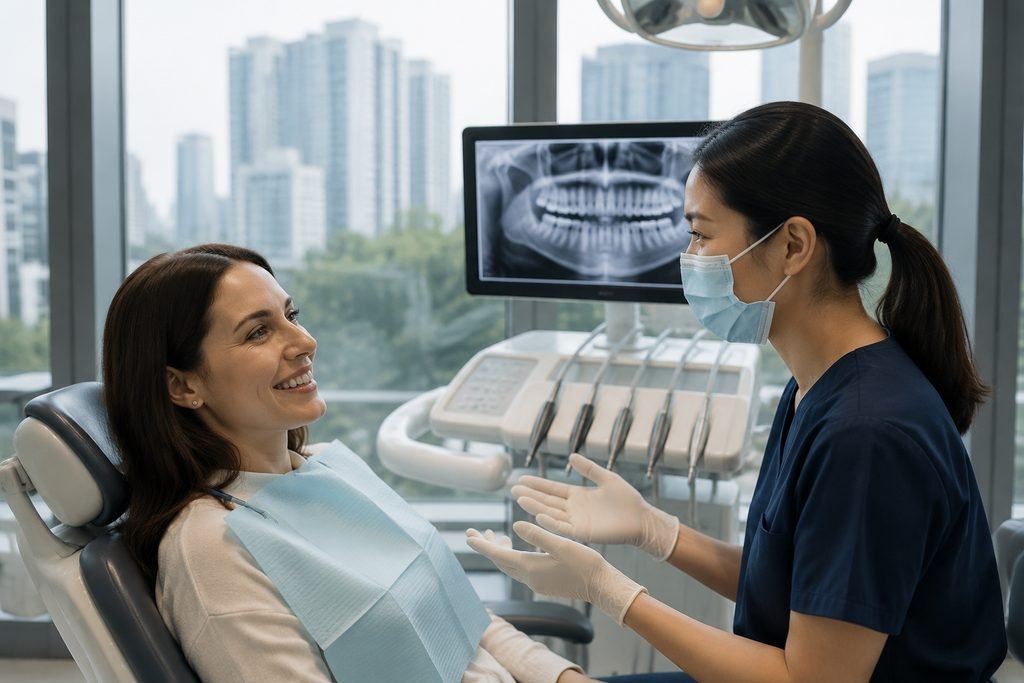
What full-mouth reconstruction actually means
Full-mouth reconstruction is not one procedure. It is a plan that combines different dental treatments to rebuild function, comfort and appearance across many or all teeth. The combination might include crowns, bridges, dentures, implants, gum treatment, root canal treatment or bite adjustments. Crowns, bridges, dentures and implants address different dental problems and are not interchangeable treatments. That means the question 'which teeth can be kept?' has no single answer that applies to everyone.
The confusion often starts with marketing. Some clinics present full-mouth reconstruction as if it always means removing all remaining teeth and placing implants. That is one possible route, not the definition. Another plan might keep several teeth, use them to support bridges, and replace only the teeth that cannot be restored. A third plan might combine implants in one jaw with a removable prosthesis in the other. The treating dentist chooses the combination after assessing your mouth, not before.
For an overseas patient, this matters because the decision changes the number of procedures, the number of visits and the records you need to send ahead. If you ask a clinic for 'full-mouth reconstruction' without describing which teeth are causing problems, you may receive a quote for a different plan than the one you actually need. Start by listing your main complaints: pain, loose teeth, difficulty chewing, appearance, or a denture that no longer fits.
How dentists decide whether a tooth can be kept
A dentist deciding whether to keep a tooth looks at several things. The first is the tooth itself: how much healthy structure remains, whether it is cracked, and whether the nerve or pulp is involved. The second is the supporting bone and gum. A tooth with severe mobility or deep periodontal pockets may not be a reliable long-term support, even if the crown looks acceptable. The third is the bite. A tooth that is overloaded because of the way the jaws meet may fail sooner if it is used as a bridge support.
The fourth factor is strategic. Even a tooth in poor condition can sometimes be kept if it helps anchor a prosthesis or preserves bone for a future implant. Conversely, a tooth that looks fine on a quick look may be recommended for removal if it sits in a position that complicates the overall plan. This is why a single X-ray or photograph rarely settles the question. A dentist needs to see the roots, the bone level and the relationship between the upper and lower teeth.
The fifth factor is you. Your general health, medications, smoking status, oral hygiene and willingness to attend follow-up appointments all affect how long a kept tooth is likely to last. A plan that keeps more teeth usually requires more maintenance. A plan that removes more teeth may be simpler to clean but changes the way forces travel through the jaw. Neither approach is automatically better; the treating clinician must weigh the trade-offs for your individual situation.
Records that help a dentist answer the question before you travel
If you want an early view on which teeth might be kept, send a focused set of records rather than a complete archive. Useful items include a recent panoramic X-ray, any periapical X-rays of problem teeth, a current list of dental treatments you have had, and clear photographs of your bite from the front and sides. If you have gum measurements or a periodontal chart, include that too. These records let a dentist see the roots and bone levels, which a photograph alone cannot show.
A written summary of your main problems is just as important. Note which teeth hurt, which are loose, which have been root-treated, and which have crowns or bridges already. Mention any dentures you wear and how well they fit. If you have had implants before, say where and when. This information helps the dental team understand what has already been tried and what you hope to change.
Do not send passport numbers, payment details or a complete medical history at the first contact. A brief summary is enough to start. After the initial enquiry, the team can explain how to share larger files securely. If a clinic asks for a specific scan or test before reviewing your case, ask whether it is essential for the decision or simply part of their standard intake. The answer may differ between providers, so confirm it with the one you are considering.
Questions that change the plan and the number of visits
The number of visits depends on the plan, not on a fixed schedule. A plan that keeps several teeth and uses crowns or bridges may need more appointments for preparation, impressions and fitting. A plan that removes teeth and places implants may need healing time between stages. Some stages can be combined; others cannot. Ask the treating dentist to outline the sequence in writing, including which stages are provisional and which depend on how your mouth responds.
Useful questions to ask include: Which teeth do you propose to keep, and why? Which teeth do you propose to remove, and what happens to the bone in those areas? What will support the new teeth in each jaw? What happens if a kept tooth fails later? What are the alternatives if I want to keep more teeth, and what are the risks of that choice? What can be done in one visit, and what must wait? These questions turn a vague quote into a plan you can evaluate.
It is also worth asking what the plan does not include. A quote for full-mouth reconstruction may cover the main prosthesis but not gum treatment, root canal treatment, extractions, temporary teeth or follow-up adjustments. Ask for the written scope: which treatments, which materials, which laboratory work and which review appointments are included. If the answer is unclear, ask for it in writing before you commit. This is a planning question, not a criticism of any provider.
A labelled planning example, not medical advice
Consider a hypothetical patient with several failing teeth in the lower jaw and a poorly fitting upper denture. One plan might keep two lower teeth to support a bridge, place implants in the upper jaw, and make a new upper prosthesis. Another plan might remove all lower teeth, place implants, and use a removable upper denture. A third might keep more teeth and use crowns and bridges throughout. Each plan has different maintenance needs, different risks and a different number of visits.
This example shows why the question 'which teeth can be kept?' cannot be answered from a description alone. The same mouth can support more than one reasonable plan, and the choice depends on the dentist's assessment, your priorities and your willingness to attend follow-up. It also shows why a quote for 'full-mouth reconstruction' is not comparable between clinics unless the scope is identical. Ask each provider to list the teeth they plan to keep, the teeth they plan to remove, and the materials they plan to use.
The example is illustrative only. It is not a recommendation, and it does not predict what any clinician would advise for you. Your own plan must be confirmed after a clinical examination. If you have pain, swelling, bleeding or a loose tooth that is worsening, seek local dental care rather than waiting for an overseas appointment.
What to confirm before committing to care in China
Before you commit, confirm who will make the final decision about which teeth to keep. In most settings, that is the treating dentist after examining you in person, not a coordinator or a remote reviewer. Ask whether the initial plan can change after the examination and how that affects the quote. Ask what records you need to bring and whether any can be done after arrival. Ask how follow-up will work once you return home, and whether your local dentist is willing to take over maintenance.
Also confirm the practical side: which hospital or clinic will provide the treatment, who will be your main contact, and how communication will work if you do not speak Chinese. If you need an interpreter, ask whether one is available for consultations and consent discussions. Ask about payment stages and what happens if the plan changes midway. These are administrative questions, but they affect your experience and your budget.
An initial enquiry with ChinaSpecialistCare is free and does not require buying a proxy consultation. You can send a brief summary of your dental situation and ask which records would help a dentist review your case. The team can explain the next step, but the treating hospital decides suitability and the final plan. For general information about the procedure, see the full-mouth reconstruction reference page.
Sources & scope of this guide
References and official service information relevant to this guide.
This is general planning information and has not been individually reviewed by a doctor. Medical decisions and personal treatment advice come from your treating clinicians.