Which Record Is Actually Missing
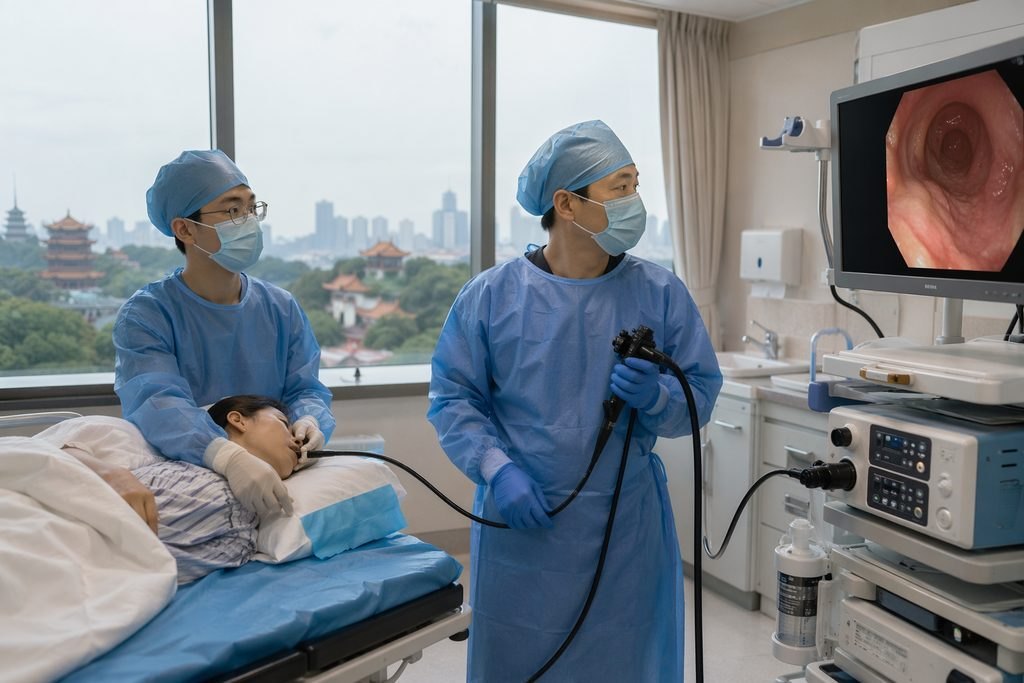
The phrase "my records are missing" can mean several different things, and the right person to ask depends on which one applies. Before contacting anyone, work out what you actually have and what you do not. A previous gastroscopy or upper endoscopy usually generates a procedure report and, if tissue was taken, a pathology report. You may also have images, a discharge summary, a referral letter, or a medication list. These are examples of documents a receiving team might ask about, not a universal mandatory list. Confirm the exact items with the hospital or clinician who will review your case.
The distinction matters because the documents are held by different people. The procedure report is normally held by the endoscopy unit or hospital where the test was performed. A pathology report is issued by the laboratory that examined the tissue, even if your gastroenterologist ordered it. Images may sit with the radiology or endoscopy department. If you moved between hospitals, the older file may still be at the first site. Asking the wrong office is a common reason a request goes nowhere.
Write down three things before you make contact: the date of the test, the name of the hospital or clinic, and the name of the clinician who performed or ordered it. Those three identifiers let a records office locate the file. Without them, staff may search under the wrong spelling or the wrong year. If you genuinely do not know the date, give the approximate month and the reason for the test. That is usually enough for a records department to begin a search.
Who to Ask for Each Document
For a procedure report, contact the endoscopy unit or medical records department of the hospital where the gastroscopy was done. Ask specifically for the endoscopy report, not "my file", because a general request can return a billing summary instead. For a pathology result, contact the laboratory or the pathology department named on any report you already hold. If you have no report at all, ask the hospital's records office which laboratory processed the sample.
If you are requesting records from a hospital in your home country while you are preparing for care in China, ask about their release process. Many hospitals require a signed authorisation form before they will send records to a third party. Ask whether they can issue the report in English or provide a certified translation. Do not assume a translation is available; ask. If the receiving team in China needs the original language version as well, they will tell you.
When you contact the receiving hospital in China, address your message to the international patient office or the department handling your enquiry. Ask a direct question: which documents do you need before you can assess my case? Give them the list of what you already have and what you are still trying to obtain. This lets them tell you whether the missing item is essential for the next step or whether a summary is enough to begin.
Keep a simple log of who you contacted, on what date, and what they said. If a records office promises to send something, note the name of the person and the reference number if one is given. This is not bureaucracy for its own sake; it means that if a document does not arrive, you can follow up with the right person rather than starting again.
Does a Missing Record Block the Next Step
Sometimes it does, and sometimes it does not. The answer depends on what the receiving clinician needs in order to make a decision. If the missing document is the procedure report from a recent gastroscopy, the team may want it before they can judge whether a repeat examination is appropriate. If the missing item is an older report that has been superseded by a newer one, it may be less important. You cannot decide this yourself, and neither can a coordinator. Ask the hospital directly: does this missing item change what you can do next?
A useful way to frame the question is to ask what the team can and cannot conclude without the document. For example: "I do not yet have the pathology report from my 2023 endoscopy. Can you proceed with an initial review based on the procedure report and my current symptoms, or is the pathology report required first?" That question gives the clinician a clear choice and produces a clear answer.
Do not delay necessary local care while you wait for records. If your symptoms are worsening, seek assessment where you are. An overseas enquiry is a planning step, not a substitute for urgent local evaluation. This applies regardless of how far along your China planning has progressed.
If the hospital says the missing record does not block an initial review, you can proceed with what you have. If it says the record is required, you now know exactly what to chase and who holds it. Either way, you have replaced uncertainty with a specific task.
How to Send Records Without Overwhelming the Team
A common mistake is to send everything at once, including documents from unrelated episodes of care. This makes it harder for the receiving team to find the relevant information. Start with a short summary: your main concern, the date and result of any previous gastroscopy or upper endoscopy, and the specific question you want answered. Then attach the key documents that support that summary.
If you are missing a document, say so in the summary rather than leaving a gap. A sentence such as "The pathology report from my 2023 endoscopy is not yet available; I have requested it from the issuing laboratory" tells the team what to expect. It also shows that you are actively working on the gap rather than waiting for them to notice it.
For the initial enquiry, a brief summary is enough. You do not need to send a complete medical archive, passport numbers or payment details at this stage. The team will tell you what else they need once they understand your question. If you are working with a coordination service, they can help you organise and translate records, but the clinical review and the decision about suitability belong to the hospital.
If you are preparing for care in China and want help with record organisation, interpretation or requesting a specialist appointment, ChinaSpecialistCare can assist with these non-clinical steps. The service does not decide suitability or guarantee an appointment; the hospital does. You can start with a free initial enquiry and share records after first contact.
What to Confirm in Writing Before You Travel
Once the hospital has your records, ask for written confirmation of the next step. This is not a demand for a guarantee; it is a way to avoid misunderstandings. Ask what the appointment is for, what preparation is required, and whether any further documents are needed before that date. If the hospital gives you a provisional plan, ask what could change it.
If you are comparing options or planning a visit, ask the hospital what its written quote or estimate includes. Do not assume that a quoted figure covers every element. Ask specifically about the scope: what is included, what is excluded, and what remains undecided until after assessment. This is a question for the named provider, because scope and inclusions can differ between hospitals and between departments within the same hospital.
Ask who your point of contact is for records and scheduling. If you are dealing with more than one department, ask which one owns the next action. A clear handover of responsibility prevents the situation where each office assumes the other is handling your file.
Finally, ask what you should do if a document arrives after your appointment has been set. The answer may be that you should bring it with you, or that it should be sent ahead. Confirm this rather than guessing, because the receiving team's preference is the one that matters.
Your Next Step
Identify the single most important missing document, find out who holds it, and request it. At the same time, send a short summary of what you have to the receiving hospital and ask whether the missing item changes what they can do next. That one message often resolves more uncertainty than weeks of collecting paperwork.
An initial enquiry with ChinaSpecialistCare is free and does not require buying a proxy consultation. You can share a brief summary of your situation, and the team will help identify what is missing and suggest the relevant next step. The hospital remains responsible for assessing suitability and deciding on any procedure.
Sources & scope of this guide
References and official service information relevant to this guide.
This is general planning information and has not been individually reviewed by a doctor. Medical decisions and personal treatment advice come from your treating clinicians.