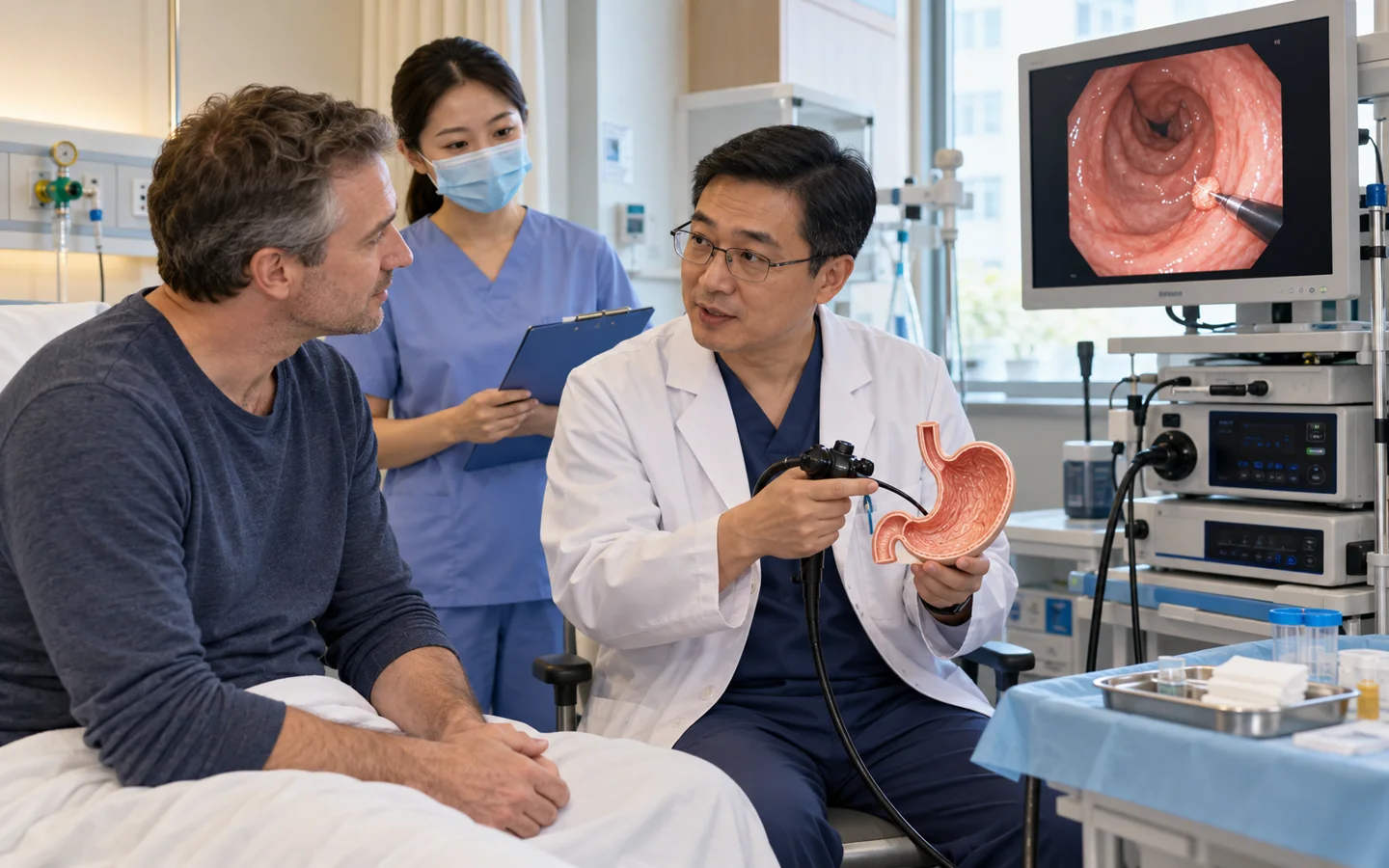
Upper endoscopy examines and samples the upper digestive tract
A flexible camera passes through the mouth to view the esophagus, stomach and first part of the small intestine. Biopsies can assess inflammation, infection, precancerous change or tumor.
The examination may also treat bleeding, remove selected lesions, dilate narrowing or place a feeding or drainage device. Sedation and throat anesthesia vary by setting.
Celiac disease, eosinophilic esophagitis, H. pylori and some early changes can depend on correctly located tissue samples.
Who may be considered?
Specialist review may help when the diagnosis, symptoms and previous treatment create a focused question about upper gastrointestinal endoscopy.
- Persistent swallowing difficulty, upper abdominal symptoms or unexplained vomiting.
- Bleeding, anemia or suspected ulcer.
- Surveillance of Barrett esophagus or previous upper-GI lesions.
- An abnormal CT, barium study or laboratory result requiring direct assessment.
What the specialist team must confirm
Review includes the exact symptom question, prior endoscopy and pathology, swallowing and aspiration risk, fasting, anticoagulants, diabetes medicines, allergies, heart or lung disease, altered anatomy and whether specific biopsy protocols are needed.
Key points for this treatment
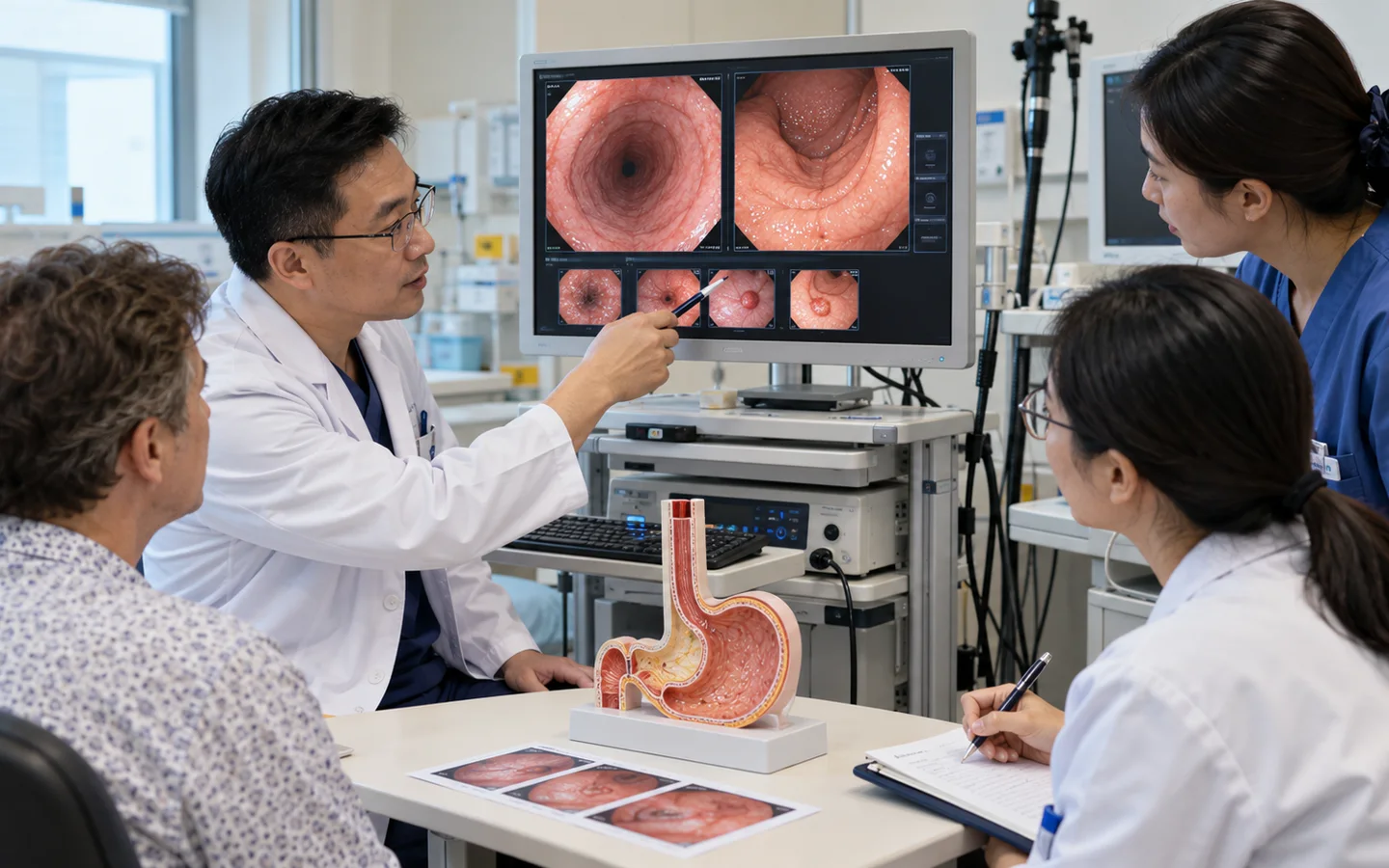
From symptom question to documented endoscopic diagnosis
A high-quality report records landmarks, lesion size and location, image documentation, biopsies and any limits to the examination.
Pathology may change an immediate visual impression
After sedation, patients need an escort and should follow driving and eating instructions. Mild throat discomfort or bloating may occur briefly.
Biopsy results guide infection treatment, surveillance or further staging. Persistent symptoms after a normal examination may require motility, reflux or cross-sectional evaluation.
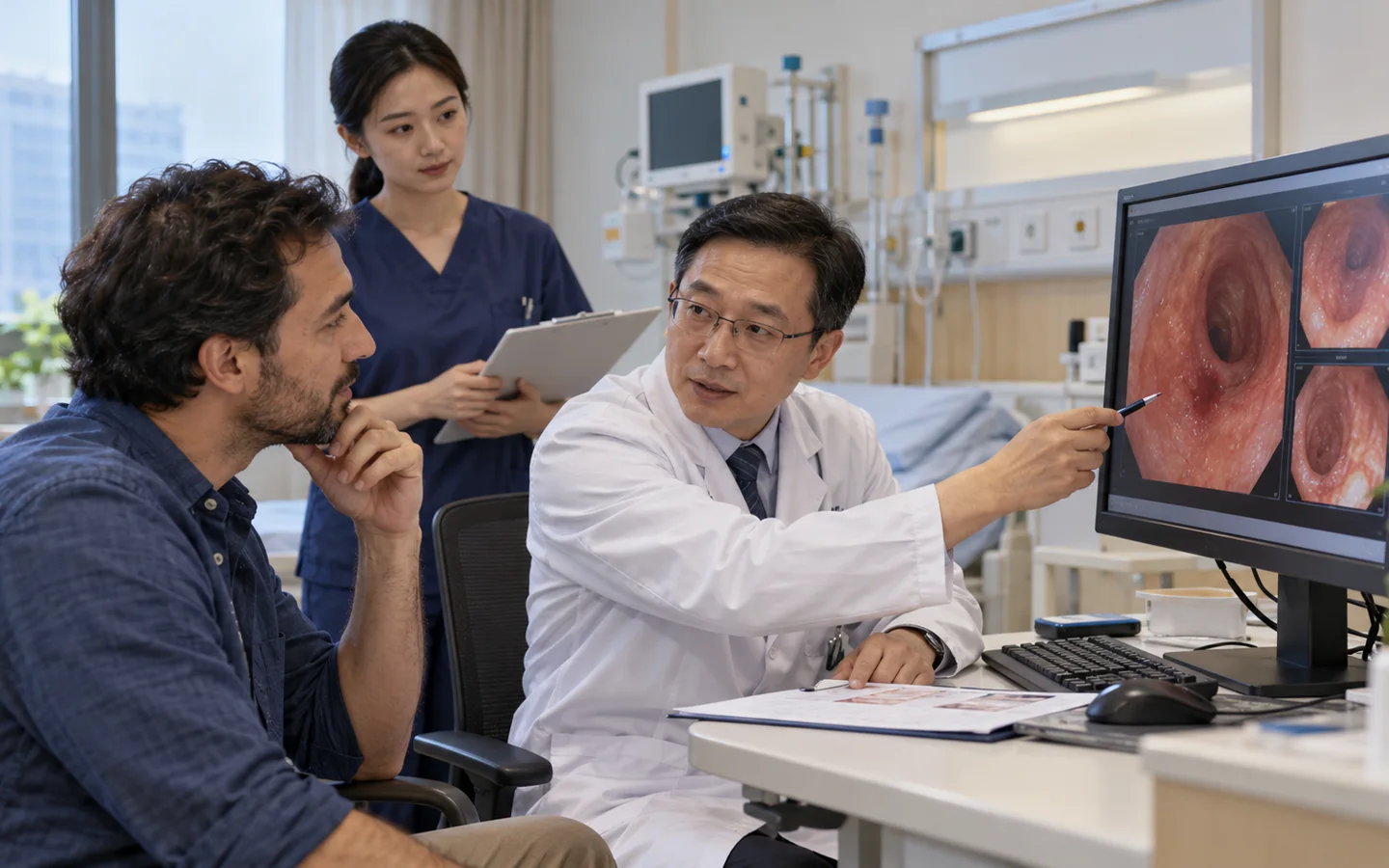
Risks, limits and realistic expectations
Upper endoscopy may miss subtle or intermittent disease and carries risks of bleeding, perforation, aspiration and sedation complications. A biopsy samples only the tissue reached.
Severe chest or abdominal pain, vomiting blood, black stool, fever, breathing difficulty or fainting after endoscopy requires urgent local care.