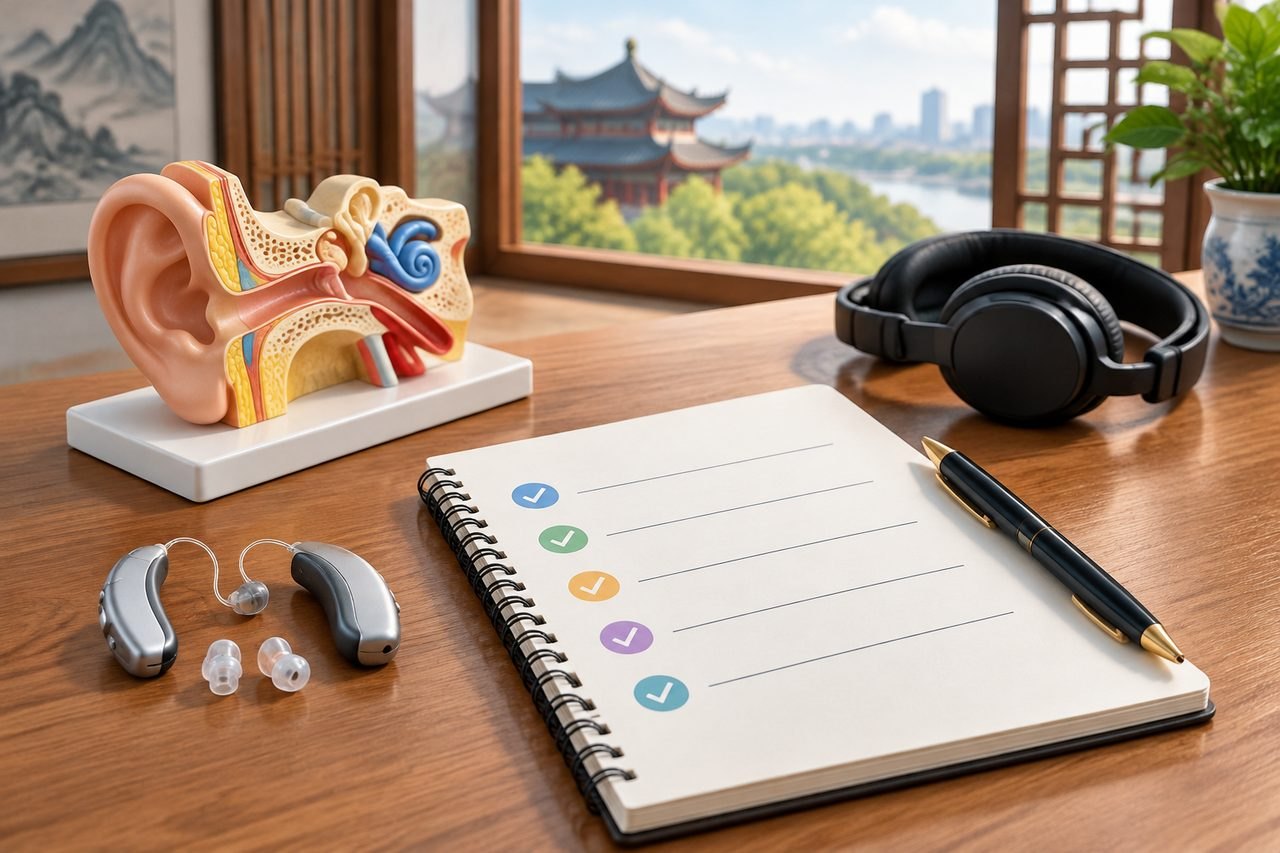
Start with the reason for the hearing check
The first question a clinician needs answered is not which test you want, but why you are asking for a hearing check. An overseas patient may be booking a routine review with no current symptoms, following up a known ear condition, or seeking assessment because of new or changing hearing difficulty. These are different situations, and the provider decides which assessment is appropriate.
Write one or two sentences that state your situation plainly. For example: no symptoms but a family history of hearing loss; a previously diagnosed condition that needs review; or a change in hearing that has prompted you to seek care. If you have pain, sudden hearing loss, discharge, dizziness or other active symptoms, say so first, because the clinician needs to know whether this is routine planning or assessment of a current problem.
This distinction matters because a routine check and a symptom-driven consultation may follow different pathways. The provider, not the patient, decides whether a screening-style check is suitable or whether a diagnostic consultation is needed. Your job at this stage is to describe the situation accurately, not to select the test.
Describe your hearing history in plain language
After the reason for the visit, the next useful information is your hearing history. This does not need to be a complete medical archive. A short, factual summary helps the clinician understand context: when you first noticed a change, whether it affects one ear or both, whether it is stable or progressing, and how it affects daily communication.
Include any previous hearing tests, diagnoses, ear surgery, or use of hearing aids or other devices. If you have records from those episodes, mention that they exist and ask whether the provider would like to see them. Do not assume that every past document is required, and do not delay seeking local care for urgent symptoms while gathering records for an overseas appointment.
Also mention relevant background that a clinician would reasonably ask about, such as exposure to loud noise, current medicines, or other health conditions. You are not expected to decide which details are clinically important. The purpose of writing them down is to give the clinician a starting point and to avoid spending the appointment reconstructing basic facts.
Ask what the hearing check is intended to show
A hearing check is not a single, uniform test. Different assessments answer different questions, and the clinician decides which is suitable based on your situation. Before the appointment, prepare a question about the purpose of the proposed check: what is it intended to measure or rule out, and what will the result mean for your next step?
Ask how the results will be explained to you, whether an interpreter is needed, and whether the provider can give a written summary. If you are travelling from another country, ask whether the assessment can be completed in one visit or whether a follow-up is expected. These are administrative questions, but they affect how you plan.
You can also ask what the check cannot show. No single test answers every hearing question, and a clinician may recommend additional assessment depending on what is found. Understanding the scope in advance helps you avoid expecting a definitive answer from a test that was not designed to provide one.
Clarify what you need to bring and what the provider needs to confirm
Requirements vary by provider and by the type of hearing check. Rather than assuming a standard document list, ask the specific hospital or clinic what it needs from you. Useful questions include: which records are helpful, whether previous test results should be translated, whether an identity document is required for registration, and whether the appointment needs to be booked in advance.
If you have a written summary from a previous clinician, ask whether it should be sent ahead or brought to the appointment. If you are unsure whether a document is relevant, describe it briefly and let the provider decide. This is more reliable than sending a complete archive or withholding information because you are unsure.
For a checkup-style visit, the approved CSC health checkup service page explains that a clinician should advise the interval and suitable tests, and that a stand-alone diagnostic test normally needs a specialist's order. That is a planning principle, not a test recommendation. Confirm the actual requirements with the named provider.
Prepare questions about communication and follow-up
For an overseas patient, communication is part of the clinical plan. Ask whether the clinician speaks English, whether an interpreter can be arranged, and whether the report will be available in a language you can use. Do not assume that every hospital provides the same language support; confirm it with the specific provider.
Ask how and when you will receive the result, and who will explain it. If a follow-up appointment is needed, ask how that is arranged and whether it can be planned around your travel. If you are returning home, ask what information you should take with you and whether the provider can prepare a summary for your local clinician.
These questions are practical, but they affect whether the hearing check produces a usable outcome. A result that you cannot understand or act on is less useful than one that comes with a clear explanation and a next step.
Language support shapes what you can actually ask during the appointment. If the clinician does not speak your language and no interpreter is present, you may end up agreeing to a step you did not fully understand, or leaving without asking the question you came to ask. Ask before the visit whether interpretation is available, whether it is provided by the hospital or arranged separately, and whether there is a cost. If you are using a companion to interpret, tell the provider in advance so the clinician can plan how to explain findings.
The report matters as much as the test. Ask what form the result takes, whether it is written, and whether a copy can be given to you on the day or sent later. If you need it in English, ask whether that is possible and whether it changes the timing. If you are returning to your home country, ask whether the provider can prepare a short summary that your local clinician can read. A result you cannot share with the person who will act on it has limited value.
Follow-up is the point where many overseas patients lose track. Ask who will contact you, through which channel, and what happens if you have already left China. If a repeat check or a further assessment is suggested, ask whether it can be done locally, whether it needs to be done at the same hospital, and what information the provider would need from your local clinician. Confirm whether any follow-up depends on a result that is not yet available.
Confirm the practical details in writing where you can. A short email that repeats the appointment time, the language arrangement, the expected report format and the follow-up contact is easier to rely on than a verbal understanding. If the provider cannot confirm a detail before the visit, ask when it will be confirmed and who will tell you. This is not distrust; it is how an overseas patient keeps a plan workable across time zones.
What a reply does and does not confirm, and the next step
When a provider replies to your enquiry, it may confirm appointment availability, the documents it wants, or the general scope of the visit. It does not confirm a diagnosis, a final treatment plan, or that a particular test will be performed. Those decisions belong to the treating clinician after assessment.
If a step cannot be completed before you travel, ask what can be done locally first and what can wait until the appointment. Do not delay necessary local care for an overseas enquiry. If you are unsure whether your situation is routine or urgent, seek local medical advice rather than waiting for an overseas reply.
For patients who want help with the administrative side, ChinaSpecialistCare can assist with records, interpretation and specialist appointment requests as supported by its published services. An initial enquiry is free and does not require buying a proxy consultation. The hospital decides suitability, and clinical assessment remains with the treating team.
A practical next step is to write your one-paragraph reason for the hearing check, list your hearing history and previous records, and send a short enquiry to the provider asking what it needs and what the visit can cover.
Sources & scope of this guide
References and official service information relevant to this guide.
This is general planning information and has not been individually reviewed by a doctor. Medical decisions and personal treatment advice come from your treating clinicians.