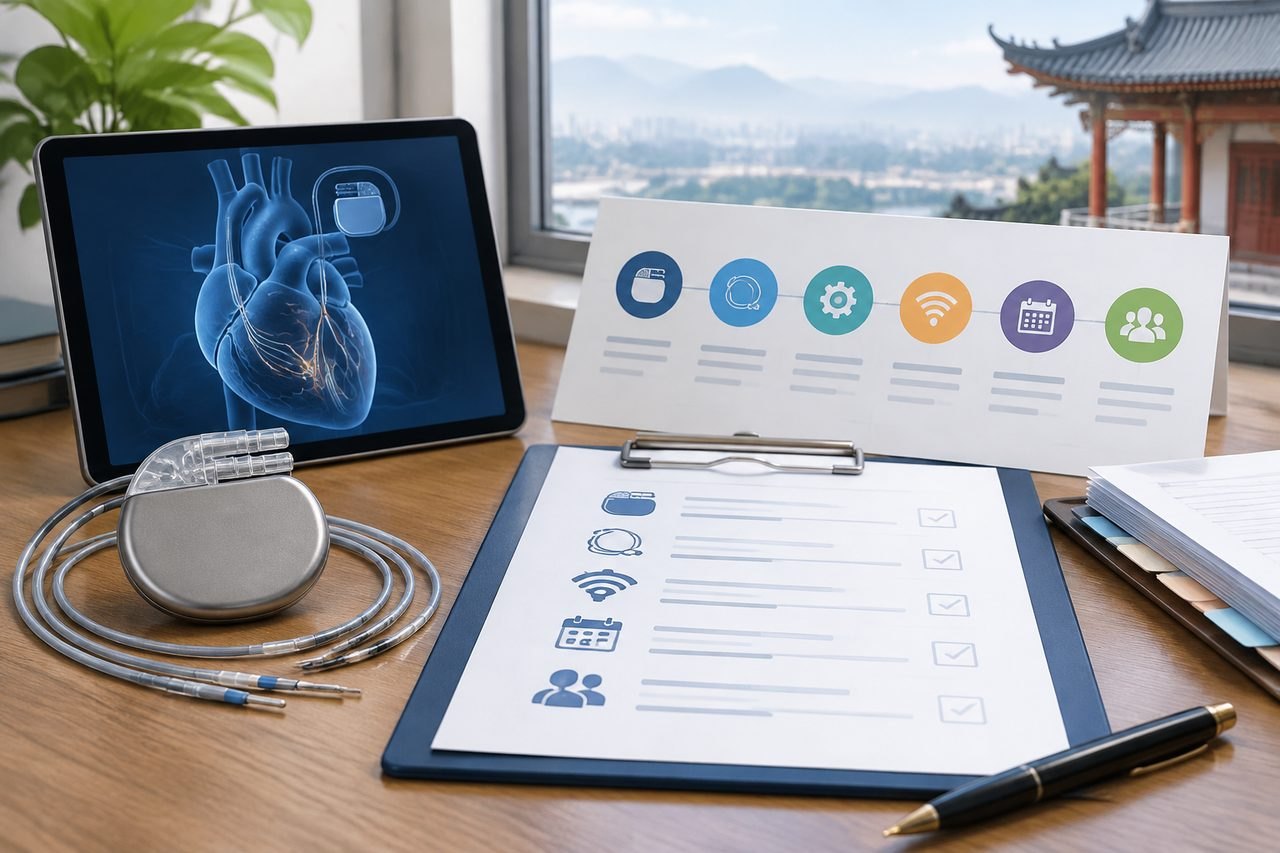
Why an ICD or CRT estimate can leave gaps
An implantable cardioverter defibrillator treats dangerous heart rhythms. A CRT-D also supports coordinated pumping, and these device labels are not interchangeable. That clinical distinction matters for cost because the device itself, the number and type of leads, and the programming workflow differ between a straightforward ICD and a cardiac resynchronisation system. If your estimate was written before the implanting team confirmed which device and leads are proposed, the figure may describe a different configuration from the one you eventually receive.
This is not a reason to distrust the estimate. It is a reason to read it as a snapshot of one proposed plan, not a fixed package. The hospital decides suitability and the final device choice. Your task is to make the written scope match the plan the clinician actually intends, and to know in advance which items sit outside that scope.
Ask the hospital which device and leads are proposed and whether the estimate names them. If the answer is a category rather than a specific model, treat the estimate as provisional and request a revised written scope once the team has decided.
Items that commonly sit outside an initial figure
The following are questions to put to the named hospital, not statements about how Chinese hospitals bill. Each one changes the total if the answer is yes, and each one should be answered in writing before you authorise treatment.
First, the device and lead combination. A CRT-D with an additional left-ventricular lead is a different product from a single-chamber ICD. Ask whether the estimate names the exact generator and every lead, and what happens to the figure if the implanting team changes the configuration during the procedure.
Second, programming and interrogation. Device implantation is not complete until the system is programmed and tested. Ask whether initial programming, defibrillation threshold testing if the team plans it, and the first post-implant interrogation are inside the estimate or billed separately.
Third, remote monitoring. If the team proposes a home monitor or app-based follow-up, ask who supplies the equipment, whether there is a subscription or transmission charge, and whether it works from your home country. Do not assume remote monitoring is compatible across borders; confirm it for your specific device and location.
Fourth, later device checks. Routine follow-up interrogations, battery monitoring and any reprogramming are ongoing costs. Ask how many checks are included, at what interval the team plans them, and how they would be coordinated if you return home.
Fifth, replacement and revision. Generator replacement at end of battery life, lead revision, or extraction of an infected system are separate procedures with their own estimates. Ask the hospital how it would quote these if they became necessary.
Sixth, items outside the hospital's own bill. Interpretation, hospital companion support, airport pickup, hotel and local transport are coordination or travel costs, not hospital charges. Ask for these separately so they are not confused with the clinical estimate.
Finally, ask whether the estimate assumes a standard ward or an international department, and whether the room type, length of stay or any intensive-care contingency would change the figure.
Device choice, system choice and what the estimate should name
The estimate should be read alongside the clinical plan, not instead of it. If the team is considering a CRT device, ask whether a defibrillator function is part of the proposal. Not every CRT device includes a defibrillator, and the two are not interchangeable in either clinical or cost terms. The hospital decides which system is suitable; your role is to make sure the written estimate reflects that decision rather than an earlier assumption.
Ask also whether magnetic resonance imaging access is relevant to your future care and, if so, whether the proposed system is conditional for MRI at your hospital. Do not assume universal MRI access for any device. This is a question for the implanting team about the specific model they propose.
If the team has not yet fixed the device, ask when that decision will be made and whether the estimate will be revised at that point. An estimate written before device selection is a planning figure, not a final one.
Follow-up checks and how they are coordinated
Follow-up is where many overseas patients lose visibility of cost. A device check is a clinical encounter with its own charge, and it may involve interrogation, reprogramming, battery assessment or a decision to adjust therapy. Ask the hospital how it plans the schedule, what each visit includes, and whether the fee is fixed or depends on what is done.
If you intend to return home, ask how the Chinese team would hand over device details to your local clinic. Request the device and lead identification, the implant report and the programmed parameters in a form your local team can read. Confirm with your local clinic that it can follow the specific device before you rely on that plan.
Remote monitoring deserves its own question. Ask whether the proposed system supports monitoring in your home country, who provides the transmitter, and whether there is an ongoing charge. Do not treat remote monitoring as a substitute for in-person checks unless the treating team says so for your situation.
If you are staying in China for follow-up, ask how appointments are booked, what notice is needed, and whether the same team reviews each check. These are administrative questions with real cost consequences if a visit has to be repeated.
Sources & scope of this guide
References and official service information relevant to this guide.
This is general planning information and has not been individually reviewed by a doctor. Medical decisions and personal treatment advice come from your treating clinicians.