Start by asking which device and which leads are proposed
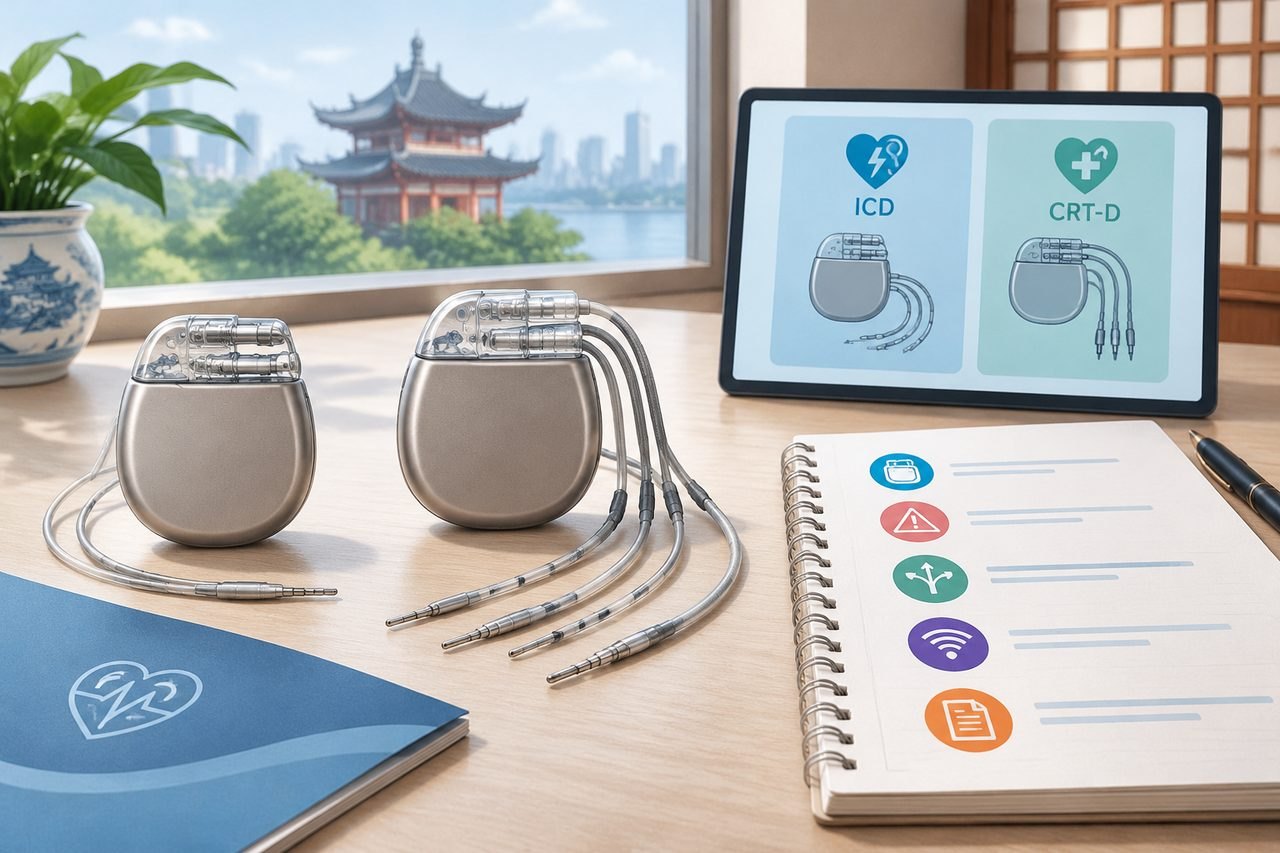
The single most useful question is not "do I need a device?" but "which device, which leads, and why this combination for me?" An implantable cardioverter defibrillator (ICD) treats dangerous heart rhythms. A cardiac resynchronisation therapy defibrillator (CRT-D) also supports coordinated pumping. Those two labels describe different jobs, and they are not interchangeable. A CRT pacemaker without defibrillation is a third possibility. If the team uses the words loosely, ask them to write the full device name and model family in your records.
Then ask about the leads. A device is only part of the system. The number of leads, where each one sits, and whether a lead is added, replaced or left in place from earlier surgery all change the procedure and the follow-up plan. If you already have a device, ask whether this is a new implant, an upgrade, or a generator change, because the risks and the recovery instructions differ between those situations.
Write the answers down in the same words the clinician uses. If a term is unfamiliar, ask for a plain-language explanation rather than accepting a brochure. You are not choosing the device yourself; you are making sure you understand what is being proposed before you consent.
Ask what the specific risks are for your situation, not in general
Every implant has risks, and a generic list is not enough to make a decision. Ask the clinician to separate the risks of the implant procedure itself from the risks of living with the device afterwards. Procedure-related questions include what can go wrong during lead placement, what happens if a lead does not position well, and what the plan is if the team needs to change approach mid-procedure. Device-related questions include inappropriate shocks, infection, lead problems over time, and what a device alert would mean for you.
Ask how each risk applies to your own history. A previous infection, a previous device, certain medicines, kidney function, or the anatomy of your veins can all change the picture. The clinician should be able to say which of the general risks are more relevant in your case and which are less so. If the answer is only a standard consent form, ask for the parts that matter most for you.
You should also ask what the team would do if a complication happened after you returned home. Who would you contact, and what information would they need? This is a practical question, not a challenge to the team's competence.
Ask what the alternatives are, including doing nothing for now
Alternatives are not only other devices. They include medication changes, a different type of device, a procedure to treat the underlying rhythm problem, or continued monitoring without an implant at this stage. Ask the clinician to describe the alternatives that were considered for you and why the proposed device was preferred. If no alternative was discussed, say so and ask for that discussion.
It also helps to ask what would happen without the device. Sometimes the answer is that the risk of a dangerous rhythm is high enough that waiting is not reasonable. Sometimes the answer is that the decision can be revisited after further tests. You are not asking the clinician to predict the future; you are asking what the trade-offs are.
If the team mentions a clinical trial, a newer device, or a therapy that is not yet routine, ask clearly whether that option is confirmed for you or only being discussed. A review of your records does not establish trial enrolment, transplant access, or availability of a specific therapy. Those are separate decisions made by the hospital and, where relevant, by a research team.
Ask how programming, remote monitoring and later checks would work
A device is not finished when it is implanted. It has to be programmed, and that programming is based on your rhythm history and your symptoms. Ask who would set the initial settings, what they are aiming for, and when the first check would happen. Ask what would trigger a reprogramming visit, and whether settings can be adjusted remotely or only in person.
Remote monitoring is a separate question. Not every device and not every follow-up arrangement supports the same remote-monitoring setup, and compatibility is not universal. Ask whether remote monitoring is available for the specific device proposed, what it would monitor, who reviews the transmissions, and what you would be expected to do. If you live outside China, ask how transmissions would be handled across borders and what the practical fallback is if remote review is not possible.
Magnetic resonance imaging (MRI) access is another point that is often assumed rather than confirmed. Ask whether the specific device and leads proposed are approved for MRI in your situation, and under what conditions. Do not assume that a device labelled MRI-conditional is automatically safe for every scan; the clinician and the imaging team have to confirm it for the specific device, leads and body region.
Finally, ask how later device checks would be coordinated if you return home. Would your local cardiology team take over, and what records would they need? Would the China team remain involved? These are administrative questions, but they affect whether the follow-up plan is realistic for you.
Ask what the hospital needs from you, and what it will confirm in writing
Before any decision, ask what records the hospital wants and what it will confirm in writing. Useful items often include recent rhythm recordings, echocardiography and other imaging reports, a current medication list, previous device or lead information if you have one, and any relevant blood results. Ask which of these are needed for the assessment and which can follow later. If a record is missing, ask whether the team can proceed with what you have or whether a specific test is needed first.
Ask for the written plan to state the proposed device and leads, the main risks discussed, the alternatives discussed, and the follow-up arrangements. If a point is still undecided, ask for it to be marked as undecided rather than left blank. This is not a contract; it is a record you can share with your local team and refer to later.
Costs are a separate conversation. Ask the hospital for a written quote that lists what is included, what is excluded, and what is still undecided for your case. Do not rely on a verbal range. If you use a coordination service, its fees are separate from hospital charges, and you should ask for both in writing before committing.
Bring the questions in writing and keep the decision with the clinical team
The most reliable way to get clear answers is to bring a short written list to the consultation and ask the clinician to go through it. A useful list covers: the exact device and leads proposed; the main risks for your situation; the alternatives, including no implant for now; how programming and remote monitoring would work; how later checks would be coordinated; and what the hospital needs from you. Leave space to write the answers in the clinician's own words.
You can also ask whether a second opinion from another heart rhythm specialist is possible before you decide. That is a normal request, not a sign of distrust. The treating team remains responsible for the final recommendation, and the hospital decides whether an implant is suitable for you.
If your symptoms are worsening, seek local urgent care rather than waiting for an overseas appointment. An enquiry about care in China can run in parallel with local assessment; it should not replace it.
A brief initial enquiry is free and does not require buying a proxy consultation. You can start by sending a short summary of your diagnosis, your main question, and the records you already have. The team can then tell you what is missing and what the relevant next step would be.
Sources & scope of this guide
References and official service information relevant to this guide.
This is general planning information and has not been individually reviewed by a doctor. Medical decisions and personal treatment advice come from your treating clinicians.