Why the device label matters before you ask about China
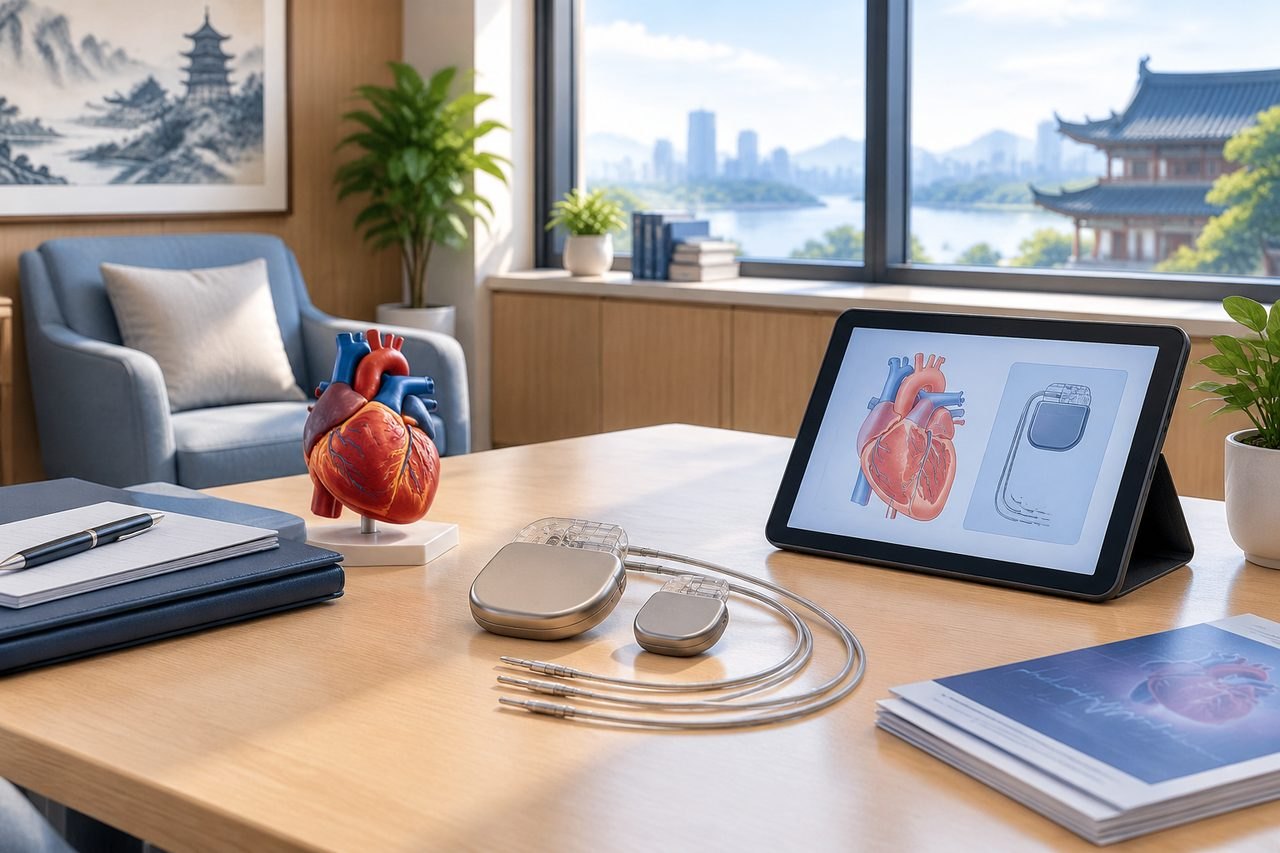
An implantable cardioverter defibrillator, or ICD, treats dangerous heart rhythms. A cardiac resynchronisation therapy device, or CRT, supports coordinated pumping when the heart's chambers do not work together. Some devices combine both functions, which is why the label CRT-D exists. These labels are not interchangeable, and a plan written only as 'a device' does not tell you what is being proposed.
This distinction changes the questions you need to ask. If your main problem is a risk of dangerous rhythms, the conversation centres on defibrillation capability and how the device would detect and respond to those rhythms. If the main problem is uncoordinated pumping, the conversation centres on resynchronisation and whether the proposed system includes defibrillation as well. The treating clinician decides which category fits your situation, but you can ask them to state it plainly.
For an overseas patient, this matters because the device type affects the leads, the implant procedure, the programming and the follow-up checks. A vague answer at the enquiry stage often means the clinical picture is not yet complete. That is not a reason to delay urgent local care, but it is a reason to ask for a specific written description before making travel plans.
Ask which device and which leads are proposed, and why
A useful first question is: which exact device and which leads are proposed for me, and what in my records supports that choice? The answer should connect to your diagnosis, your heart function and your rhythm history, not to a general preference for one product family.
Leads are the wires that connect the device to the heart. The number and position of leads differ between systems, and the proposed configuration is part of the clinical decision. You do not need to select the leads yourself, but you should be able to repeat back what the team has proposed and why. If the reply only names a brand or a model without explaining the clinical reason, ask for the reason in plain language.
It is also reasonable to ask whether more than one device option was considered and what would make the team change its recommendation. You are not asking the clinician to justify every alternative in detail. You are checking that the recommendation is specific to you rather than a default.
A second question concerns compatibility and constraints. Ask whether the proposed system has any limitations that matter for your daily life, such as restrictions the team would advise after implant. The treating team must confirm these points for your individual case; a general article cannot.
Programming is part of the plan, not an afterthought
After implant, the device is programmed to detect and respond to your heart's signals. Programming settings are clinical decisions made by the treating team, and they can be adjusted at follow-up visits. For an overseas patient, the practical question is how programming would be handled during your stay in China and after you return home.
Ask who will program the device before you leave the hospital, what the initial settings are intended to achieve, and what information you would receive about those settings. Ask whether the team can provide a written device summary that a clinician in your home country could read. You do not need to interpret the settings yourself, but you should know what documentation you will carry.
A related question is what would trigger a reprogramming visit. The team may describe routine checks, symptom-driven checks or checks after a detected event. The exact schedule depends on your clinical situation and the device, so ask the treating team to explain the plan for your case rather than relying on a general interval.
If you are comparing care in China with care elsewhere, the programming and documentation plan is a fair point of comparison. A centre that can explain its follow-up route clearly is easier to coordinate with than one that leaves the question open.
Remote monitoring and later device checks: what to confirm
Many modern devices can transmit information remotely, but remote monitoring is not universal and depends on the specific device, the available equipment and the arrangements in both countries. Do not assume that a device implanted in China will automatically connect to a monitoring service where you live, and do not assume the opposite either. Treat it as a question with a provider-specific answer.
Ask the treating team whether the proposed device supports remote monitoring, what equipment would be needed, and whether they can help set it up before you travel home. Ask what the alternative is if remote monitoring is not available to you: for example, in-person checks at a local clinic that can interrogate the device.
Later device checks are a long-term commitment. Ask how the team would coordinate checks after you leave China, what records they would send with you, and who would be responsible for acting on any alert. The receiving clinician in your home country makes their own assessment; the original team does not have to be the only team that can review the device.
MRI access is another point that patients often raise. Not every device or lead system is compatible with MRI, and compatibility depends on the specific components. Ask the treating team to state whether the proposed system has any MRI-related limitation and what that means for your future care. Do not rely on a general statement that 'modern devices are MRI-safe'.
What to prepare before asking a China team to review your case
A records-based review is only as useful as the information supplied. Before you ask a China team to comment on device choice, gather the documents that describe your heart rhythm, your heart function and any previous device or cardiac procedures. The exact list depends on your history, so ask the receiving team what they need rather than sending everything you have.
Useful items often include recent rhythm recordings, imaging or echocardiography reports, a current medication list, and any prior electrophysiology or device records. If you already have a device, include the most recent interrogation report. If you do not have a particular document, say so; the team can tell you whether it changes their ability to comment.
Write down your main question in one or two sentences. For example: 'I have been advised that I may need a defibrillator, and I want to know which system is proposed and how follow-up would work if I travel to China.' A clear question helps the team give a focused reply instead of a general summary.
Keep the first contact brief. An initial enquiry can start with a short summary and your main question; you can share more detailed records after the team explains what they need. Do not send passport numbers, card details or a complete medical archive in the first message.
How to read the reply and what to do next
When a reply arrives, check whether it answers the device question directly. A useful reply names the proposed device category, explains the clinical reason, and describes the follow-up route. A reply that only offers an appointment without addressing the device question is incomplete for your decision.
Ask for the written scope of any estimate or plan you receive. The hospital's own written quote is the document that matters for what is included, excluded or still undecided. Coordination fees and hospital charges are separate, and travel costs are separate again. Without a written scope, you cannot compare one route with another.
Remember the limits of a remote review. A records-based opinion can clarify options and prepare questions, but it does not establish final suitability, and it does not guarantee that a particular device is available or that a hospital will accept your case. The treating hospital decides suitability after its own assessment.
If you have symptoms that are new, worsening or severe, seek local urgent care rather than waiting for an overseas enquiry to progress. An overseas planning process should not delay necessary assessment where you are.
A practical next step is to prepare a short summary of your diagnosis, your main question about device choice, and the records you already have. You can send that summary through the enquiry form, email or WhatsApp, and the team will explain what information is missing and what the relevant next step is. The initial case review is free and does not commit you to a proxy consultation or any treatment in China.
Sources & scope of this guide
References and official service information relevant to this guide.
This is general planning information and has not been individually reviewed by a doctor. Medical decisions and personal treatment advice come from your treating clinicians.