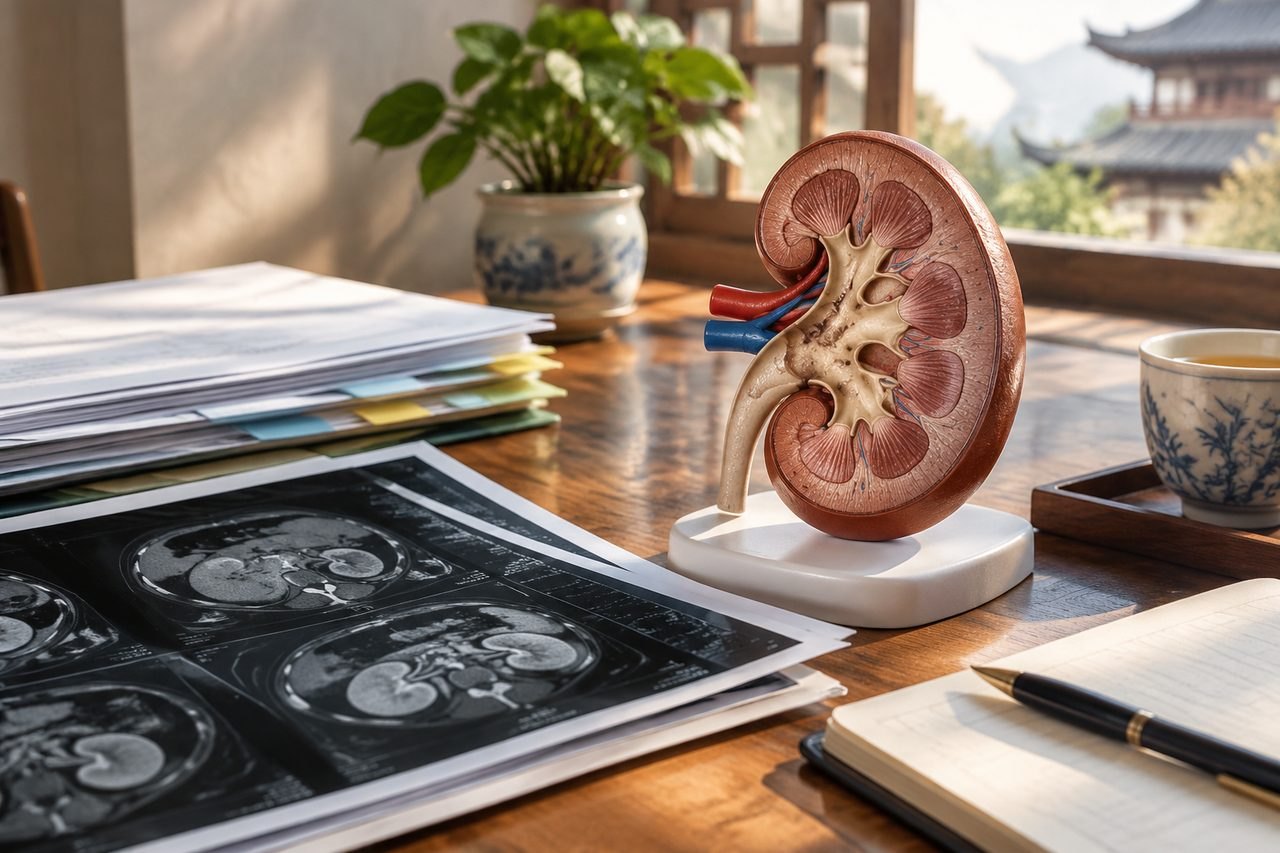
What a previous kidney procedure summary needs to contain
A previous kidney procedure can mean several different things. It may have been a partial nephrectomy, where part of a kidney was removed, or a radical nephrectomy, where a whole kidney was removed. It may also have been a biopsy, a drainage procedure, or treatment for a stone or obstruction. For a kidney cancer review, the receiving clinician needs to know which of these applies, when it happened and what the result was.
The summary should be factual and dated. Start with the procedure name as written in your records, the date and the hospital. Then state the reason it was done: suspected tumour, confirmed tumour, bleeding, obstruction or another problem. Next, describe what the operation or biopsy found. If a pathology report is available, include the tumour type, size, grade and margin status if those are stated. If no pathology was taken, say so plainly rather than leaving the reader to guess.
The second half of the summary is about consequences. Did the procedure remove all visible disease, or was residual disease left? Did kidney function change afterwards? Are you on any medication or follow-up schedule because of it? These points matter because a new treatment decision depends on what has already been done and what remains.
Keep the summary to one or two pages. A long chronological diary is less useful than a clear table of dates, procedures and results. If you are unsure what a term means, copy the exact wording from the report and ask the receiving team to explain it. Do not translate medical terms yourself if that risks changing their meaning.
Tumour records: what the cancer team will look for
For a confirmed or suspected kidney cancer, the tumour record is separate from the surgical record. The cancer team will want to know how the tumour was first identified, what imaging was done and what those images showed. Relevant imaging may include CT, MRI or ultrasound of the abdomen, and sometimes chest imaging if staging is being considered. The dates and the actual reports matter more than a verbal description.
Pathology is central. If a partial or radical nephrectomy was performed, the pathology report should state the tumour type, size, grade and whether the margins were clear. If a biopsy was done instead, the report should say what tissue was sampled and what the pathologist concluded. If the report is unavailable, say that clearly. A missing pathology report is a gap to be filled, not something to work around with assumptions.
Staging records also belong in this summary. If a stage was assigned, include it and the date. If staging was never completed, say so. The receiving team may need to repeat or extend staging before discussing treatment. That is a clinical decision for them, not something to predict in advance.
Do not send only selected pages. A partial pathology report or a single scan image can be misleading. If you are unsure what to send, ask the receiving team what they need for the specific question you are asking. A records-based review can clarify what is missing, but it does not replace the treating hospital's own assessment.
Kidney function records: why they change the discussion
Kidney function is a separate record from the tumour record, and it can determine what options are realistic. Serum creatinine and estimated glomerular filtration rate are the measures a receiving team will look for. If you have had a partial nephrectomy, the remaining kidney tissue may still be working well, but that needs to be shown with current numbers, not assumed from the fact that you feel well.
If you have had a radical nephrectomy, you are living with one kidney. That does not automatically mean kidney function is poor, but it does mean the receiving team will want recent blood tests and possibly urine tests. If you have other conditions such as diabetes or high blood pressure, include those diagnoses and their current treatment. They affect how the kidney is likely to cope with any future procedure or medication.
Bring the actual laboratory reports with dates and reference ranges. A single creatinine value without a date is not very useful. If your kidney function has changed over time, a short trend is more informative than one number. If you have had a nuclear medicine scan to measure split kidney function, include that report as well.
Do not stop or change any medication before a review. If you are taking medicines that affect kidney function or blood pressure, list them with doses and say who prescribed them. The receiving clinician will decide whether any adjustment is needed.
Partial versus radical surgery: what the distinction changes
Partial nephrectomy removes part of a kidney. Radical nephrectomy removes the whole kidney. The distinction matters for several reasons. After partial surgery, the remaining kidney tissue on that side may still be present, and the question of local recurrence in the operated kidney can arise. After radical surgery, that kidney is gone, and the focus shifts to the remaining kidney and to any evidence of disease elsewhere.
The proposed approach for any future procedure depends on the lesion and on the kidney assessment. A clinician cannot promise that a kidney can be preserved, and a previous partial nephrectomy does not guarantee that another partial procedure is feasible. Equally, a previous radical nephrectomy does not automatically rule out further treatment. These are clinical judgements based on imaging, kidney function and the overall picture.
If you are seeking a review in China, describe both the procedure and its result. For example: partial nephrectomy in 2021 for a 3 cm tumour, margins clear, no recurrence on last imaging, current eGFR stable. That is more useful than saying only that you had kidney surgery. If you do not know the margin status or the tumour size, write that you do not know and ask the team what they need.
Avoid framing the summary as a request for a particular operation. The purpose is to give the receiving team enough information to assess your situation. They will decide what is appropriate after reviewing the records and, if needed, arranging their own tests.
What to send, and what to ask before you send it
A practical records set for a kidney cancer review usually includes: discharge summaries from any previous kidney procedure; operative notes if available; pathology reports; imaging reports with dates; recent blood tests including creatinine and eGFR; a current medication list; and a short cover note stating your main question. If you have had more than one procedure, order the documents by date.
Before sending a large file, ask the receiving team two questions. First, what is the specific question they can address with these records? Second, what is missing that they would need for a meaningful review? This avoids sending an incomplete set and then waiting for a reply that cannot answer your question. It also helps you understand the limits of a records-based opinion.
A records-based review is not a diagnosis and does not confirm hospital acceptance or treatment availability. It can identify gaps, clarify what has already been done and suggest a next step. If your symptoms are worsening, seek local medical care first rather than waiting for an overseas reply.
If you are considering care in China, you can start with a brief summary through the enquiry form, email or WhatsApp. The initial case review is free and checks the available diagnosis, records and your main question. It is not a promise of acceptance. You do not need to buy a proxy consultation to make an initial enquiry.
How to write the summary so it is actually read
Clinicians are busy, and a clear summary is more likely to be read than a long narrative. Use headings: procedures and dates; pathology results; imaging results; kidney function; current medications; main question. Under each heading, write short factual sentences. If a result is unknown, write 'not available' rather than leaving it blank.
Do not include unrelated medical history unless it affects the kidney or the proposed treatment. A brief mention of diabetes, hypertension or blood-thinning medication is relevant. A full list of childhood illnesses is not. If you are unsure whether something is relevant, include it in one line and let the clinician decide.
If your records are in another language, ask whether a certified translation is needed before you send them. Do not assume that English is accepted everywhere. The receiving hospital will confirm its own requirements. Similarly, do not assume that a particular scan or test will be repeated or accepted; ask the provider what its written plan includes.
Finally, keep a copy of everything you send. If you later need a second opinion or a follow-up review, you will not have to reconstruct the file. A well-organised summary of previous kidney procedures and their results is one of the most useful things you can prepare for a kidney cancer review in China.
Sources & scope of this guide
References and official service information relevant to this guide.
This is general planning information and has not been individually reviewed by a doctor. Medical decisions and personal treatment advice come from your treating clinicians.