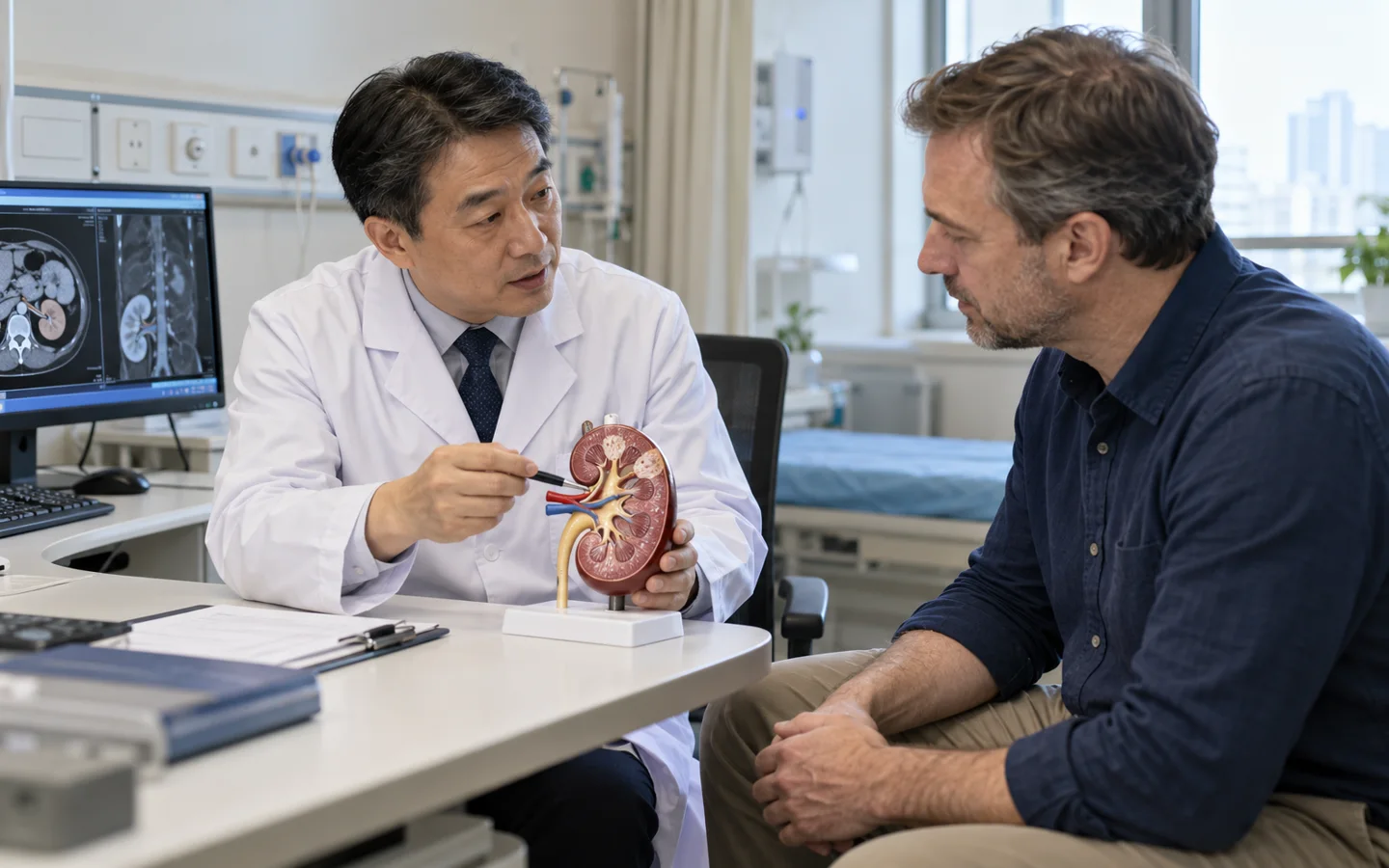
Partial nephrectomy removes the renal mass while preserving kidney tissue
The surgeon excises the tumor and closes blood vessels and any opening into the urine-collecting system. Open, laparoscopic or robotic access may be used.
Feasibility depends on tumor size and position, relation to vessels and the collecting system, baseline renal function and whether cancer appears localized.
Ask how imaging complexity, margin strategy and possible conversion to total nephrectomy are handled.
Who may be considered?
Specialist review may help when the diagnosis, symptoms and previous treatment create a focused question about partial nephrectomy.
- A localized renal mass suitable for nephron-sparing removal.
- A patient with one kidney, bilateral tumors or chronic kidney disease where preservation is important.
- A hereditary or recurrent-tumor risk requiring long-term renal reserve.
- A patient fit for surgery after staging and functional review.
What the specialist team must confirm
Review multiphase contrast CT or MRI, chest staging, contralateral kidney, estimated GFR, split renal function when needed, tumor complexity, biopsy where relevant and cardiac and bleeding risk.
Key points for this treatment
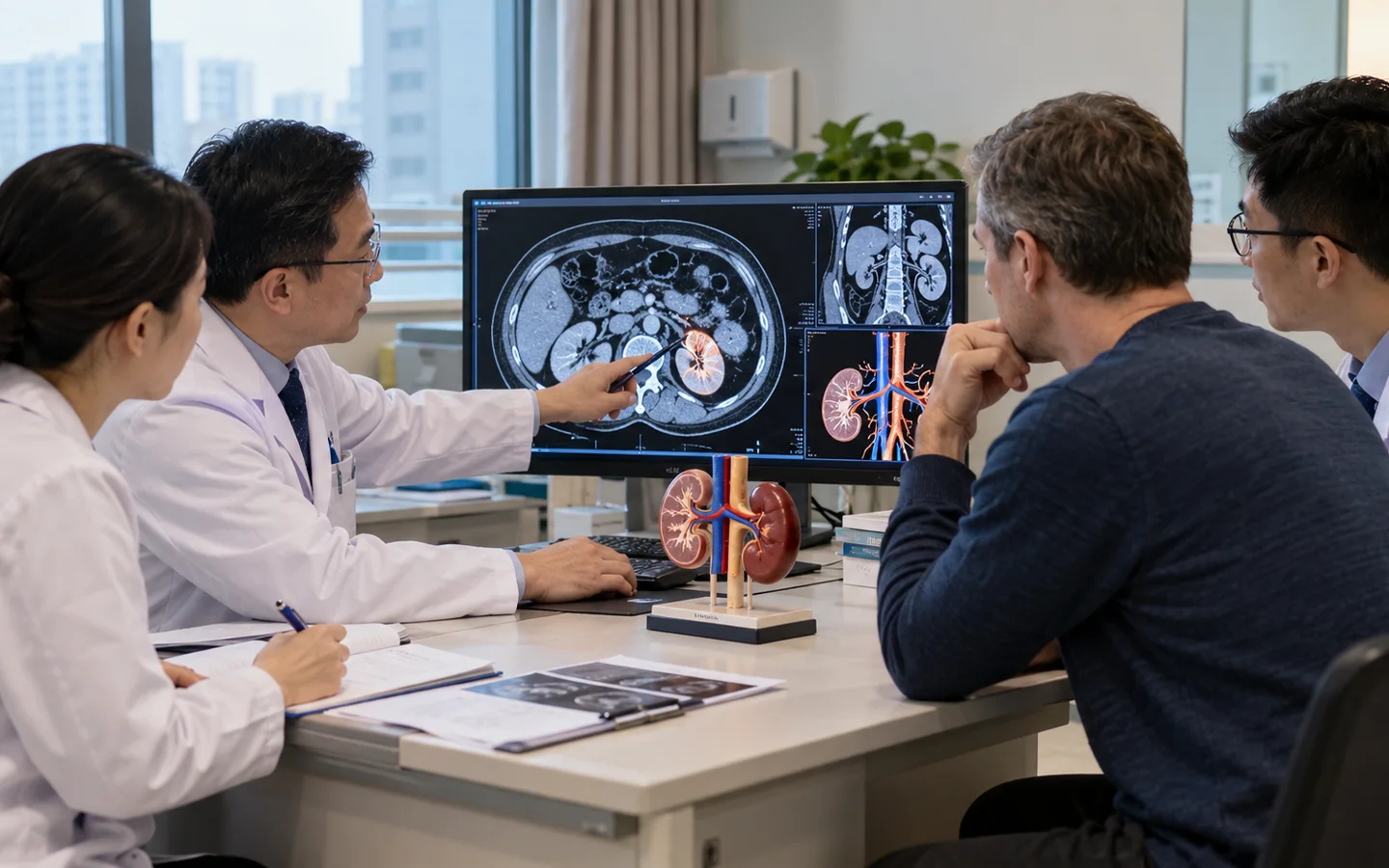
From renal-mass characterization to functional surveillance
The operation aims to preserve useful nephrons while maintaining appropriate oncologic margins and complication control.
Pathology and kidney function define the next phase
Early monitoring focuses on bleeding, urine leak, kidney function, pain and thrombosis. Final pathology confirms tumor type, grade and margin status.
Long-term follow-up combines blood pressure and renal tests with risk-adapted imaging for recurrence or new renal lesions.
Risks, limits and realistic expectations
Risks include bleeding, urine leak, infection, loss of renal function, conversion to radical nephrectomy, injury to nearby organs, recurrence and anesthesia complications.
Faintness, increasing flank swelling, fever, heavy blood in urine, breathlessness or marked reduction in urine output requires urgent local assessment.