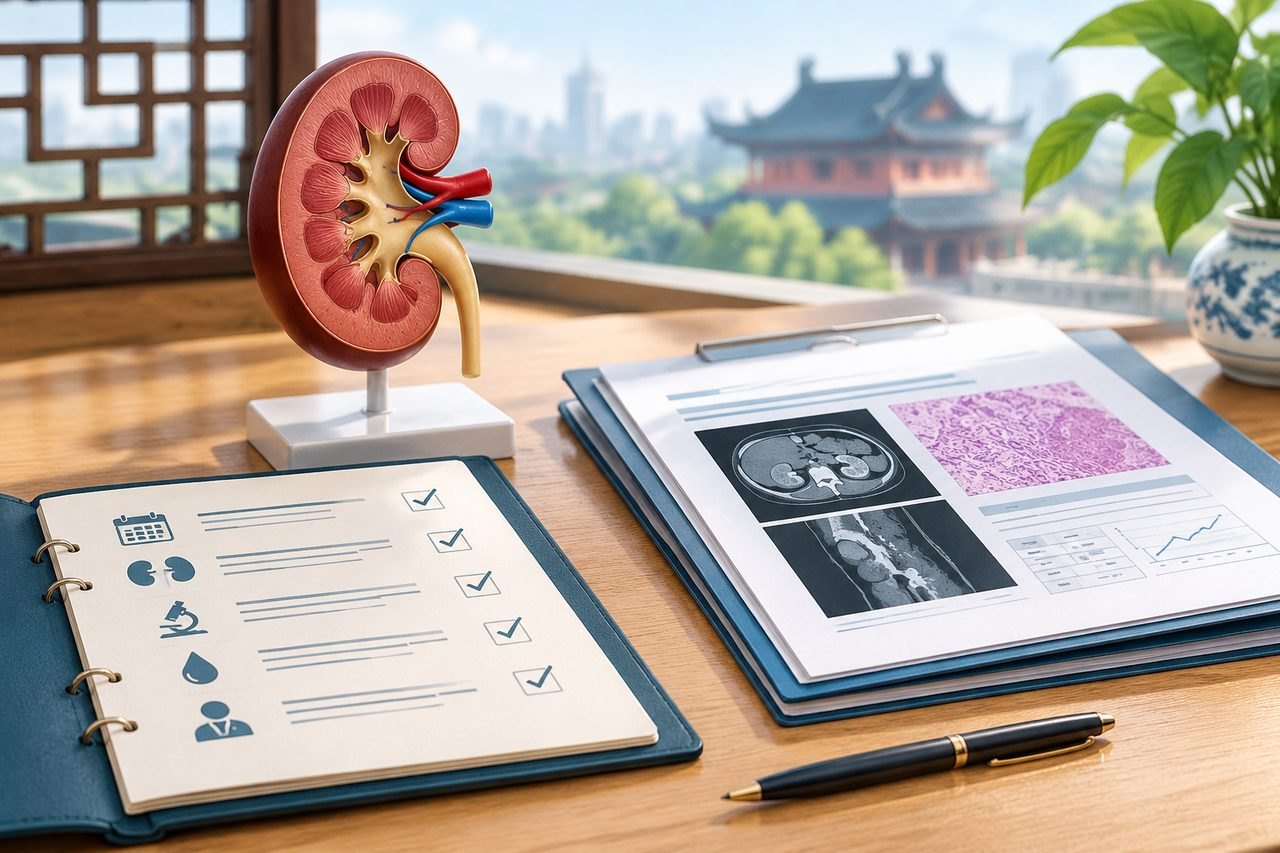
What a records review can and cannot settle
A records-based opinion is a second reading of the material you already have. It can comment on how the imaging, pathology and kidney-function information fit together, and it can suggest questions your local team may want to consider. It cannot examine you, cannot repeat or reinterpret a scan it has not seen, and cannot confirm that any procedure will be done in China.
That distinction matters for kidney cancer because the decision is rarely about one image. Partial nephrectomy removes part of a kidney, and the proposed approach depends on the lesion and the kidney assessment. A reviewer working from records can discuss what those records appear to show, but the operating surgeon who examines you and reviews the full imaging is the person who decides what is technically suitable.
So treat a review reply as a structured opinion with limits. It is useful for deciding whether travelling for an in-person assessment is worth pursuing. It is not a booking, not a guarantee of kidney preservation, and not a substitute for your local team's judgement about your current treatment.
Keep the local team in charge while you gather a second view
The safest sequence is to tell your current treating clinician that you are seeking an additional opinion, and to keep every scheduled appointment, scan and treatment in place while the review is arranged. A second opinion is most useful when it runs alongside care, not instead of it.
If your local team has already proposed a plan, ask them what information they would want a reviewer to see. That request often reveals which records are genuinely decision-relevant, and it keeps the two conversations connected rather than parallel and contradictory.
Do not pause or change any medication, and do not delay an appointment your local team considers necessary, in order to wait for an overseas reply. If your symptoms worsen, local urgent assessment comes first.
Which kidney cancer records to prepare
Start with the documents that describe the tumour and the kidney function, because those are the two threads a reviewer needs to follow. Imaging reports and the actual image files are different things; a report summarises, while the images let a specialist form an independent view. Ask your hospital how to obtain the images in a format a reviewer can open.
Pathology matters if a biopsy or previous surgery has already produced a tissue diagnosis. Include the full report rather than a summary line, because the detailed description is often what a reviewer needs. If no tissue diagnosis exists yet, say so clearly instead of leaving the question open.
Kidney function is the other thread. Include recent blood results that describe how your kidneys are working, plus any record of previous kidney procedures. A history of earlier surgery, stone treatment or other intervention on either kidney can change how a future operation is planned, so it belongs in the summary even if it feels unrelated.
A short covering note helps more than a large unorganised file. State your diagnosis or the question still being clarified, what treatment has already been given, what your local team is currently proposing, and the one decision you want the review to address.
- Imaging reports plus the image files, and how to transfer them.
- Pathology reports in full, or a clear statement that none exists.
- Recent kidney-function blood results and relevant urine findings.
- Records of any previous kidney surgery or procedure on either side.
- A one-page summary of current treatment and the specific question.
Partial or radical surgery: what the records must show
The choice between removing part of a kidney and removing the whole kidney is a clinical judgement that depends on the lesion, its position, and how well the remaining kidney is expected to function. A records review can help you understand how those factors are being weighed, but it cannot declare that partial removal is always feasible.
This is why the imaging files matter so much. Two reports can describe the same lesion differently, and a specialist forming an opinion needs to see the images rather than accept a summary. If your local team has already discussed partial versus radical surgery, ask them to write down the reasoning. That written reasoning is often the most useful single document you can send.
If a previous kidney procedure has already reduced your kidney function, say so explicitly. A reviewer who does not know this may comment on options that your own clinicians have already set aside for good reason.
How to ask for the review without committing to travel
You do not need to decide about travelling before you ask a question. An initial enquiry is free and is meant to establish whether a review is worth arranging, what information is missing, and what the sensible next step would be. It is not a diagnosis and it does not commit you to anything.
If you want a records-based specialist opinion while you remain at home, that is a separate, optional step. It is not a prerequisite for every appointment or operation, and you should not feel pushed into it before you understand what it would add. Ask what the reviewer will receive, what the reply will cover, and what it will not cover.
For a complex case where more than one specialty is relevant, a review involving two or three specialties may be arranged, with the scope and fee agreed beforehand. Ask whether your question genuinely needs that breadth or whether a single specialist view is enough.
Keep the request narrow. One clear question produces a more useful reply than a general request to comment on everything.
What a reply confirms, and what it leaves open
A written reply should tell you what the reviewer understood from your records, what remains uncertain, and which questions your local team may want to pursue. It may also indicate whether an in-person assessment in China could be worth considering. It does not confirm hospital acceptance, a surgical plan, or that any particular procedure will be offered.
If a reply suggests travelling for assessment, that is a starting point for a conversation with your local team, not an instruction to stop their plan. Ask your local clinician to read the reply and say whether it changes anything. Sometimes it confirms the current plan; sometimes it raises a question worth testing locally first.
If a step cannot be completed, the fallback is straightforward. If images cannot be transferred, ask the reviewer whether the reports alone are enough for a preliminary comment, and be clear about the limitation. If a reply is delayed, keep your local appointments. If the reply is unclear, ask a specific follow-up question rather than requesting a fresh review.
Where coordination is genuinely useful, it covers practical, non-clinical work: helping assemble and translate records, requesting a specialist appointment, and interpreting during a visit. Clinical assessment, prescriptions, and any decision about suitability belong to the treating hospital and its licensed clinicians. A preliminary enquiry does not require buying a proxy consultation, and the hospital decides whether to accept a case.
The practical next step is to send a brief summary through the enquiry form, email or WhatsApp, and to say which single question you want answered. Share fuller records only after that first contact, and never send passport numbers, card details or a complete medical archive at the outset.
Sources & scope of this guide
References and official service information relevant to this guide.
This is general planning information and has not been individually reviewed by a doctor. Medical decisions and personal treatment advice come from your treating clinicians.