
What a kidney cancer pathology review actually examines
Kidney cancer is not one disease. The main types differ in behaviour and in how they are treated, and the 2022 World Health Organization classification of urinary and male genital tumours recognises a growing list of renal cell carcinoma subtypes and other kidney tumours. A pathology review is a fresh look at the same tissue by a pathologist with experience in urological or renal tumours, working from your original glass slides or tissue blocks rather than from a written report alone.
The review typically addresses questions such as: what is the exact tumour type; what is the grade; is there invasion of the renal sinus, renal vein or perinephric fat; are there sarcomatoid or rhabdoid features; and are the surgical margins clear. For some subtypes, additional tests may be relevant, and the reviewing pathologist may recommend immunohistochemistry or molecular studies. Whether those are needed, and whether the tissue available allows them, is a professional judgement rather than something you can decide from a report.
This matters because the answers feed directly into the treatment conversation. A partial nephrectomy may be discussed for a small, favourably located tumour, while a larger or more aggressive tumour may prompt a different operation or additional systemic treatment. The pathology is one input among imaging, your general health and kidney function, and the treating clinicians weigh all of them.
When a second pathology opinion is worth arranging
A review is most useful when the diagnosis is uncertain, when the reported subtype is unusual, when the grade seems inconsistent with the imaging or clinical picture, or when the treatment plan hinges on a distinction the original report does not settle. It is also reasonable when you are considering treatment in China and want the receiving team to work from tissue that has been examined to their own standards.
A review is less useful when the original diagnosis is clear, the tissue is limited and the question is really about which operation or drug to choose. In that situation the more relevant step is a clinical review of the full record, including imaging and blood results, by the urological or oncology team. A pathology review does not decide whether you are a candidate for surgery, and it does not establish that a particular treatment is available to you in China.
Be clear about what you want answered. A vague request for a second opinion produces a vague reply. A focused question, such as whether the tumour shows features associated with a higher risk of recurrence, gives the reviewing pathologist something concrete to address.
- Diagnosis uncertain or subtype described as unusual
- Grade or stage in the report does not fit the imaging or clinical course
- Treatment choice depends on a feature the original report leaves open
- You want the receiving team to assess the original tissue directly
The tissue and records a reviewing pathologist needs
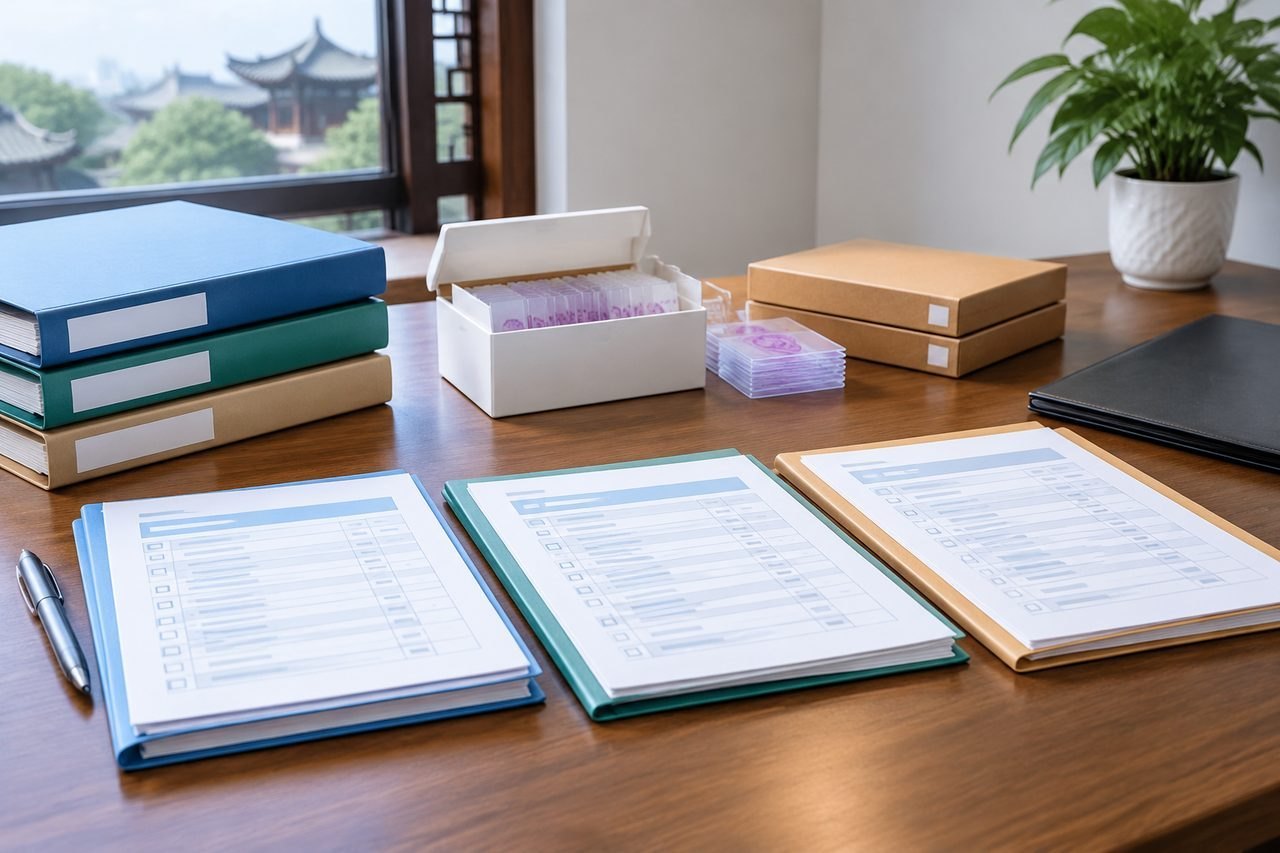
A review of the written report alone is not a pathology review. The pathologist needs the original slides, and often the paraffin blocks from which further sections or stains can be cut. These are physical materials held by the hospital or laboratory that performed the original examination, and releasing them usually requires a request from you or your treating clinician, sometimes with a formal loan agreement and a defined return date.
Alongside the tissue, send the full original pathology report, including any addenda, and the operative note if surgery has already happened. Imaging reports and, where available, the images themselves help the pathologist understand the clinical context. A short summary of your treatment history and the specific question you want answered should accompany the material.
Practical points to confirm with the laboratory and the receiving service include how the slides will be transported, whether blocks can be sent or only slides, who is responsible for returning them, and how long the review is expected to take. These arrangements differ between laboratories, so ask rather than assume. If blocks cannot leave the original hospital, ask whether unstained slides or a tissue transfer can be arranged instead.
How the review fits with treatment planning in China
The pathology review is one component of a broader records-based assessment. The receiving urologist or oncologist will also want to see cross-sectional imaging of the abdomen, blood tests including kidney function, and information about your general health and any previous treatment. For kidney cancer, imaging stage and the pathology together inform whether surgery is discussed, which operation is considered, and whether systemic therapy enters the conversation.
It is important to separate three different things. A pathology review gives an opinion on the tissue. A clinical review gives an opinion on the whole case. Hospital acceptance and the final treatment plan belong to the treating hospital and its clinicians after they have assessed you. None of these steps guarantees that a particular operation, drug or clinical trial will be offered, and a review does not establish eligibility for a trial or access to a specific therapy.
If your case is complex, involving uncertainty across urology, medical oncology and possibly radiation oncology, a multidisciplinary review may be a more suitable route than pathology alone. The scope and fee for such a review are agreed before it begins.
Questions to put to the treating team
Write your questions down before the review is arranged, and keep them specific. Useful questions include: which tumour features does the treatment plan depend on; does the reviewing pathologist need blocks as well as slides; will additional stains or molecular tests be requested, and who decides; how will the review opinion be communicated and by whom; and what else does the treating team need before it can discuss a plan.
Ask also how the review opinion will be reconciled with the original diagnosis if the two differ. A discrepancy is not unusual in second reviews and is handled by discussion between pathologists and clinicians, sometimes with further testing. You should ask who will explain the implications to you in plain language.
Finally, ask what the review cannot answer. No pathology review can tell you how you will respond to treatment or guarantee an outcome. Those questions belong in a conversation with your treating clinicians, who can discuss the evidence for different approaches in your situation.
A practical next step
Start with a short summary of your situation: the diagnosis as reported, whether surgery has already taken place, the specific question you want the pathology review to address, and what records and tissue you can obtain. An initial enquiry is free and is not a diagnosis or a promise of acceptance. Our team can check what is available, identify missing information and suggest the relevant next step, which may be a pathology review, a clinical records review or a specialist appointment.
If you later choose a records-based specialist opinion, that is a separate optional service with its own agreed scope. Hospital consultation, testing and treatment fees are paid to the hospital or provider and are separate from any coordination fee. Send only a brief summary at first; detailed records can be shared after initial contact through the secure route the team provides.
Sources & scope of this guide
References and official service information relevant to this guide.
- Related treatment reference
- WHO Classification of Tumours: Urinary and Male Genital Tumours, 5th edition
- National Cancer Institute: Renal Cell Cancer Treatment (PDQ)
- European Association of Urology: Renal Cell Carcinoma Guidelines
This is general planning information and has not been individually reviewed by a doctor. Medical decisions and personal treatment advice come from your treating clinicians.