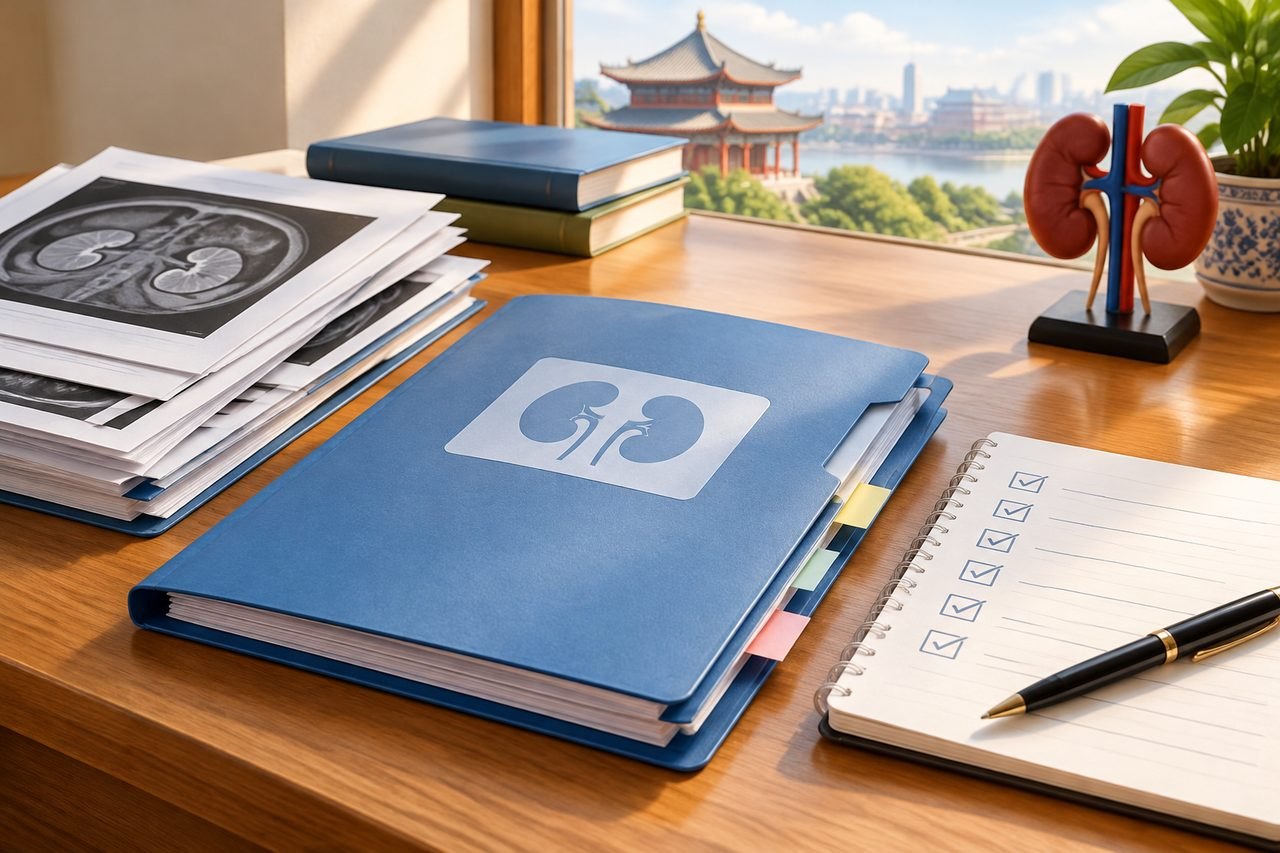
Why you should not remove previous kidney results before review
A kidney health assessment is not a single test. It can include blood chemistry, urine analysis, imaging and sometimes a kidney biopsy report. Each result carries a date, a laboratory method, a reference range and, for imaging, an image set. When you remove one item because you think it is outdated or abnormal, you remove the context a clinician needs to judge whether a repeat is necessary.
The safer approach is to keep the full record and let the receiving clinician decide what is still useful. A creatinine result from six months ago may still help show a trend. A urine protein result from last year may explain why a new test is being considered. An ultrasound report without the original images may be less useful than one with images, but the report itself still tells the clinician what was seen and when.
This is also a communication issue. If you send only selected results, the clinician may not know that other tests were done. They may then order a test that already exists, or they may assume no previous assessment was performed. Both outcomes waste time and may lead to unnecessary repeat testing.
Separate routine screening, known kidney disease follow-up and symptom assessment
The first question to clarify is why the assessment is being requested. A routine health checkup for someone without kidney symptoms is different from a follow-up for a known kidney condition, and different again from an assessment of current symptoms such as swelling, blood in urine, pain or reduced urine output.
For a routine checkup, the purpose is a general health review. The clinician should advise which tests are suitable, and a base package can be chosen before optional additions. A stand-alone diagnostic test normally needs a specialist's order, so the checkup route and the specialist route are not interchangeable.
For a known kidney condition, the purpose is usually to compare current results with previous ones. The previous reports are therefore central, not optional. The clinician needs to know the diagnosis, the date of the last assessment, any treatment or medicine currently taken, and what has changed since.
For current symptoms, the purpose is assessment, not screening. Symptoms call for a specialist consultation rather than buying a screening package. If symptoms are urgent or worsening, local care should take priority over an overseas enquiry.
The practical consequence is that you should state clearly in your enquiry which of these three situations applies. That single sentence changes which records matter and which questions the clinician will ask first.
What to send, and how to send it without deleting anything
Start with a short summary: your main question, the known diagnosis if any, the date of the most recent kidney assessment, and the names of any medicines or treatments currently used. Do not send passport numbers, card details or a complete medical archive at first contact. A brief summary is enough for the initial review.
After first contact, the team will explain how to share records. At that stage, prepare the original reports rather than a typed summary alone. Useful items include blood test reports with dates and reference ranges, urine test reports, imaging reports, and the original image files if they are available. If a kidney biopsy was performed, include the pathology report.
Keep every version. If a test was repeated at different laboratories, send both reports. If a report is in a language other than English or Chinese, ask whether a translation is needed and who should provide it. Do not translate a report yourself if a certified translation is requested.
Do not delete an abnormal result. An abnormal result is often the reason the clinician needs to review the record. Removing it does not make the assessment simpler; it makes the clinical picture incomplete.
If a record is missing, say so. A missing record is a gap to explain, not a reason to delay local clinical assessment. The receiving clinician can decide whether the gap matters for the question being asked.
Ask the clinician to confirm which previous tests remain valid
The decision about whether a previous test is still valid belongs to the treating clinician. Validity depends on the test, the clinical question, the time elapsed and whether the patient's condition has changed. There is no single rule that applies to every kidney test.
A useful way to frame the request is to ask for a written list of proposed tests, with each item marked as one of three categories: already available and acceptable, already available but a repeat is advised, or not available and needed. For any repeat, ask what the repeat is expected to add that the previous result does not provide.
This request is reasonable and specific. It also gives you a document you can compare with the hospital's written quote or plan. If the plan includes a test you believe you already have, you can point to the earlier report and ask whether it changes the recommendation.
Do not decide yourself that a test is unnecessary and omit it from the records. Instead, send the report and ask the question. The clinician may agree that no repeat is needed, or may explain why the earlier result is not sufficient for the current decision.
What to confirm with the hospital before you travel
Before making travel arrangements, confirm the administrative points that affect your planning. Ask whether the appointment is confirmed or provisional, and at what stage it becomes confirmed. Ask which department or clinician will review the kidney records, and whether a specialist appointment or a checkup package is the correct route for your situation.
Ask what the written quote or plan includes and what it does not include. If a test is listed, ask whether it is part of a base package or an optional addition. If the hospital requires a specialist's order for a stand-alone test, ask how that order is arranged.
Ask how reports will be provided, in what language, and whether an interpreter is needed for the consultation. Ask whether previous imaging can be reviewed from the files you send, or whether the hospital requires its own imaging. These are administrative questions, and the hospital's answer is the one that applies.
Ask what happens if the clinician decides that a proposed test is not needed. Confirm whether the plan or quote is adjusted, and how that change is communicated. Getting this in writing before travel reduces the chance of confusion later.
Do not assume that a test will be repeated or that it will be accepted. Both are decisions for the treating clinician, based on the records and the clinical question.
A practical next step for your kidney assessment enquiry
Prepare a short summary with your main question, the date of your most recent kidney assessment, and the names of any current medicines or treatments. Send it through the enquiry form, email or WhatsApp. An initial enquiry is free and does not require buying a proxy consultation.
After first contact, the team will explain how to share your records. Send the original reports and images, keep every version, and ask the hospital to confirm in writing which previous results remain acceptable and which tests, if any, are proposed as repeats. The hospital decides suitability, test necessity and whether your previous results are sufficient.
If you have current or worsening symptoms, seek local medical care first. An overseas enquiry can continue in parallel, but it should not delay assessment of urgent symptoms.
Sources & scope of this guide
References and official service information relevant to this guide.
This is general planning information and has not been individually reviewed by a doctor. Medical decisions and personal treatment advice come from your treating clinicians.