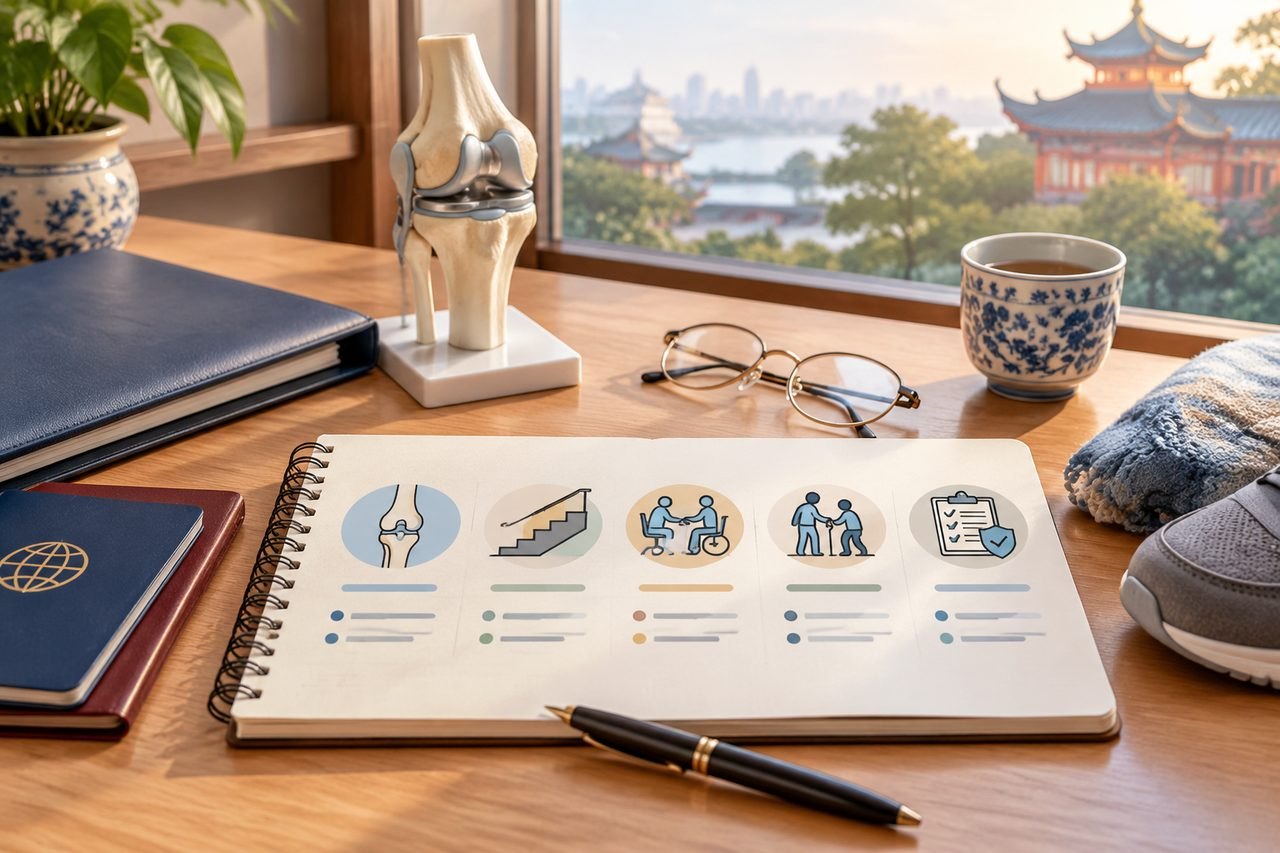
The decisions you need to make before booking anything
A knee replacement replaces damaged joint surfaces with artificial components, and assessment looks at symptoms and function. That clinical decision belongs to the hospital. Your planning decisions are different: where you will stay after discharge, who will help you, how you will manage stairs and transfers, and what you will do if the plan changes.
Start by clarifying the clinical pathway with the hospital. Ask whether your admission is confirmed or provisional, what pre-operative assessments are required, and when you will receive written instructions about weight-bearing, stairs, transfers and follow-up. Do not book non-refundable travel until the hospital confirms your dates and any pre-admission requirements.
Ask the hospital these questions in writing: What is my expected weight-bearing status after surgery? Will I need a walker, crutches or a cane, and can these be provided or must I bring them? What stair and transfer techniques will I be taught? Who will teach them, and will I have a practice session before discharge? What help will be available in the ward and after discharge? What follow-up appointments will I need, and can they be arranged before I leave China?
If you are travelling with a companion, include them in these discussions. Their role in transfers, stairs and daily tasks should be agreed with the clinical team, not assumed.
Stairs: what to confirm and how to prepare
Stairs are a common concern because they affect where you can stay and how you move around. The hospital's physiotherapy team will assess your strength, balance and confidence before teaching you a safe method. Do not rely on general advice from the internet; your technique depends on your surgery, your weight-bearing status and your home environment.
Before you travel, ask the hospital whether you will be able to manage stairs before discharge and what equipment or support you will need. If you are staying in a hotel or apartment, find out whether there is a lift, how many steps are at the entrance, and whether the bathroom has a walk-in shower or a step-over tub. These details matter more than star ratings.
If you will need to climb stairs at your accommodation, ask the hospital to include stair practice in your rehabilitation. If they cannot confirm this in advance, plan for a ground-floor room or a place with a lift until you have been assessed. Do not assume you will be able to manage stairs on a particular day.
For your return journey, ask the airline and the hospital about any restrictions on flying after knee replacement. The hospital's advice depends on your individual recovery, wound healing and risk of clots. Do not book a flight until the clinical team confirms you are fit to travel.
Transfers: bed, chair, toilet and car
Transfers are the movements between bed, chair, toilet and car. After knee replacement, you may need to avoid twisting or bending your knee beyond a certain angle, and you may need to keep weight off the operated leg. The hospital will teach you how to transfer safely, often using a walker or crutches.
Ask the hospital what transfer equipment you will need and whether it can be provided. Common items include a raised toilet seat, a shower chair, a firm chair with arms, and a car seat cushion. Availability varies by hospital and by accommodation, so confirm before you arrive.
If you are staying in a hotel, ask whether the bathroom has grab bars and a raised toilet seat. If not, you may need to arrange these yourself or choose different accommodation. For car transfers, ask the hospital how to get in and out safely, and whether you should sit in the front or back seat.
Your companion should learn these techniques too. Ask the physiotherapist to show your companion how to assist without hurting you or themselves. If you are travelling alone, discuss with the hospital what support they can provide and whether a companion or professional carer is recommended.
Practical help: who does what during your stay
Practical help covers daily tasks: getting to appointments, carrying items, preparing food, laundry, and managing medications. The hospital will provide clinical care, but day-to-day support is usually arranged by you or your companion.
If you are travelling with a companion, agree their role in advance. They may need to help with transfers, fetch items, and communicate with staff. Ask the hospital whether your companion can stay overnight and what facilities are available.
If you are travelling alone, ask the hospital whether they can recommend a professional carer or a nursing service. ChinaSpecialistCare can discuss non-clinical coordination, such as a hospital companion and interpretation, but this is a separate service and not clinical care. The hospital decides what clinical support you need.
For communication, ask whether English-speaking staff are available and whether you need an interpreter for appointments and discharge instructions. If you do not speak Chinese, arrange interpretation for key discussions, including consent and discharge planning. Do not rely on machine translation for medical instructions.
Contingencies: what if the plan changes
Plans can change. Your surgery may be delayed, your length of stay may be longer than expected, or you may need additional tests. Build flexibility into your travel and accommodation bookings.
Ask the hospital what happens if your surgery is postponed or if you need to stay longer. Can your accommodation be extended? Can your flight be changed? What are the costs? Do not assume your travel insurance will cover changes related to medical treatment; check the policy terms.
Ask what follow-up you will need after discharge and whether it can be done locally or remotely. If you are returning home soon after surgery, ask the hospital for a written discharge summary and instructions for your local doctor. Confirm whether you need any prescriptions or equipment to take with you.
If you develop symptoms such as fever, worsening pain, redness or swelling around the wound, or difficulty breathing, seek urgent medical care. Do not wait for a scheduled appointment. The hospital should give you contact details for urgent questions.
Next step: how to start planning
Start with a free initial enquiry. Send a brief summary of your diagnosis, your main question, and your preferred travel dates. ChinaSpecialistCare can help you understand the next step, but the hospital decides suitability and provides clinical instructions. You do not need to buy a proxy consultation to make an initial enquiry.
Before you commit to flights or a long stay, work through the practical questions in this guide in the order they affect your bookings. The clinical pathway comes first: confirm whether your admission is provisional, what pre-operative assessments are required, and when you will receive written instructions about weight-bearing, stairs, transfers and follow-up. Until those answers are in writing, treat your travel dates as provisional.
Accommodation is the next decision, because it determines whether stairs and transfers are manageable. Ask each candidate hotel or apartment whether there is a lift, how many steps are at the entrance, whether the bathroom has a walk-in shower or a step-over tub, and whether grab bars and a raised toilet seat can be arranged. If the answers are unclear, ask the hospital's physiotherapy team what they would want to know about your accommodation before discharge, and use that list when you compare options.
Companion arrangements should be settled alongside accommodation, not after it. If someone is travelling with you, agree in advance what they will help with, whether they can stay overnight, and whether they can attend physiotherapy sessions to learn transfer and stair techniques. If you are travelling alone, ask the hospital what non-clinical support is available and whether a professional carer or nursing service can be recommended. ChinaSpecialistCare can discuss non-clinical coordination such as a hospital companion and interpretation, but that is a separate service and not clinical care.
Build contingencies into every booking. Ask what happens if surgery is postponed, if your stay is extended, or if you need additional tests. Check whether your accommodation can be extended at short notice and what your flight change terms are. Review your travel insurance for how it treats changes related to medical treatment, and do not assume a particular event is covered.
Finally, plan your communication and follow-up before you leave China. Ask whether English-speaking staff are available, whether you need an interpreter for appointments and discharge instructions, and what written discharge summary and follow-up plan you will receive. Confirm how any prescriptions or equipment you need will be provided, and who to contact with urgent questions after discharge. Keep a copy of every instruction and share it with your companion and your local doctor. If anything is unclear, ask the hospital to explain before you travel.
Sources & scope of this guide
References and official service information relevant to this guide.
This is general planning information and has not been individually reviewed by a doctor. Medical decisions and personal treatment advice come from your treating clinicians.