
What is total knee replacement?
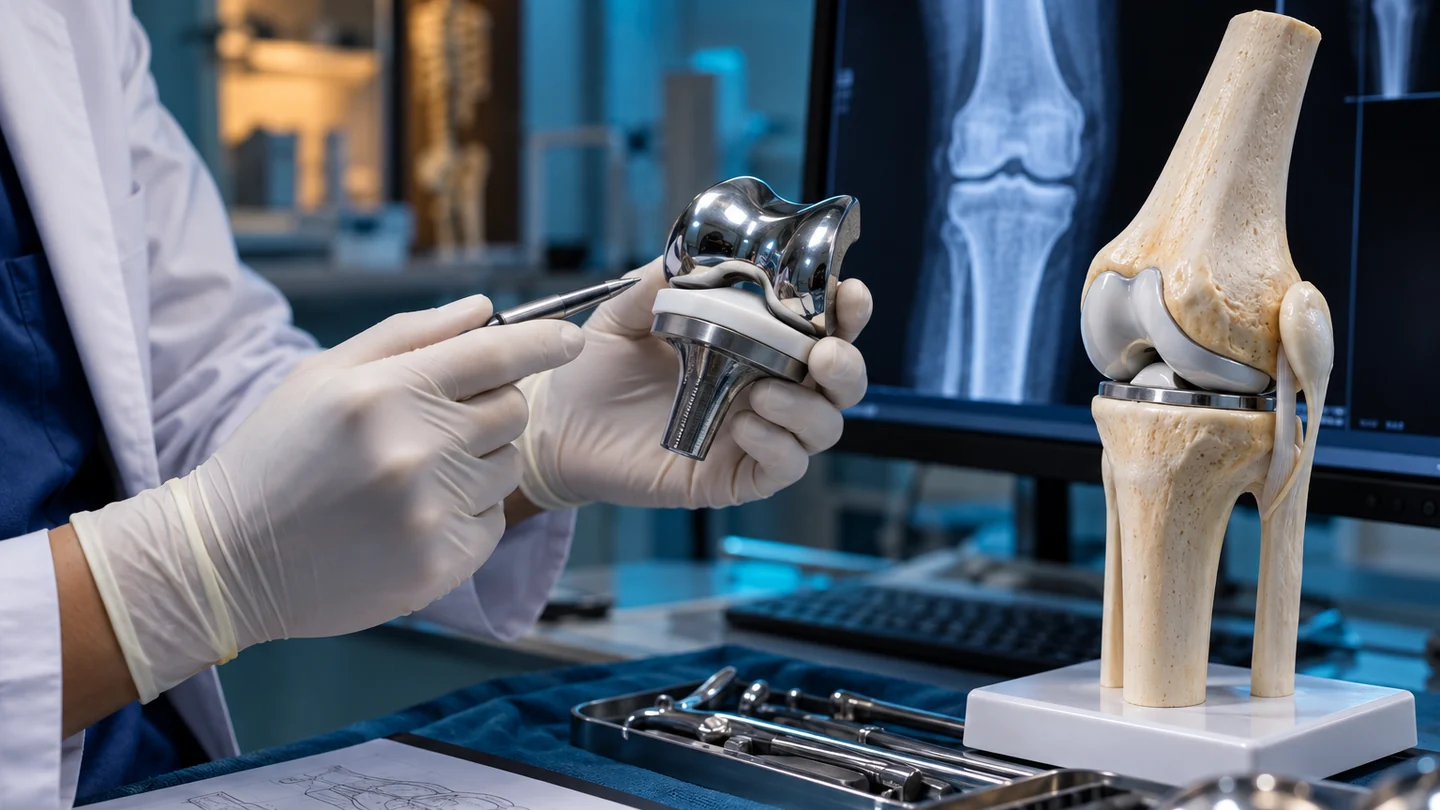
Total knee replacement—also called total knee arthroplasty—removes damaged joint surfaces from the end of the thigh bone and top of the shin bone, then resurfaces them with metal and plastic components. The aim is to reduce pain, correct deformity where possible and improve daily function.
Osteoarthritis is the most common reason for surgery. Rheumatoid arthritis, post-traumatic arthritis and some other destructive joint conditions can also lead to replacement. A scan or X-ray alone does not decide the treatment; symptoms, examination, general health and response to non-surgical care all matter.
This page explains a common care pathway. It cannot determine whether surgery is appropriate for a specific patient; that decision belongs to the treating orthopedic team after a full clinical review.
Who may be considered?
A specialist may discuss knee replacement when knee damage is advanced and pain or loss of function is substantially affecting life. Common considerations include:
- Persistent pain during walking, stairs, sleep or ordinary daily activity.
- Stiffness, reduced mobility or deformity that limits independence.
- Imaging that supports significant joint damage and matches the symptoms.
- Non-surgical options—such as activity modification, medication, injections or physiotherapy—have not provided enough relief.
- The patient is medically fit enough for anaesthesia, rehabilitation and clot prevention.
Which knee images are useful for review?
A recent weight-bearing front view (AP or PA flexion), a side view and a patellar view are a useful starting set for assessing joint-space loss and which compartments are affected. A surgeon may also request a full-length standing leg image when overall limb alignment matters. MRI or CT can add information in selected cases, but they do not automatically replace standing X-rays.
How the operation works
The operation commonly takes about one to two hours. Under anaesthesia, the surgeon removes a thin layer of damaged bone and cartilage, positions the implant components and checks alignment, stability and movement before closing the wound.
Total or partial replacement?
Total replacement resurfaces more than one knee compartment. Partial replacement treats only one suitable compartment and preserves more of the natural joint, but it is not appropriate when disease is widespread. Standing X-rays, examination and surgeon assessment help determine which option fits.
One knee or both knees?
Some patients have advanced damage in both knees, but replacing both during one admission is only considered in selected cases. General health, anaesthetic risk, mobility, home support and the demands of rehabilitation all need to be reviewed. Staging the operations at different times may be more appropriate for some patients.
Technology and implant choices
Some hospitals offer computer navigation or robotic assistance, but the AAOS patient summary does not show a clear short-term outcome advantage and says long-term benefit remains unproven. Surgeons may also choose cemented or cementless fixation and decide whether to resurface the kneecap. Useful questions include why a particular implant and fixation method fit the patient’s bone, whether the patella will be resurfaced, and what experience the team has with the proposed technique.
Hospital stay and recovery
Patients are usually helped to stand and begin walking with support soon after surgery. Pain control, wound care, clot prevention and physiotherapy begin in hospital. NHS patient guidance gives a general hospital stay of about one to four days, but the actual stay varies by health, mobility, hospital protocol and complications.

These are general milestones, not promises. Recovery speed depends on pre-operative function, age, other medical conditions, pain control and participation in rehabilitation.
Recent major surgery and long periods of immobility can both increase clot risk. Some orthopedic services advise waiting about three months before a long-haul journey after hip or knee replacement, but recommendations vary. International travel plans should be discussed with the surgeon before booking, including anticoagulation, mobility assistance and travel-insurance requirements.
Risks and possible complications
Most patients do not experience a serious complication, but informed consent should cover important risks, including:.
- Blood clots in the leg or lung (DVT or pulmonary embolism).
- Infection around the wound or implant.
- Bleeding, nerve or blood-vessel injury, or tissue damage.
- Stiffness, instability, persistent pain or limited movement.
- Implant wear or loosening that may require revision surgery later.
- Medical or anaesthetic complications related to the patient’s overall health.
After surgery, sudden chest pain, shortness of breath, increasing calf swelling, high fever, wound drainage or rapidly worsening pain requires urgent clinical assessment.